Chavín de Huántar: The Ancient Ceremonial Heart of the Andes
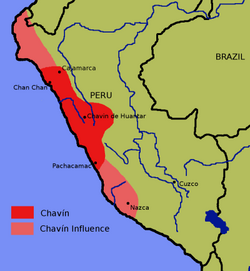
High in the Ancash Region of Peru, nestled at an elevation of 3,180 meters (10,430 ft), lies Chavín de Huántar. This sprawling archaeological site served as the political capital and religious epicenter for the Chavín, a major pre-Inca culture. Established as early as 1200 BC and occupied until approximately 400–500 BC, the site acted as a pan-regional gathering place where people traveled from across the region to consult oracles, participate in sacred rituals, and enter mysterious cults.
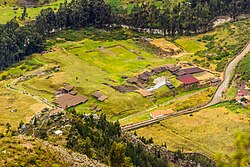
Strategically located at the headwaters of the Marañón River, between the coast and the jungle, Chavín de Huántar was more than just a temple; it was a hub for the exchange of material goods and spiritual ideas. Its unique geography, situated at the confluence of the Mosna and Huachejsa rivers, likely contributed to its spiritual allure.
Key Facts
- Location: Ancash Region, Peru, 434 km north of Lima.
- Timeline: Built before 1200 BC; primary activity through the middle of the first millennium BC.
- UNESCO Status: Designated as a World Heritage Site in 1985.
- Elevation: 3,180 meters (10,430 ft) above sea level.
- Significance: A major ceremonial center featuring a U-shaped plaza and complex underground galleries.
The Architecture of Power and Spirit
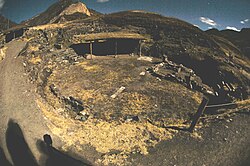
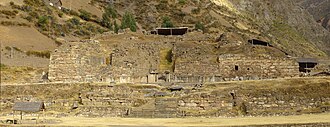
The site is characterized by a massive flat-topped pyramid surrounded by lower platforms. The layout follows a U-shaped ceremonial design, a style typical of many coastal settlements during the Early Horizon period (the early stage of Andean civilization). Central to this design is the Circular Plaza, a sacred open-air space approximately 20 meters in diameter.
The plaza's floor is composed of yellow diatomite (a soft, siliceous sedimentary rock) pillow-shaped pavers, with a center line of black limestone blocks running east-west. The walls were constructed from cut granite laid in varying courses.
The Old Temple and the Lanzón
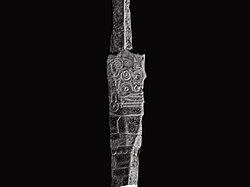
The "Old Temple" is an inward-facing structure consisting of a network of passageways surrounding a circular courtyard. This area is famous for its relief carvings of jaguars, caimans, and other anthropomorphic figures (beings with both human and animal characteristics). At the very heart of this structure lies the Lanzón Gallery, which houses the Lanzón, a sculpture believed to represent the supreme deity of the site. This figure features a feline head and a human body.
The New Temple and Expansion
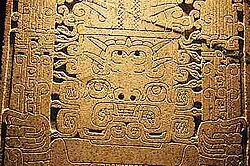
Constructed between 500 and 200 BC, the "New Temple" expanded the site to accommodate larger crowds. This phase introduced a larger, sunken rectangular plaza and further relief sculptures. One notable depiction in the New Temple shows the Lanzón deity holding a Spondylus shell (a spiny oyster shell considered sacred) and a strombus shell.
Social Hierarchy and Daily Life
Archaeological evidence reveals a clear social divide within the community. Excavations of burial sites show a small elite class buried with precious metals and colorful textiles, while the majority of the population was interred in shallow pits with simple cotton clothing.
This inequality extended to diet and resources. Residents living east of the temple had access to higher-quality meals and gold jewelry. Those in urban areas used high-quality imported obsidian for sharp blades, while rural residents relied on chert tools. A staple of the diet was llama meat, which was often freeze-dried into charqui (the precursor to modern beef jerky) for preservation.
Cultural and Spiritual Significance
The site's location is a prime example of tinkuy, a Quechua concept referring to the harmonious meeting of opposing forces—in this case, the confluence of two rivers. This, combined with nearby natural hot springs and the view of the Wantsan peak, reinforced the site's identity as a meeting place of cosmic and natural forces.
While early archaeologists like Julio C. Tello once called it the "birthplace of South American culture," later discoveries identified the Norte Chico (Caral-Supe) civilization as the oldest in the Americas, dating back 5,000 years. However, Chavín de Huántar remains a pivotal site for understanding the evolution of Andean religious and political authority.
| Feature | Details |
|---|---|
| Coordinates | 9°35′34″S 77°10′42″W |
| Total Area | 14.79 hectares (36.5 acres) |
| Primary Materials | White granite, black limestone, yellow diatomite |
| Key Deities/Icons | Lanzón (feline-human deity), jaguars, caimans |
| Economy | Agricultural (maize, potatoes) and llama domestication |
Modern Research and Conservation
In recent years, technology has revolutionized our understanding of the site. John Rick of Stanford University used laser scanning to create digital blueprints, suggesting that the site may have followed a standardized building code. In 2018, four-wheel-drive robots discovered 30 previously unknown tunnels and several graves beneath rocks.
Since 2004, the Global Heritage Fund (GHF) has worked to stabilize monuments, repair underground structures, and train local residents in conservation and tourism entrepreneurship to ensure the site's preservation for future generations.
Frequently Asked Questions
What does the name Chavín de Huántar mean?
The name is derived from the Quechua words chawpin, meaning "center" or "middle," and waantar, which refers to a specific Andean plant (Cortaderia rudiuscula Stapf).
Who were the Chavín people?
The Chavín were a major pre-Inca culture that established a powerful religious and political center in the Peruvian highlands, influencing the region through their art, architecture, and spiritual practices.
What is the Lanzón?
The Lanzón is a large anthropomorphic stone sculpture located in the center of the Old Temple. It features a feline head and a human body and is believed to have been the supreme deity of the site.
How did the social structure work at Chavín de Huántar?
The society was hierarchical. An elite class, likely including priests, enjoyed better food (younger llama meat), higher-quality tools (obsidian), and luxury goods (gold and Spondylus shells), while rural populations lived more modestly.
Is Chavín de Huántar the oldest civilization in the Americas?
No. While it was once thought to be the oldest, the Norte Chico (Caral-Supe) civilization is now recognized as the first, dating back approximately 5,000 years.