Charles Pellat: Scholar of Arab and Islamic Studies
Charles Pellat (1914–1992) was a distinguished French Algerian academic and historian who dedicated his career to the rigorous study of the Arabic language and Islamic civilization. As a specialist in Oriental studies—the academic study of the languages, cultures, and histories of Asia and North Africa—Pellat became a pivotal figure in bridging classical Arabic literature and modern French scholarship.
Throughout his tenure in some of France's most prestigious institutions, he balanced his roles as a professor, a translator, and an editor, contributing significantly to the global understanding of early Islamic intellectual history.
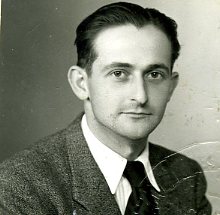
Key Facts
- Born: September 28, 1914, in Souk Ahras, French Algeria.
- Died: October 28, 1992, in Bourg-la-Reine, France.
- Specialization: Arab and Islamic studies.
- Major Affiliations: Sorbonne, École des langues orientales, and the Académie des Inscriptions et Belles-Lettres.
- Key Contribution: Extensive translations of the classical Muslim scholar al-Jāḥiẓ.
Academic Career and Institutional Influence
Pellat's academic journey was marked by a steady ascent through the elite tiers of the French educational system. His teaching career spanned three decades and several renowned institutions:
- Collège Louis le Grand: Professor of Arabic from 1947 to 1951.
- École des langues orientales: Professor from 1951 to 1956.
- The Sorbonne: Professor from 1956 until 1978.
In recognition of his scholarly achievements, Pellat was elected as a member of the Académie des Inscriptions et Belles-Lettres in 1984, one of the most prestigious learned societies in France.
Contributions to Islamic Scholarship
One of Pellat's most enduring legacies is his work with the Encyclopaedia of Islam, published by Brill Academic Publishers, where he served as a contributing editor for the second edition. This work is considered a foundational reference for the study of the Muslim world.
The Study of al-Jāḥiẓ
Pellat is particularly noted for his deep engagement with the works of al-Jāḥiẓ (781-869 CE), a classical Muslim scholar known for his prose and intellectual curiosity. Pellat translated several of al-Jāḥiẓ's Arabic works into French, including Le livre des avares (1951), Le livre de la couronne (1954), and Livre des mulets (1955). He also explored the scholar's intellectual development in his 1953 work, Le milieu baṣrien et la formation de Ǧāḫiẓ.
Selected Bibliography and Works
Pellat's bibliography reflects a diverse interest in linguistics, history, and cultural sociology. His works range from textbooks on modern Arabic to specialized editions of historical calendars.
| Year | Title | Type |
|---|---|---|
| 1950 | La Littérature arabe des origines à l'époque de la dynastie umayyade | Translation (from Italian) |
| 1952 | L'arabe vivant / Langue et littérature arabes | Linguistic Study |
| 1954 | Le livre de la couronne: Kitāb at-tāǧ | Translation (from Arabic) |
| 1955 | Textes berbères dans le parler des Ait Seghrouchen de la Moulouya | Linguistic Study |
| 1961 | Le calendrier de Cordoue | Edition |
| 1976 | Conseilleur du calife | Translation |
| 1977 | Textes arabes relatifs à la dactylonomie | Study |
Frequently Asked Questions
Who was Charles Pellat?
Charles Pellat was a French Algerian historian and academic who specialized in Arab and Islamic studies. He was a professor at the Sorbonne and a member of the Académie des Inscriptions et Belles-Lettres.
Which classical author did Pellat translate most frequently?
Pellat focused extensively on the works of the 9th-century Muslim scholar al-Jāḥiẓ, translating several of his Arabic texts into French.
What was Pellat's role in the Encyclopaedia of Islam?
He served as a contributing editor for several articles in the second edition of the Encyclopaedia of Islam, published by Brill Academic Publishers.
Where did Charles Pellat teach during his career?
He taught at the Collège Louis le Grand (1947–1951), the École des langues orientales (1951–1956), and the Sorbonne (1956–1978).
What other languages or dialects did Pellat study?
Beyond classical and modern Arabic, Pellat also produced work on Berber texts, specifically those of the Ait Seghrouchen of the Moulouya.