Charles Alton Forsberg: The Architect of ZMODEM and YMODEM
In the early days of digital communication, transferring files between computers over dial-up connections was a slow and often fragile process. Charles Alton "Chuck" Forsberg (1944–2015) was a pivotal figure in solving these challenges. An expert in computer engineering, Forsberg developed the protocols that defined how data moved across bulletin board systems (BBS) in the 1990s, ensuring that file transfers were faster, more reliable, and capable of recovering from interruptions.
Key Facts
- Primary Contribution: Developed the ZMODEM and YMODEM data transmission protocols.
- Major Award: Received the Dvorak Award for Excellence in Telecommunications in 1992.
- Professional Background: Project engineer for the Tektronix 4010 graphics terminals and founder of Omen Technology.
- Education: M.S. in Electrical Engineering from the University of Wisconsin (1968).
- Technical Innovation: Introduced the sliding window protocol to ZMODEM to maximize bandwidth.
The Evolution of File Transfer Protocols
The Birth of YMODEM
Forsberg's journey into protocol design began with a Unix program called rbsb (receive batch / send batch). He noticed that XMODEM, designed by Ward Christensen, started its data blocks at block 1. Forsberg utilized the unused "block 0" to transmit essential metadata, such as the file name and optionally the date and time.
Upon seeing this improvement, Christensen suggested the name YMODEM, as it was "one better" than XMODEM. Forsberg subsequently created the program YAM, which followed the Unix naming convention "Yet Another Modem," a nod to the original "Modem.asm" released in 1977.
ZMODEM and the Sliding Window Protocol
Forsberg's most significant achievement was the development of ZMODEM. Unlike previous protocols that required a positive acknowledgment after every single block of data was sent, ZMODEM employed a sliding window protocol. This method allowed the sender to transmit multiple blocks in rapid succession, only resending those that went unacknowledged later.
This innovation drastically reduced the impact of latency (the delay before a transfer of data begins following an instruction), allowing the transmission speed to closely match the actual bandwidth of the underlying link. Furthermore, ZMODEM introduced the ability to resume interrupted transfers, meaning users no longer had to restart a large download from the beginning if the connection dropped.
Zmodem G for High-Speed Lines
Recognizing that different environments had different needs, Forsberg created Zmodem G. This version was specifically designed for "guaranteed error free" communication lines, such as Ethernet or short serial-to-serial connections. By removing the overhead required for retransmission, Zmodem G could send files at the maximum possible speed of the hardware.
Professional Career and Personal Life
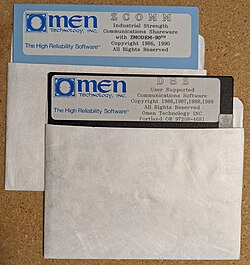
Beyond his work on protocols, Forsberg had a distinguished career in hardware and software. He served as the project engineer for the Tektronix 4010-series graphics terminals. In 1984, he founded Omen Technology, a data transmission software company. Through this venture, he published essential tools such as DSZ and ZComm, a terminal-based communications program that integrated the ZMODEM-90 protocol.
Forsberg's interests extended beyond professional engineering. He was a licensed aircraft pilot and an active amateur radio operator with the call sign WA7KGX. His early interest in broadcasting can be traced back to his time at the Western Military Academy in Alton, Illinois, where he participated in a pirate radio station known as WMAS before graduating in 1962.
| Contribution/Role | Details | Impact |
|---|---|---|
| YMODEM | Added block 0 for file metadata | Improved file identification during transfer |
| ZMODEM | Sliding window protocol | Increased speed and enabled crash recovery |
| Zmodem G | Optimized for error-free lines | Maximum speed for Ethernet/Serial links |
| Tektronix 4010 | Project Engineer | Development of graphics terminals |
| Omen Technology | Founder (1984) | Published ZComm and DSZ software |
Frequently Asked Questions
What is the main difference between XMODEM and YMODEM?
YMODEM improved upon XMODEM by utilizing "block 0" to transmit the file name and timestamps, whereas XMODEM began transmission at block 1 and did not include this metadata.
How did ZMODEM improve data transfer speeds?
ZMODEM used a sliding window protocol, which allowed it to send multiple blocks of data without waiting for an individual acknowledgment for each one, thereby reducing delays caused by latency.
What was the purpose of Zmodem G?
Zmodem G was designed for high-reliability connections like Ethernet. It removed the retransmission overhead used in standard ZMODEM to achieve the fastest possible transfer speeds.
What was the Tektronix 4010?
The Tektronix 4010 was a series of graphics terminals for which Charles Forsberg served as the project engineer.
What award did Charles Forsberg receive for his work?
In 1992, he was honored with the Dvorak Award for Excellence in Telecommunications specifically for his development of the ZMODEM protocol.