César Luis Menotti: The Visionary Architect of Argentine Football
César Luis Menotti, affectionately known as El Flaco ("Slim"), was more than just a football manager; he was a philosopher of the game. From his beginnings as a striker in Rosario to leading Argentina to its first-ever global triumph, Menotti's influence reshaped the tactical and aesthetic identity of Argentine football. His commitment to an attacking, fluid style of play left an indelible mark on the sport.
Born on October 22, 1938, in Rosario, Menotti's life was defined by a passion for the "beautiful game." His journey took him across continents, managing some of the world's most prestigious clubs and national teams, always striving to balance competitive success with artistic expression on the pitch.

Key Facts
- World Cup Glory: Led Argentina to victory in the 1978 FIFA World Cup.
- Youth Success: Managed the Argentina U20 team to win the 1979 FIFA World Youth Championship.
- Club Versatility: Managed legendary clubs including FC Barcelona, Atlético Madrid, Boca Juniors, and River Plate.
- Playing Career: A striker who played for Rosario Central, Boca Juniors, and the Brazilian side Santos.
- Legacy: Recognized by World Soccer as the 22nd greatest manager of all time.
The Playing Years: From Rosario to Brazil
Menotti began his professional journey in 1960 with his hometown club, Rosario Central, where he debuted in the Primera División with a victory over Boca Juniors. A tall, commanding striker, he spent four seasons at Central before moving to Racing Club in 1964 and subsequently Boca Juniors in 1965, where he secured his first title in the Primera División.
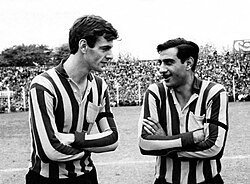
His career eventually took him abroad. He played in the North American Soccer League for the New York Generals before moving to Brazil in 1968 to join Santos. It was here that he played alongside the legendary Pelé and won the Torneio Roberto Gomes Pedrosa (later recognized as the Brazilian national championship). He concluded his playing days at Clube Atlético Juventus in 1970.
The Rise of a Managerial Icon
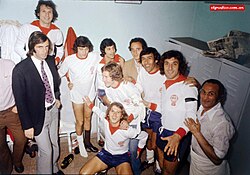
Menotti's transition to coaching was inspired by the Brazilian style of play he witnessed during the 1970 FIFA World Cup. After serving as an assistant at Newell's Old Boys, he took the helm at Huracán. In 1973, he led the club to the Torneo Metropolitano title with a squad praised for its breathtaking style, cementing his reputation as a tactical innovator.
Triumph with the Argentina National Team
Appointed as the head coach of the Argentina national team in 1974, Menotti embarked on a project to modernize the national side. This culminated in the 1978 FIFA World Cup, where Argentina defeated the Netherlands in the final to claim their first world title.
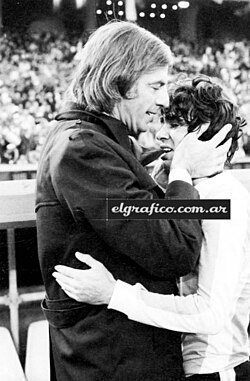
Menotti's tenure was also marked by his relationship with a young Diego Maradona. While he famously excluded the 17-year-old from the 1978 squad to protect him from pressure, he later led Maradona to victory at the 1979 FIFA U-20 World Cup in Japan and integrated him into the senior squad for the 1982 World Cup.
Global Journeys and Club Management
In the 1980s, Menotti's expertise took him to Spain. At FC Barcelona (1983–1984), he reunited with Maradona and won the Copa del Rey, the Copa de la Liga, and the Supercopa de España. He later managed Atlético Madrid, where he achieved a stunning 4–0 victory over Real Madrid in the derby before a fallout with chairman Jesús Gil led to his departure.
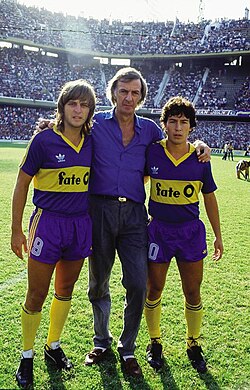
Menotti's career was characterized by a rare ability to cross deep divides, managing both Boca Juniors and their arch-rivals River Plate. His later years saw him manage in Uruguay with Peñarol, in Italy with Sampdoria, and in Mexico with the national team, Puebla, and Tecos.
Personal Life and Final Years
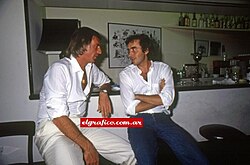
Beyond the touchline, Menotti was known for his intellectual curiosity and his friendship with cultural figures, including singer Joan Manuel Serrat.
A lifelong smoker, Menotti faced health challenges in his later years, including a lung growth removal in 2011. He passed away on May 5, 2024, at the age of 85 in Buenos Aires, following a battle with stomach cancer. He is remembered not only for the trophies he won but for his unwavering belief that football should be a source of joy and beauty.
| Role | Key Teams | Major Achievements |
|---|---|---|
| Player | Rosario Central, Boca Juniors, Santos | Primera División (1965), Campeonato Brasileiro (1968) |
| Manager (National) | Argentina, Mexico | FIFA World Cup (1978), FIFA U-20 World Cup (1979) |
| Manager (Club) | Huracán, Barcelona, Atlético Madrid | Torneo Metropolitano (1973), Copa del Rey (1983) |
Frequently Asked Questions
Why was Menotti known as "El Flaco"?
"El Flaco" is Spanish for "Slim," a nickname referring to his tall and lean physical build (1.93 m).
Why did Menotti exclude Diego Maradona from the 1978 World Cup?
Menotti believed that at 17 years old, Maradona was too young to handle the immense psychological pressure of a home World Cup.
Which clubs did Menotti manage in Spain?
Menotti managed both FC Barcelona and Atlético Madrid during his time in Spain.
What was Menotti's contribution to the Argentina U20 team?
He led the Argentina U20 national team to victory in the 1979 FIFA World Youth Championship held in Japan.
What caused the death of César Luis Menotti?
Menotti died at the age of 85 due to stomach cancer, following a period of hospitalization for severe anemia.