Cayuse People: History, Culture, and the Legacy of the Plateau
The Cayuse, who referred to themselves as the Liksiyu, were a powerful and skilled people of the Pacific Northwest. Their name, "Cayuse," is believed to have originated from the French word cailloux (meaning stones or rocks), a term used by early French Canadian trappers. This name likely described the rocky terrain of their homeland or served as a phonetic approximation of their own name. Closely linked with the Nez Percé and Walla Walla tribes, the Cayuse maintained a distinct identity, most notably through their language, which was a language isolate—meaning it had no known relationship to any other language, including the Sahaptin spoken by their neighbors.
During the eighteenth century, the Cayuse population was estimated at approximately 500 people. They lived as a seminomadic society, strategically moving between summer and winter villages across a vast territory. Their ancestral lands spanned the Snake, Tucannon, Walla Walla, and Touchet rivers in Washington, as well as the Umatilla, Grand Ronde, Burnt, Powder, and John Day rivers in Oregon, extending from the Blue Mountains to the Deschutes River.
Historian Verne Ray identified seventy-six traditional village sites, the majority of which were temporary seasonal camps. The social structure included seven bands scattered across Eastern Oregon and Washington, including the Pa'cxapu (the Walla Walla River Cayuse Band). Other records suggest a simpler division of three regional bands: two centered on the Umatilla River and one on the Walla Walla River.
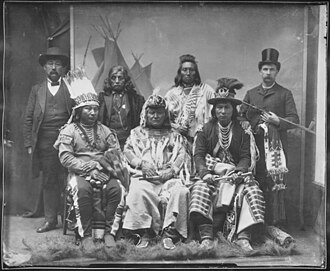
The Mastery of the Horse
The Cayuse became renowned throughout the region for their bravery and exceptional skill as horsemen. They meticulously bred their ponies for speed and endurance, creating a breed known today as the Cayuse horse. This mastery of equestrianism fundamentally transformed their way of life; no longer limited by what they could carry or what dogs could pull, the Cayuse expanded their reach significantly.
With their horses, they traveled as far east as the Great Plains and as far south as California to engage in trade, hunting, warfare, and the capture of slaves. Their herds grew rapidly through a combination of expert breeding and raids on other tribes. By the early 1800s, horse ownership was the primary measure of wealth: while a person with 15 to 20 horses was considered poor, wealthy families controlled 2,000 or more.
This mobility allowed the Cayuse to dominate sedentary neighbors along the Columbia River. They claimed control over The Dalles—a critical fishery and trade hub—forcing weaker bands to pay tribute in salmon and other goods. They also frequently clashed with the Blackfeet and the "Snake people" (including the Piute, Shoshone, and Bannock tribes) over hunting grounds and territory.
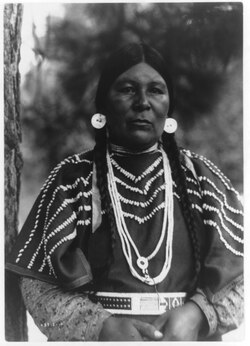
Conflict and the Cayuse War
The arrival of white settlers via the Oregon Trail starting in 1842 brought severe pressure to the Cayuse. Settlers competed for essential water and game, and the subsequent gold rushes of 1848 (California) and 1862 (Eastern Oregon) accelerated the encroachment on tribal lands.
Tensions peaked following the establishment of a mission by Marcus and Narcissa Whitman at Waiilatpu ("Place of the Rye Grass") in 1838. In 1847, a measles epidemic devastated the tribe. Because a significantly higher percentage of Native people died compared to white settlers, some Cayuse leaders suspected the missionaries were deliberately poisoning them. Combined with cultural friction and land loss, these tensions led to a violent eruption.
The Cayuse attacked the mission, killing the Whitmans and eleven others, while capturing 54 European-American women and children for ransom. This event sparked the Cayuse War. In the aftermath, five Cayuse warriors were hanged. The remaining captives were eventually released after the Hudson's Bay Company brokered an exchange for blankets, shirts, rifles, ammunition, tobacco, and flints.
Transition and Modern Legacy
The Cayuse eventually lost the war and were forced to cede their lands to the United States. In 1855, they signed the Treaty of Walla Walla, joining the Umatilla and Walla Walla tribes to form the Umatilla Indian Reservation. Over time, extensive intermarriage occurred, particularly with the Nez Percé.
By the early 20th century, the distinct Cayuse language had become extinct. A 1902 census found only one "pure-blooded" Cayuse on the reservation, though many descendants continued to identify as Cayuse. In the mid-twentieth century, the Indian Relocation Act of 1956 prompted some members to move to urban areas for employment. Today, the Cayuse are part of the integrated community of the reservation, where they no longer maintain separate population statistics from the Umatilla and Walla Walla.
Key Facts
- Self-Designation: The Cayuse called themselves the Liksiyu.
- Language: Their original language was a unique isolate and is now extinct.
- Equestrianism: They developed the Cayuse horse, known for speed and endurance.
- Wealth: In the early 1800s, wealthy families owned 2,000 or more horses.
- Conflict: The 1847 measles epidemic and land encroachment led to the attack on the Whitman Mission and the subsequent Cayuse War.
- Current Status: They reside on the Umatilla Indian Reservation as part of a confederated group.
| Category | Details |
|---|---|
| Traditional Territory | Eastern Washington and Eastern Oregon (Snake, Columbia, and Umatilla river basins) |
| Social Structure | Seminomadic; organized into regional bands (e.g., Pa'cxapu) |
| Economic Power | Horse breeding and control of The Dalles trade emporium |
| Key Treaty | Treaty of Walla Walla (1855) |
| Population (18th C) | Approximately 500 |
Frequently Asked Questions
Where does the name "Cayuse" come from?
The name is derived from the French word cailloux, meaning stones or rocks. It was adopted by French Canadian trappers and likely referred to the rocky landscape the tribe inhabited.
What was the significance of the Cayuse horse?
The Cayuse bred ponies for exceptional speed and endurance. These horses allowed the tribe to expand their hunting and trading ranges to the Great Plains and California, and gave them a military advantage over sedentary neighbors.
What caused the conflict at the Whitman Mission?
The conflict was driven by cultural differences, settler encroachment, and a deadly measles epidemic in 1847. The high mortality rate among the Cayuse led some to believe the missionaries were poisoning them.
Is the Cayuse language still spoken?
No, the original Cayuse language is considered extinct. By the early 1900s, many Cayuse had intermarried with the Nez Percé and adopted their language.
Where do the descendants of the Cayuse live today?
The Cayuse officially reside within the limits of the Umatilla Indian Reservation, having joined the Umatilla and Walla Walla tribes through the Treaty of Walla Walla in 1855.