Carole Cadwalladr: Investigating Big Tech and the Fight for Press Freedom
From writing travel guides in the 1990s to becoming one of the most prominent critics of the global technology industry, Carole Cadwalladr has carved a career defined by investigative rigor and a willingness to challenge powerful entities. Her work has spanned literature, feature writing, and high-stakes reporting on the intersection of data, politics, and democracy.
Cadwalladr first gained literary recognition with her debut novel, The Family Tree. The work was a New York Times Book Review Editor's Choice and was shortlisted for several prestigious awards, including the 2006 Commonwealth Writers' Prize and the Wales Book of the Year. Its reach extended globally through translations into German, Italian, Spanish, Portuguese, and Czech, and it was later adapted into a five-part serial for BBC Radio 4.
Journalistic Evolution and the "Fake News Ecosystem"
Cadwalladr joined The Observer as a feature writer in 2005, remaining with the publication until 2025. While her early work was diverse, her focus shifted toward technology in the 2010s, leading to interviews with figures such as Wikipedia founder Jimmy Wales. By late 2016, she began publishing a landmark series of articles examining what she described as the "right-wing fake news ecosystem."
Her reporting focused on the 2016 EU membership referendum, specifically alleging malpractice by Brexit campaigners and illicit funding within Vote Leave. She further investigated potential links between Nigel Farage, the 2016 Donald Trump presidential campaign, and Russian influence. While the full Mueller investigation report remained unpublished, it did identify numerous links between the Russian government and the Trump campaign. These reports led to legal action from Cambridge Analytica before the company ceased operations in 2018.
The TED Talk and the "Truth Bomb"
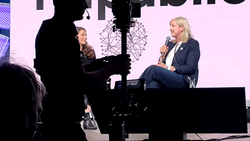
In April 2019, Cadwalladr delivered a high-profile TED talk titled "Facebook's role in Brexit — and the threat to democracy." During the presentation, she explicitly named the "Gods of Silicon Valley"—Mark Zuckerberg, Sheryl Sandberg, Sergey Brin, Larry Page, and Jack Dorsey—accusing Facebook of breaking liberal democracy. Although some tech giants claimed the talk contained factual inaccuracies, they did not provide specifics when asked. TED curator Chris Anderson later cited it as one of the best talks of 2019.
The Banks v Cadwalladr Libel Case
The scrutiny of political funding led to a protracted legal battle when Arron Banks initiated a libel action against Cadwalladr on July 12, 2019. The dispute centered on her claim that Banks had lied about his relationship with the Russian government.
The legal proceedings were complex. While a High Court judge initially dismissed the case in June 2022, ruling that Cadwalladr had a reasonable belief that her comments were in the public interest, the victory was partial. The judge noted she had "no defence of truth," and the case was later appealed.
In February 2023, the Court of Appeal ruled that the continued publication of the TED talk after an April 2020 Electoral Commission report (which found no evidence of Banks breaking campaign donation laws) had caused "serious harm" to Banks's reputation. Consequently, Cadwalladr was ordered to pay £35,000 in damages and over £1 million in legal costs. In November 2023, her legal team announced plans to take the case to the European Court of Human Rights.
New Ventures and Continued Advocacy
Following the sale of The Observer to Tortoise Media in 2025—a deal Cadwalladr publicly criticized—her freelance contract was not renewed. In response, Cadwalladr and four other female journalists from The Observer used their redundancy payments to launch The Nerve, an online publication focusing on culture, politics, and technology. The platform features contributors such as Stewart Lee and Philippa Perry.
Beyond journalism, Cadwalladr co-founded The Citizens, a not-for-profit organization that brings together data scientists, lawyers, and creatives to confront the unchecked power of states and Big Tech through storytelling. Her recent work includes co-hosting the BBC Sounds podcast Stalked and appearing on Democracy Now! to discuss the "broligarchy"—the concentrated political power of major tech firms.
| Period/Date | Key Milestone / Event | Outcome/Detail |
|---|---|---|
| 1990s | Early Career | Travel writer for The Daily Telegraph and guidebooks. |
| 2006 | Literary Debut | The Family Tree shortlisted for Commonwealth Writers' Prize. |
| 2016-2018 | Investigative Reporting | Exposed "fake news ecosystem" and Cambridge Analytica. |
| April 2019 | TED Talk | Accused Facebook of "breaking" democracy. |
| 2019-2023 | Banks Libel Case | Ordered to pay £35k damages and £1m+ in costs. |
| 2025 | The Nerve | Launched new publication after leaving The Observer. |
Key Facts
- Literary Success: Her novel The Family Tree was a New York Times Book Review Editor's Choice.
- Tech Criticism: She famously challenged the founders of Facebook, Google, and Twitter during a 2019 TED talk.
- Legal Battle: Faced a multi-year libel suit from Arron Banks, resulting in significant financial penalties.
- Entrepreneurship: Co-founded The Nerve and the non-profit The Citizens.
- Focus: Specializes in the intersection of Big Tech, electoral integrity, and techno-authoritarianism.
Frequently Asked Questions
What was the primary focus of Carole Cadwalladr's work at The Observer?
While she began as a feature writer, her later work focused heavily on technology, specifically the "right-wing fake news ecosystem," the role of Facebook in Brexit, and the influence of Russian interests in Western elections.
Why did Arron Banks sue Carole Cadwalladr?
Banks initiated a libel action because of claims made by Cadwalladr, particularly in her TED talk, regarding his relationship with the Russian government and the funding of electoral campaigns.
What is "The Nerve"?
The Nerve is an online publication dedicated to culture, politics, and technology, launched by Cadwalladr and four other former Observer journalists using their redundancy payments.
What is the purpose of "The Citizens" organization?
The Citizens is a not-for-profit organization that uses storytelling and a multidisciplinary team of experts to confront the unchecked power of Big Tech and government states.
What happened with the Court of Appeal ruling in the Banks case?
The court ruled that continuing to publish the TED talk after an Electoral Commission report found no evidence of law-breaking caused "serious harm" to Banks's reputation, leading to damages and high legal costs for Cadwalladr.