Caravanserais: The Historic Roadside Inns of the Islamic World
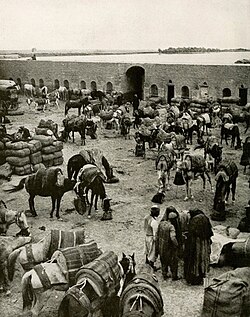
Across the vast landscapes of Asia, North Africa, and Southeast Europe, a network of specialized inns once facilitated the movement of people, goods, and ideas. Known as caravanserais, these structures were essential to the functioning of ancient trade routes, most notably the legendary Silk Road. By providing safe harbor for merchants and their pack animals, caravanserais acted as the vital connective tissue of global commerce for centuries.
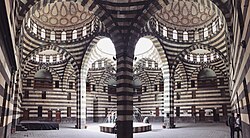
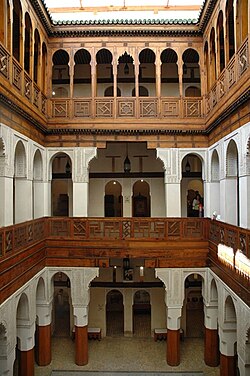
Depending on the region and the era, these inns were known by various names, including khan, funduq, and wikala. While rural versions served as staging posts for long-distance travel, urban caravanserais functioned as commercial hubs, depots, and business venues within the heart of major cities.
Key Facts
- Purpose: Provided lodging and security for travelers, merchants, and caravans.
- Spacing: Rural inns were typically placed one day's journey apart (roughly 30-40 km in plains, 10 km or less in mountains).
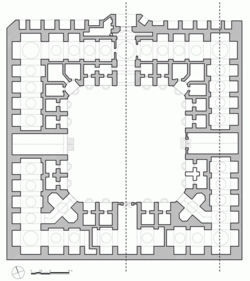
- Architecture: Generally rectangular with a central courtyard, a single protected entrance, and surrounding rooms.
- Facilities: Included sleeping quarters for people, stables for horses and camels, and storage for merchandise.
- Global Reach: Prevalent across the Middle East, North Africa, Central Asia, and the Indian subcontinent.
The Evolution of the Caravanserai
Ancient Origins
The concept of the roadside staging post predates the Islamic era. Evidence of early antecedents exists in Urartian sites from the 8th or 9th century BCE in western Iran. The Achaemenid Empire (6th to 4th centuries BCE) further developed this system with relay stations along the 2,500-kilometre Royal Road stretching from Sardis to Susa. Later, the Byzantine Empire also maintained similar staging posts, though few physical remains from these ancient periods survive.
The Islamic Golden Age and Beyond
The use of caravanserais intensified after the seventh century, coinciding with a shift toward using camels for long-distance travel. The oldest identified Islamic example is a courtyard structure at Qasr al-Hayr al-Sharqi, an Umayyad complex from the early 8th century in present-day Syria.
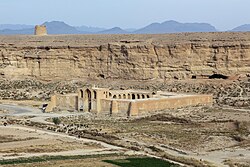
Between the 12th and 13th centuries, the Seljuk Empire constructed numerous rural caravanserais across Turkey, Iran, and Central Asia. This trend continued under later dynasties. In Iran, the Safavid Empire—particularly under Shah Abbas I (r. 1587–1629)—expanded this infrastructure to bolster international trade with India.
![Ribat-i Sharaf in Iran, built by the Great Seljuks in the 12th century[29]](/images/c7/18/c71888a597f59d80c1eb3e52dbb2be315d63b9da2525923dd25ce04cf93e7906.jpg)
Urban Centers and Regional Adaptations
In cities, caravanserais became economic engines often located near the main bazaar. The Khan al-Mirjan in Baghdad (1359) stands as the oldest surviving urban example. In the Indian subcontinent, the concept was adapted from Iranian designs. These were common along the Grand Trunk Road, with significant construction occurring under Sultan Muhammad ibn Tughluq (r. 1324–1351), Sher Shah Suri (r. 1486–1545), and the Mughal emperors.
![Khan al-Mirjan in Baghdad, dated to 1359, the oldest surviving urban caravanserai[2]](/images/a5/3e/a53ebf6dc42f41ff1b883b834f7bf4361f79b5855e5c360a7539fb25a012ece2.jpg)
Architecture and Design
Standard Layouts
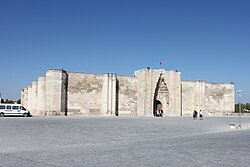
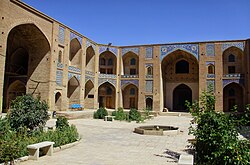
Most caravanserais followed a rectangular plan featuring a central courtyard surrounded by rooms and vaulted openings called iwans (rectangular halls open on one side). In Safavid Iran, a "four-iwan" plan was common, with a large iwan centered on each of the four walls. Rural sites often featured imposing entrance portals and rounded corner towers for defense.
Regional Variations
- Safavid Iran: Later 17th-century designs evolved from rectangular to more complex octagonal floor plans.
- Indian Subcontinent: Designs typically featured symmetrical plans with two major gateways and a mosque (often a three-domed hall) on the west side.
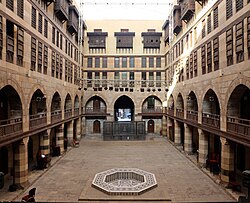
- Egypt: In 19th-century Alexandria, the traditional wikala was reinterpreted as the okelle by Italian architect Francesco Mancini under the direction of Muhammad Ali, blending traditional functions with Italianate style.
Summary of Caravanserai Types and Terms
| Term | Primary Context | Key Characteristics |
|---|---|---|
| Khan | General/Urban | Common term for inns and commercial depots in cities. |
| Funduq | North Africa/Levant | Regional term for merchant lodging and warehouses. |
| Wikala | Egypt/North Africa | Urban commercial buildings; later evolved into the okelle in Alexandria. |
| Rural Caravanserai | Countryside | Fortified way stations spaced by a day's journey. |
Frequently Asked Questions
How far apart were rural caravanserais located?
They were generally placed at intervals equivalent to a single day's journey. In open landscapes like deserts, this was typically 30 to 40 kilometres, while in mountainous terrain, the distance was reduced to 10 kilometres or less.
What was the difference between a rural and an urban caravanserai?
Rural caravanserais served primarily as safe resting points and staging posts for travelers between cities. Urban caravanserais functioned more as commercial hubs, serving as inns, warehouses, and venues for conducting business, often located near city bazaars.
What animals were accommodated in these inns?
Caravanserais provided dedicated space for pack animals, most commonly horses and camels, which were essential for transporting goods across long distances.
Which empire is most associated with the proliferation of these structures?
While they existed in many cultures, the Seljuk and Safavid Empires were particularly influential in building and standardizing the caravanserai network to support trade and communication across their territories.