Capital Cities: The Seats of Power and Governance
A capital city is a municipality that holds primary status within a country, state, province, or other subnational division. Most commonly, it serves as the seat of government, physically housing the offices and meeting places where laws are crafted and administrative decisions are made. This status is typically formalized through a constitution or specific legal designations.
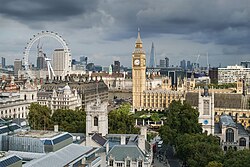
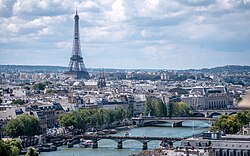
In the realm of linguistics and media, capitals often serve as a metonym—a figure of speech where the name of a place is used to represent the government residing there. For instance, when news reports mention "London–Washington relations," they are referring to the diplomatic interactions between the governments of the United Kingdom and the United States.
Key Facts
- Primary Function: Acts as the administrative center and seat of government for a jurisdiction.
- Diverse Arrangements: Some regions have multiple capitals or separate their official capital from the actual seat of government.
- Planned Cities: Many modern capitals, such as Brasília and Canberra, were intentionally designed and built to serve as administrative hubs.
- Strategic Shifts: Capitals are sometimes moved for geopolitical, economic, or symbolic reasons.
- Cultural Hubs: Many capitals also serve as major religious or historical centers.
The Evolution and Purpose of Capitals
Capital cities naturally attract a specific demographic of politically motivated individuals and professionals essential for national administration. This includes lawyers, political scientists, bankers, journalists, and public policy makers.
Religious and Historical Significance
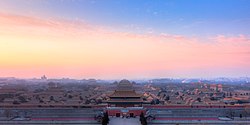
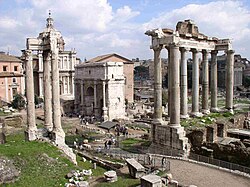
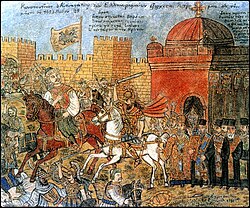
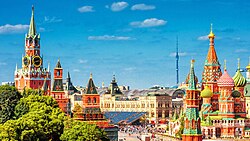
Beyond politics, many capitals have historically functioned as religious centers. Examples include Rome and Vatican City (Roman Catholic Church), Moscow (Russian Orthodox Church), Belgrade (Serbian Orthodox Church), as well as Jerusalem, Constantinople, Babylon, Paris, and Beijing.
Geopolitical Relocations
The location of a capital is not always permanent. Geopolitical shifts can trigger a change in status. For example, Turku was Finland's most important city and capital starting in 1809, but the Russian Empire moved the capital to Helsinki in 1812 during the era of the Grand Duchy of Finland.
Modern and Planned Capitals
![Tehran, the capital of Iran since the Qajar Empire, and the most populous city in West Asia.[9][10]](/images/ba/02/ba02f59e8134251ea96a232e13d066c46ea1ad810f66a898d417c16614845913.jpg)
Many nations have opted to create "planned capitals" rather than relying on existing urban centers. These cities are often developed to satisfy specific criteria, such as creating a neutral location or relieving overcrowding in a primary city.
Compromise and Strategic Locations
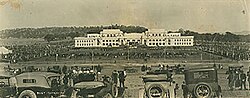
Some capitals are established as a compromise between competing major cities. Canberra, Australia, was opened in 1927 as a middle ground between Sydney and Melbourne. Similarly, Jefferson City, Missouri, was selected in 1821 due to its central location between Kansas City and St. Louis.
Symbolic and Forward Capitals
A "forward capital" or "spearhead capital" is a city moved to a peripheral location for strategic or economic reasons. Peter the Great moved the Russian government from Moscow to Saint Petersburg to foster a European orientation. Similarly, the Ming emperors moved the capital from Nanjing to Beijing to better supervise the border with the Mongols.
Unusual Governance Arrangements
Not every jurisdiction follows a simple one-city model. Some exhibit complex administrative structures:
- Multiple Capitals: The Canary Islands (Spain) share capital status between Santa Cruz de Tenerife and Las Palmas de Gran Canaria.
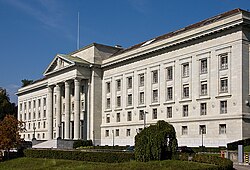
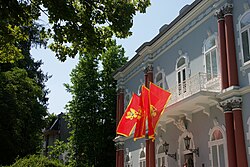
- Separated Seats of Power: In Switzerland, the judiciary is seated in Lausanne, while the executive and legislature are in Bern. Similarly, in Montenegro, the president's official residence is in Cetinje, but the legislature and executive are in Podgorica.
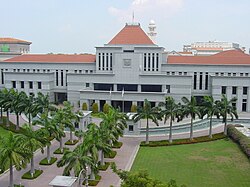
- City-States: Singapore, as a city-state, requires no specific capital city.
- Metropolitan Seats: In the Philippines, the entire National Capital Region (Metro Manila) is the seat of government, though the City of Manila is the official capital.
Summary of Notable Capital Types
| Type | Example City | Primary Reason/Characteristic |
|---|---|---|
| Planned/Compromise | Canberra, Australia | Compromise between Sydney and Melbourne |
| Strategic/Forward | Saint Petersburg, Russia | European orientation under Peter the Great |
| Administrative Shift | Helsinki, Finland | Moved from Turku for geopolitical reasons |
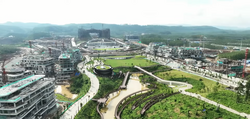
| Future Planned | Nusantara, Indonesia | Currently under construction |
| Dual Capital | Santa Cruz de Tenerife & Las Palmas | Balanced institutions in Canary Islands |
Capitals in Military Strategy
The military importance of a capital varies by political system. In highly centralized states, such as France, the capital's bureaucracy coordinates national resources, making it a high-value target but also a single point of failure. In contrast, systems with localized authority (such as those influenced by feudalism or decentralized democracy) can often survive the loss of a capital. For example, during the American Revolutionary War, American forces continued fighting from the countryside even after British forces sacked various capitals.

Frequently Asked Questions
What is the difference between a capital and a seat of government?
The capital is the official city designated by law or constitution as the primary city of a jurisdiction. The seat of government is the physical location where the administration actually operates. While they are usually the same, some countries separate them for historical or practical reasons.
Why do some countries build new, planned capitals?
Planned capitals are often created to resolve rivalry between existing cities (compromise), to move the government to a more central or strategic location (forward capitals), or to reduce overcrowding in a primary metropolitan area.
Can a country have more than one capital?
Yes. Some jurisdictions, such as the Canary Islands in Spain, have multiple official capitals to balance power and institutions between different regions.
What is a "forward capital"?
A forward capital is a city relocated to a geographically or demographically peripheral area to achieve a specific strategic, economic, or political goal, such as expanding influence toward a neighboring region.
How is the term "capital" used in news reporting?
It is often used metonymically, meaning the name of the city is used to refer to the national government that resides there (e.g., using "Washington" to refer to the U.S. federal government).