Cape Breton University: A Legacy of Academic Growth and Cultural Heritage
Located in Sydney, Nova Scotia, Cape Breton University (CBU) is a public institution known for its deep ties to the community and its evolution from a small satellite college to a diverse urban campus. Guided by the motto "Theid Díchioll Air Thoiseach" (Scottish Gaelic for "Diligence Will Prevail"), the university has spent decades expanding its academic reach and preserving the unique cultural identity of Cape Breton Island.
From its early days as a junior college to its current status as a hub for international students, CBU blends traditional academic rigor with a strong commitment to regional history and indigenous education.
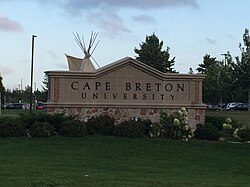
Key Facts
- Established: 1951 (originally as Xavier Junior College).
- Student Population: 4,895 students for the 2025-26 period, including 4,301 undergraduates and 594 postgraduates.
- Mascot: The Caper (Athletic teams known as the CBU Capers).
- Endowment: $27.8 million.
- Academic Affiliations: AAU, UC, CBIE, and CICan.
- Campus Type: Urban.
The Evolution of CBU
The institution's history is marked by several name changes and mergers. It began in 1951 as Xavier Junior College (colloquially called "Little X"), a satellite of St. Francis Xavier University. By 1968, the Nova Scotia Eastern Institute of Technology (NSEIT) opened to address challenges in the local coal and steel industries by focusing on trades and business technology.
In 1974, these two entities merged to form the College of Cape Breton, consolidating operations at the NSEIT site. The institution continued to evolve, becoming the University College of Cape Breton in 1982, and finally receiving its current name, Cape Breton University, in 2005.
Growth and Internationalization
In recent years, CBU has experienced a dramatic shift in demographics. Between 2017 and 2023, enrollment grew from under 2,600 to 9,100 students, with international students making up 80% of the population by fall 2023. While this growth has expanded the university's global reach, it has also brought challenges regarding local housing infrastructure and student support.
Campus Facilities and Cultural Landmarks
The CBU campus is more than just a place of study; it is a repository of regional identity. One of its most significant assets is the Beaton Institute, the second-largest public archive in Nova Scotia. Founded by Sister Margaret Beaton, who began collecting Cape Bretoniana (materials specific to the island's culture) in 1957, the institute preserves the history of Mi'kmaq, Gaelic, and various European immigrant communities.
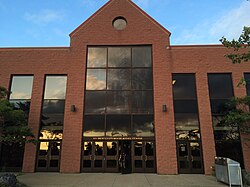
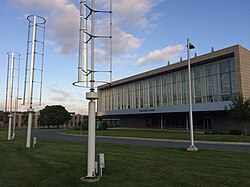
The campus also features specialized centers for research and student services. The Culture and Heritage Centre houses the President's Office and the CBU Art Gallery, while the Marvin Harvey Building serves as the central hub for the Registrar's Office and the Jennifer Keeping AccessAbility Centre.
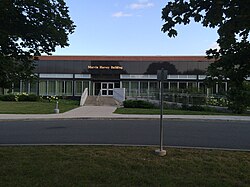
For science and technology, the Technology Enterprise Centre provides advanced research laboratories. Additionally, the university previously hosted the Verschuren Centre for Sustainability & the Environment, which focused on green technologies before incorporating as a separate non-profit in 2020.
Athletics and Student Life
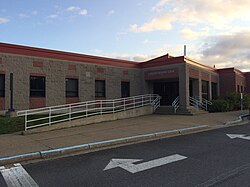
CBU is a proud member of U Sports and the AUS (Atlantic University Sport). The campus boasts comprehensive athletic facilities, including a gym and a dome that hosts an indoor soccer field, complemented by an outdoor track and field.

Academic Structure and Research
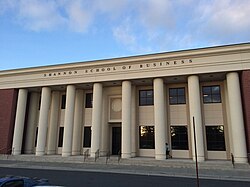
CBU organizes its academic offerings into several specialized schools, each led by a dedicated dean. The Shannon School of Business is a cornerstone of the university's professional training, while the School of Science and Technology and the School of Nursing provide critical healthcare and technical education.
Unama'ki College
Founded in 2010, Unama'ki College is a specialized offshoot dedicated to Mi'kmaq history, culture, and education. It provides a supportive environment for Indigenous students and includes the Mi'kmaq Resource Centre and a dedicated language lab.
Research Excellence
The university maintains a strong research profile through various Canada Research Chairs. Key areas of focus include:
- Healthy Environments and Communities (Dr. Xu Zhang)
- Musical Traditions (Dr. Heather Sparling)
- Social Enterprise in Inclusive Markets (Dr. Kevin McKague)
- Post-Industrial Communities (Dr. Lachlan MacKinnon)
University Overview
| Category | Details |
|---|---|
| Current President | David Dingwall |
| Chancellor | Annette Verschuren |
| Academic Ranking (Maclean's 2024) | 20th (Primarily Undergraduate) |
| Faculty Size | 227 (as of March 2019) |
| Campus Colors | Orange, Green, Black, Gold |
Frequently Asked Questions
What is the Beaton Institute?
The Beaton Institute is a regional archive and the second-largest public archive in Nova Scotia. It preserves documents, photographs, and recordings related to the history, society, and diverse cultural groups of Cape Breton Island.
What is Unama'ki College?
Unama'ki College is a specialized college within CBU founded in 2010. It focuses on Mi'kmaq history, culture, and education, providing dedicated resources like the Mi'kmaq Resource Centre.
How has CBU's student population changed recently?
CBU has seen a significant increase in international enrollment. From 2017 to 2023, the student body grew from under 2,600 to 9,100, with international students comprising approximately 80% of the population in 2023.
What are the CBU Capers?
The CBU Capers are the university's athletic teams, competing in U Sports and the Atlantic University Sport (AUS) conference.
What scholarships are available for new students?
CBU offers nine major entrance scholarships based on high school averages. Students with an average of 90% or higher can qualify for awards ranging from $10,000 (Orpha Thayer-Scott) to $24,000 (Chancellor's) over four years.