Cannes Film Festival Best Actress Award
The Best Actress Award, known in French as the Prix d'interprétation féminine, is one of the most prestigious honors in global cinema. Presented annually at the Cannes Film Festival in France, this award recognizes an actress who has delivered an outstanding performance in a film selected for the festival's official competition slate.
Since its inception in 1946, the award has celebrated a diverse array of talent, from legendary Hollywood icons to avant-garde international stars. The jury selects the winner based on the artistic merit and impact of the performance, regardless of whether the role is a lead or a supporting part.
Key Facts
- Established: 1946
- Country of Origin: France
- Most Recent Winners: Virginie Efira and Tao Okamoto (2026) for All of a Sudden
- Record Holders: Vanessa Redgrave, Barbara Hershey, Helen Mirren, and Isabelle Huppert have each won twice.
- Unique Achievement: Isabelle Adjani is the only actress to win for two different films in a single competition year (1981).
- Consecutive Wins: Barbara Hershey is the only recipient to win in back-to-back years (1987 and 1988).
Historical Evolution of the Award
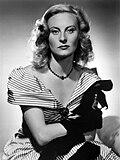
The award was first presented in 1946, with Michèle Morgan becoming the inaugural recipient for her role in Pastoral Symphony.
The history of the prize has seen several interruptions. It was not awarded in 1947, 1953, and 1954. Furthermore, the festival itself was not held in 1948, 1950, and 2020. A notable disruption occurred in 1968, when the festival was called off midway due to the civil unrest of the May 1968 events in France, resulting in no awards being issued that year.
Award Variations and Special Citations
While the award generally covers both lead and supporting roles, there was a brief period between 1979 and 1981 where the festival introduced a separate "Best Supporting Actress" prize. Additionally, the jury occasionally grants a special citation to actresses, which remains distinct from the main Best Actress trophy.
Collective Wins
On six occasions, the jury has recognized the collective effort of a cast by awarding the prize to more than two women from the same film. This occurred for A Big Family (1955), Brink of Life (1958), A World Apart (1988), Volver (2006), Emilia Pérez (2024), and All of a Sudden (2026).
Notable Recipients Through the Decades
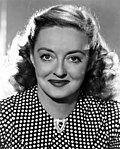
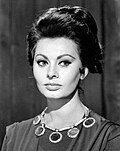
The 1950s and 60s saw the rise of cinematic legends. Bette Davis won for All About Eve in 1950, followed by other powerhouses like Sophia Loren and Katharine Hepburn.


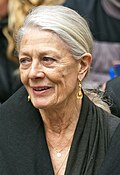
The late 60s and 70s highlighted the versatility of performers like Vanessa Redgrave, who secured her first of two wins in 1966.
The 1980s were marked by Isabelle Adjani's historic double-win in 1981 for Possession and Quartet, as well as the emergence of Isabelle Huppert.


In the following decades, the award continued to honor global icons, including Dame Helen Mirren and Meryl Streep.
Recent years have seen a continued trend of ensemble wins and international breakthroughs.



Summary of Multiple Award Winners
A small group of elite actresses have managed to win the Prix d'interprétation féminine more than once.
| Actress | Nationality | Number of Wins | Winning Films |
|---|---|---|---|
| Barbara Hershey | United States | 2 | Shy People (1987), A World Apart (1988) |
| Helen Mirren | United Kingdom | 2 | Cal (1984), The Madness of King George (1995) |
| Isabelle Huppert | France | 2 | Violette Nozière (1978), The Piano Teacher (2001) |
| Isabelle Adjani | France | 2 | Possession (1981), Quartet (1981) |
| Vanessa Redgrave | United Kingdom | 2 | Morgan – A Suitable Case for Treatment (1966), Isadora (1969) |
Frequently Asked Questions
Who was the first actress to win the Cannes Best Actress Award?
The first recipient was Michèle Morgan in 1946 for her performance in Pastoral Symphony.
Can an actress win for a supporting role?
Yes, the award can be given for either lead or supporting roles. However, between 1979 and 1981, the festival specifically awarded a separate "Best Supporting Actress" prize.
Has any actress won the award twice in one year?
Yes, Isabelle Adjani is the only actress to achieve this, winning for two different films, Possession and Quartet, in 1981.
Who has won the award in consecutive years?
Barbara Hershey is the only actress to win the award in consecutive years, receiving the prize for Shy People in 1987 and A World Apart in 1988.
What happens if the jury wants to honor multiple actresses from one film?
The jury has the authority to award the prize to multiple women for a single film. This has happened on six occasions, most recently in 2026 for the film All of a Sudden.