Canela and the European Heritage of Southern Brazil
Nestled within a landscape of lush subtropical rainforests and towering araucarias—distinctive Brazilian pine trees—the region surrounding Canela offers a unique cultural tapestry. This area is defined by a rich history of European immigration that began in the 19th century, creating a societal blend rarely seen elsewhere in South America.
The Waves of European Settlement
The demographic landscape of the region was shaped by two primary waves of immigration. German settlers were the first to arrive in 1824, establishing themselves primarily in the lowlands near river springs. Decades later, in 1875, Italian immigrants began to arrive, populating the highland areas.
This geographical divide between the lowlands and highlands fostered distinct yet complementary cultural pockets, which eventually merged to create the region's current architectural and culinary identity.
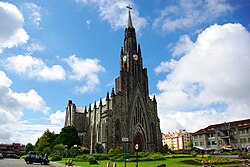
German Influence and Linguistic Heritage
The German legacy is most visible in the small towns that mirror the appearance of centuries-old European villages. These settlements are characterized by traditional architecture set against the vibrant green of the Brazilian wilderness.
Beyond the aesthetics, the linguistic heritage remains vibrant. Many local residents continue to speak German, specifically the Riograndenser Hunsrückisch dialect, a variety of the German language adapted by immigrants in southern Brazil.
Italian Traditions and Viticulture
In the highland towns settled by Italians, the culture is deeply intertwined with the land. Wine production is a cornerstone of the local economy and social identity, with vineyards appearing throughout the landscape.
The city of Caxias do Sul serves as a hub for this heritage, hosting the Festa da Uva (Grape Festival) to celebrate the region's viticultural success. The Italian influence is further preserved through the Talian dialect, a Northern-Italian variety still spoken by many in the community today.
Key Facts
- German Arrival: Settled in 1824, primarily in the lowlands.
- Italian Arrival: Settled in 1875, primarily in the highlands.
- German Dialect: Riograndenser Hunsrückisch is still spoken locally.
- Italian Dialect: Talian, a Northern-Italian dialect, remains in use.
- Major Event: The Festa da Uva in Caxias do Sul celebrates wine heritage.
- Environment: Characterized by subtropical rainforests and araucaria trees.
| Immigrant Group | Arrival Year | Primary Geography | Cultural Legacy |
|---|---|---|---|
| Germans | 1824 | Lowlands / River Springs | Village architecture, Riograndenser Hunsrückisch |
| Italians | 1875 | Highlands | Wine production, Talian dialect, Festa da Uva |
Frequently Asked Questions
When did European immigrants first arrive in the region?
German immigrants began arriving in 1824, followed by Italian immigrants who started arriving in 1875.
What are the primary dialects spoken by the descendants of immigrants?
Descendants of German settlers often speak Riograndenser Hunsrückisch, while those of Italian descent may speak the Talian dialect.
How did the geography influence where different groups settled?
German immigrants typically settled in the lowlands near river springs, whereas Italian immigrants populated the highland areas.
What is the Festa da Uva?
The Festa da Uva is a festival held in Caxias do Sul that celebrates the region's Italian wine heritage.
What defines the natural landscape of the area?
The region is characterized by luscious subtropical rainforests and the presence of araucarias.