Canarian Diaspora: The History and Legacy of Isleños in the Americas
The story of the Canarian diaspora is one of resilience, survival, and profound cultural influence. Originating from the Canary Islands, these settlers—known as Isleños (island dwellers)—migrated in massive waves to the Americas from the 15th through the 20th centuries. In many Hispanic American countries, the term isleño is still used to distinguish those of Canarian descent from peninsulares, or those from continental Spain.
By the early 19th century, the population of Canarian extraction in the Americas had already surpassed the population of the Canary Islands themselves. This migration was not merely a result of individual choice but was often driven by royal decrees, economic desperation, and geopolitical strategy.
Key Facts
- Tributo de Sangre: A 1678 law requiring 50 Canarian families to migrate for every 1,000 tons of cargo shipped from Spanish America to Spain.
- Primary Destinations: Venezuela, Cuba, Puerto Rico, and the Dominican Republic saw the highest concentrations of settlers.
- Cultural Impact: Isleños significantly influenced the Spanish dialect, cuisine, and customs in Venezuela and the Caribbean.
- US Presence: Significant historical settlements were established in San Antonio, Texas, and Spanish Florida.
- Drivers of Migration: Poverty, volcanic eruptions (specifically in Lanzarote), the Spanish Civil War, and the avoidance of military service.
The Mechanics of Migration: From Royal Decree to Economic Necessity
The early colonization of Latin America was organized by Spanish conquistadors who recruited groups from the Canary Islands to settle in Mexico, Peru, New Granada, and La Florida. In the second half of the 16th century, focus shifted toward Santo Domingo and Cuba.
A pivotal moment occurred in 1678 with the enactment of the Tributo de Sangre (Blood Tribute). This law was designed to populate under-settled regions to prevent foreign powers, such as the French, from seizing Spanish territory. Under this mandate, hundreds of families were sent to Venezuela, Cuba, the Dominican Republic, and Puerto Rico. Although the tribute was abolished in 1764, migration continued as islanders fled grinding poverty.
In the 19th century, the collapse of the cochineal dye trade and a coffee boom crisis further depressed the local economy, spurring more people to leave. In Lanzarote, extreme conditions—including the devastating volcanic eruptions of 1730, locust invasions, and pirate attacks—forced many to seek refuge in other islands or the Americas.
Regional Impact and Settlements
Venezuela: The Eighth Island
Venezuela is often referred to in the Canary Islands as the "eighth island" due to the sheer volume of immigrants. From the 16th-century recruitment of soldiers and settlers to the massive waves after 1948, Canarians have been central to Venezuelan society. They played key roles in the War of Independence; notably, Simón Bolívar had Canarian ancestors on his mother's side.
The Hispanic Antilles: Cuba, Puerto Rico, and the Dominican Republic
In Puerto Rico, the first wave arrived in 1695. Throughout the 19th century, thousands of peasant families immigrated to farm their own land. In Cuba, separatists during the Ten Years' War (1868–1878) actively promoted Canarian immigration to distinguish them from the peninsular Spanish administration. In the Dominican Republic, Isleños were once the fastest-growing ethnic group, particularly in the Cibao region.
The United States: Texas and Louisiana
Between 1731 and 1783, the Spanish crown established Canarian communities in the Southern United States to secure the region. Sixteen families arrived in San Antonio in 1731, and 154 families were sent to Florida between 1757 and 1759. Many of these Isleños fought in the American Revolutionary War and the Battle of the Alamo.
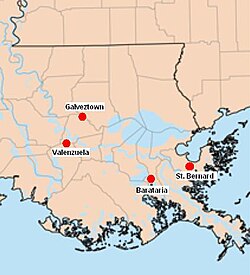
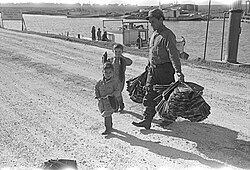
While many Florida settlers left when the territory was ceded to Great Britain and later the US, the community in St. Bernard Parish, Louisiana, preserved the 18th-century Canarian dialect of Spanish well into the modern era.
Uruguay and Argentina
In Uruguay, Canarians were instrumental in the early development of Montevideo, arriving in the 1720s. They provided the city's first civilian authorities and named many of its roads. In Argentina, while numbers were lower than in Venezuela, significant groups settled in Buenos Aires and later founded the town of Candelaria in Paraguay.
Demographic Summary of Canarian Populations
| Region | Estimated Population / Range | Primary Migration Drivers |
|---|---|---|
| Venezuela | 42,671 - 600,000 | Colonial settlement, political asylum, economic opportunity |
| Cuba | 30,400 - 900,000 | Tributo de Sangre, agricultural labor |
| United States | 37,008 | Strategic colonization (Texas/Florida) |
| Argentina | 2,390 | Military settlement, 19th-century migration |
| Uruguay | 628 | Urban population of Montevideo |
| Brazil | 620 | General diaspora |
Frequently Asked Questions
What was the Tributo de Sangre?
The Tributo de Sangre (Blood Tribute) was a Spanish law enacted in 1678. It mandated that for every 1,000 tons of cargo shipped from the Americas to Spain, 50 Canarian families had to be sent to the colonies to increase the population of Spanish-born settlers.
Why did so many people leave Lanzarote specifically?
Lanzarote suffered from extreme environmental and social hardships, including severe droughts (1626–1632), locust plagues, frequent pirate attacks, and volcanic eruptions in 1730 that affected over half the population.
How did Canarians influence Venezuela?
Canarians had a massive cultural impact on Venezuela, influencing its cuisine, customs, and the development of the local Castilian Spanish. Many prominent leaders, including Simón Bolívar and Francisco de Miranda, had Canarian ancestry.
Where can the Canarian dialect still be found in the US?
While the 18th-century dialect faded in San Antonio by the 1950s, it is still spoken by the Isleño community in St. Bernard Parish, Louisiana.
When did Canarian emigration to the Americas end?
Substantial immigration to the Americas continued until the early 1980s, after which the improvement of the economy in Spain and the Canary Islands led to a significant decrease in emigration.