Canaletto: The Master of Venetian Vedute
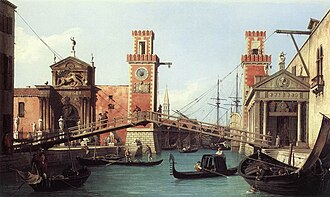
Giovanni Antonio Canal, known to history as Canaletto, was a towering figure of the 18th-century Venetian school. A master of the veduta (a highly detailed, large-scale painting of a cityscape), Canaletto captured the essence of Venice, Rome, and London with a precision that bordered on the photorealistic. His work bridged the gap between strict topographical recording and artistic imagination, leaving an indelible mark on the history of landscape art.
Born in Venice to Bernardo Canal, a painter, and Artemisia Barbieri, Giovanni's early training was rooted in the theatrical. He apprenticed under his father and brother, designing elaborate sets for operas by composers such as Antonio Vivaldi. This background in stage design likely informed his sophisticated grasp of perspective and spatial arrangement.
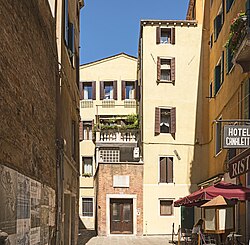
Key Facts
- Full Name: Giovanni Antonio Canal.
- Specialization: Vedute (cityscapes) and capricci (imaginary views).
- Key Patrons: Owen Swiny and Joseph "Consul" Smith.
- Major Influence: Studied under Luca Carlevaris and was inspired by Giovanni Paolo Pannini.
- English Period: Lived and worked in London from 1746 to 1755.
- Legacy: His works are held in the Royal Collection, the National Gallery, and the Wallace Collection.
Artistic Evolution and Technique
Canaletto's career began in earnest after a formative trip to Rome in 1718, where he was inspired by the Roman vedutista Giovanni Paolo Pannini to paint the daily rhythms of city life. Upon returning to Venice, he studied with Luca Carlevaris, quickly mastering the art of the urban cityscape. By 1725, his work was already being praised for its luminosity, with contemporaries noting that "you can see the sun shining in it."
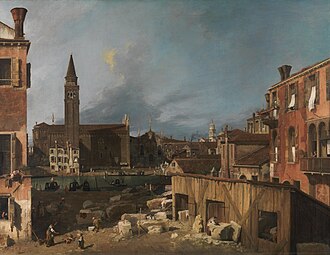
Unlike many of his peers who finished works in a studio, Canaletto often painted "from nature." His commitment to accuracy is evident in his depictions of Venice's seasonal flooding and ice. This precision led to long-standing debates regarding his use of the camera obscura—an optical device that projects an image onto a surface. While Canaletto owned one, modern experts suggest he used it for inspiration rather than literal tracing.
From Realism to Capriccio
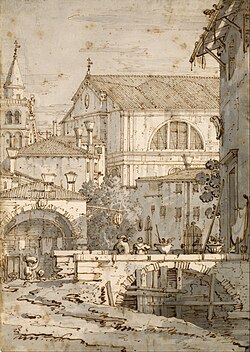
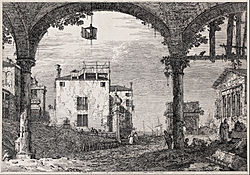
While famous for his accuracy, Canaletto also created capricci—architectural fantasies that blended real landmarks with imaginary elements. The line between his factual recordings and these artistic whims was often blurred, adding a layer of mystery to his compositions.
The English Connection and the Grand Tour
During the 18th century, wealthy Englishmen embarked on the "Grand Tour" of Europe, and Canaletto's views of Venice became highly coveted souvenirs. Initially encouraged by Owen Swiny to create smaller, commercially viable views, Canaletto later found a powerful patron in Joseph "Consul" Smith. Smith, a British businessman and diplomat, became the artist's primary agent, eventually selling a massive collection of Canaletto's works to King George III in 1762 for £20,000.
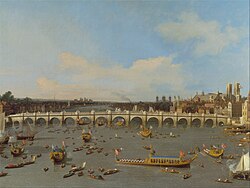
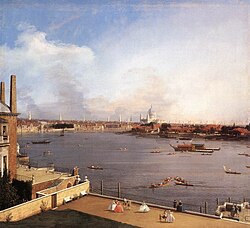
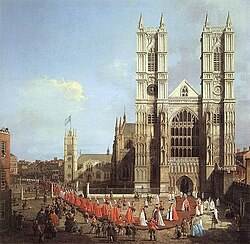
When the War of the Austrian Succession reduced the number of British tourists visiting Venice, Canaletto moved to London in 1746 to be closer to his market. He resided in Soho and produced numerous views of the city, including the newly constructed Westminster Bridge and various estates like Warwick Castle.
Challenges in London
Canaletto's time in England was not without controversy. Some critics, including George Vertue, suggested his style had become mechanical and repetitive, even questioning if the artist was an impostor. This may have been due to the work of his nephew, Bernardo Bellotto, who also used the name "Canaletto," or the proliferation of copies by unscrupulous dealers. Despite attempting to refute these claims publicly, his reputation in England never fully recovered before his return to Venice in 1755.
Summary of Canaletto's Legacy
| Category | Details |
|---|---|
| Primary Genres | Vedute (Cityscapes), Capricci (Imaginary views), Etching |
| Key Locations | Venice, Rome, London |
| Notable Students | Bernardo Bellotto, Francesco Guardi |
| Major Collections | The Royal Collection (UK), National Gallery of Art (Washington DC) |
| Auction Record | £31.9 million (including fees) for Venice, the Return of the Bucintoro on Ascension Day |
Frequently Asked Questions
What is a veduta?
A veduta is a highly detailed, large-scale painting of a cityscape or vista. Canaletto is considered one of the most important practitioners of this genre, specializing in the urban landscapes of Venice, Rome, and London.
Did Canaletto use a camera obscura to trace his paintings?
While it is confirmed that Canaletto owned a camera obscura, many modern experts believe he used the device for inspiration and compositional guidance rather than for photorealistic tracing.
Who was Joseph "Consul" Smith?
Joseph Smith was a British businessman, art collector, and the British Consul in Venice. He served as Canaletto's primary patron and agent, eventually selling a vast collection of the artist's work to King George III.
Why did Canaletto move to London?
He moved to London in 1746 because the War of the Austrian Succession had decreased the number of British tourists visiting Venice, which disrupted his primary market for paintings.
What is a capriccio in the context of Canaletto's work?
A capriccio is an architectural fantasy or imaginary view. In these works, Canaletto would combine real buildings and landmarks into a fictional composition for artistic effect.