Campylobacteriosis
Campylobacteriosis, commonly known as Campylobacter food poisoning or campylobacter enteritis, is a significant cause of bacterial gastroenteritis—an inflammation of the stomach and intestines. Caused primarily by the bacterium Campylobacter jejuni, this infection is one of the most frequent reasons for food-related gastrointestinal illness globally.
In the United States alone, an estimated 2 million cases occur annually, representing 5% to 7% of all gastroenteritis cases. In some regions, such as the United Kingdom in 2000, C. jejuni was linked to 77.3% of all laboratory-confirmed foodborne illnesses. While many people may unknowingly harbor the bacteria in their gut—up to 0.5% of the general population—most clinical cases are acute and self-limiting.
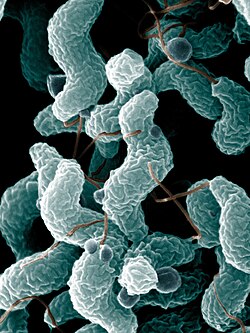
Key Facts
- Primary Cause: The bacterium Campylobacter jejuni.
- Main Sources: Animals farmed for meat, particularly poultry and cattle.
- Common Symptoms: Diarrhea (often bloody), abdominal pain, and fever.
- Typical Duration: 2 to 10 days.
- Serious Complications: Can include Guillain–Barré syndrome, sepsis, and toxic megacolon.
Symptoms and Progression
The onset of campylobacteriosis typically begins with a prodromal phase—the early period of symptoms before the main illness develops. This phase can last up to 24 hours and is characterized by fever, headache, and severe myalgia (muscle pain).
Following this initial phase, usually within 1 to 5 days, the primary gastrointestinal symptoms emerge. These include:
- Diarrhea: Patients may experience up to 10 watery or bloody bowel movements per day. This is classified as invasive or inflammatory diarrhea, also known as dysentery.
- Abdominal Distress: Severe cramps and abdominal pain.
- High Fever: Temperatures can reach as high as 40 °C (104 °F).
Causes and Transmission
The primary reservoir for Campylobacter is animals farmed for meat. Research indicates that the vast majority of cases are linked to livestock. A study in Lancashire, England, and Chicago, Illinois, found that 97% of sampled cases were caused by bacteria found in livestock, with 57% traced to chicken and 35% to cattle. Environmental and wild animal sources accounted for only 3% of cases.
Beyond food, the bacteria can be transmitted through contaminated water or direct contact with animals. For example, a 2017 multistate outbreak in the U.S. involving 55 cases across 12 states was linked to puppies sold through Petland stores.
Waterborne Outbreaks
While food is the most common vector, water contamination can lead to large-scale outbreaks. In 2016, New Zealand experienced its largest waterborne disease outbreak in Havelock North, where 5,200 people fell ill after heavy rains caused flooding that contaminated the local water supply. This event resulted in four suspected deaths and required an urgent boil-water notice.
Complications and Prognosis
For most healthy individuals, campylobacteriosis is self-limited, meaning it resolves on its own without specific medical intervention. However, some patients may develop severe complications, including:
- Guillain–Barré syndrome: A rare neurological disorder where the body's immune system attacks the nerves.
- Sepsis: A life-threatening systemic response to infection.
- Toxic megacolon: A severe widening of the colon.
- Dehydration: Resulting from severe diarrhea and fever.
Despite these risks, deaths resulting from campylobacteriosis are infrequent.
Treatment and Management
The primary approach to treating campylobacteriosis is supportive care, which focuses on managing symptoms and maintaining hydration. Antibiotics are not used for every case but are reserved for select, more severe instances.
| Feature | Details |
|---|---|
| Causative Agent | Campylobacter jejuni |
| Primary Transmission | Contaminated poultry, cattle, and water |
| Key Symptoms | Bloody diarrhea, fever, abdominal cramps |
| Duration | 2–10 days |
| Treatment | Supportive care; antibiotics for select cases |
| Prognosis | Usually self-limited |
Frequently Asked Questions
What is the most common source of Campylobacter infection?
Animals farmed for meat are the main source, with chicken and cattle being the most frequent contributors to human infections.
How long does the illness typically last?
In most people, the symptoms of campylobacteriosis last between 2 and 10 days.
Can you get Campylobacter from pets?
Yes. While livestock are the primary source, outbreaks have been linked to contact with puppies from pet stores.
Is antibiotic treatment always necessary?
No. The illness is usually self-limited, and treatment typically consists of supportive care. Antibiotics are only used in select cases.
What are the most serious complications of this infection?
The most serious complications include Guillain–Barré syndrome, sepsis, dehydration, and toxic megacolon.