Cake: A Comprehensive History of Ingredients, Techniques, and Traditions
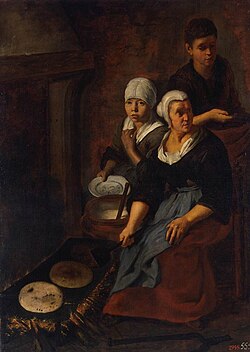
Cake is a beloved baker's confectionery created by combining flour with a liquid, a fat, or both, typically incorporating a leavening agent—a substance that causes the dough or batter to rise. While most cakes are baked in an oven, some are griddled or steamed. Historically, cakes began as sweetened modifications of bread, but they have evolved into a diverse range of desserts that share characteristics with pastries, meringues, custards, and pies.
From simple home-baked treats to elaborate ceremonial centerpieces, cakes serve as a universal symbol of celebration for weddings, birthdays, and anniversaries. Modern baking equipment has simplified the process, making it accessible to amateur cooks, whereas it once required intensive manual labor, such as the vigorous whisking of egg foams.
Key Facts
- Origin: The word "cake" comes from the Old Norse word kaka.
- Core Ingredients: Flour, sugar, eggs, fat (butter, oil, or shortening), and leavening agents (baking soda or powder).
- Distinction: Unlike bread, which uses dough, cake is typically made from a liquid batter.
- Variety: Cakes are categorized by mixing methods into batter, foam, chiffon, and flourless types.
- Safety: Raw cake batter should not be consumed due to potential pathogens like Salmonella and E. coli found in raw flour.
The Evolution of Cake
Ancient Origins
The earliest cakes were essentially breads enriched with sweet ingredients. In ancient Greece, the plakous (derived from the word for "flat") was made with flour, eggs, milk, nuts, and honey; the Greeks are also credited with using beer as a leavener. The Romans adapted this into the placenta, a sweet baked good often prepared on a pastry base.
Development in Europe and America
By the 14th century in England, cakes were distinguished from bread by their round, flat shape and the practice of turning them over during cooking. The Renaissance saw the emergence of sponge cakes, likely originating in Spain, which relied on beaten eggs for lift. In the United States, cakes became highly fashionable during the 1920s as more women entered the workforce and sought more efficient dessert options.
The Rise of the Cake Mix
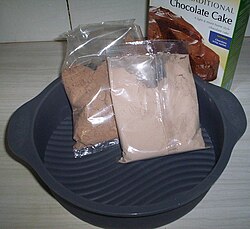
During the Great Depression, a surplus of molasses led to the patenting of the first "cake-in-a-box" mix to provide affordable, easy-to-make food. Following World War II, companies like General Mills marketed these mixes for convenience. However, when sales dipped in the 1950s, psychologist Ernest Dichter noted that the process had become too simple, removing the creative satisfaction for home bakers. This led to a shift in marketing that emphasized cake decorating, encouraging bakers to expend their creativity on frosting and ornamentation.
Types of Cakes and Mixing Techniques
The texture and structure of a cake are primarily determined by the fat content and the method used to incorporate air.
Batter Cakes
These are made from a liquid batter of creamed butter, sugar, eggs, and flour. Structure is achieved by beating butter and sugar to incorporate air. Examples include butter cake and pound cake, the latter traditionally consisting of equal parts butter, sugar, flour, and eggs.
Foam Cakes
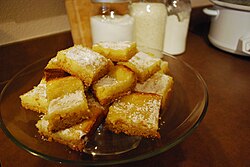
Foam cakes derive their volume from whipped eggs (meringue) folded gently with flour. They often use minimal fat to avoid interfering with the rise. Varieties include sponge cake, Génoise (which uses clarified butter), white cake (egg whites only), and angel food cake (no yolks or fat).
Chiffon and Flourless Cakes
Chiffon cakes combine both batter and foam methods, using oil instead of butter to ensure the cake remains moist when refrigerated. Flourless cakes omit wheat flour entirely, instead utilizing nut meals, semolina, corn, rice, or ingredients like chocolate and applesauce.
Cooking and Shaping
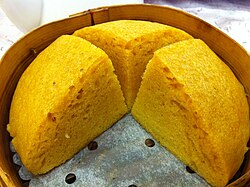
While baking is the standard, some cakes are fried (such as pancakes) or steamed. Successful baking requires precise temperature control; if the oven is too hot or too cold, or if the ratio of leavening is incorrect, the cake may "fall," resulting in a sunken or flattened center.
Common Cake Shapes
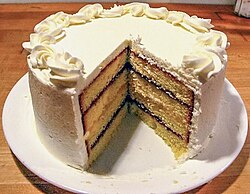
- Layer Cakes: Two or more stacked layers, often with filling.
- Sheet Cakes: Flat, rectangular cakes baked in sheet pans.
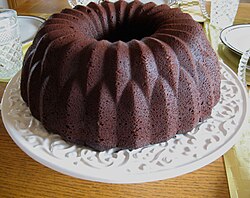
- Bundt Cakes: Baked in a distinctive ring-shaped pan.
- Miniatures: Cupcakes, cake balls, and cake pops.
- Specialty Shapes: Conical (Kransekake), tubular (spit cake), or rolled cakes.
The Art of Decoration
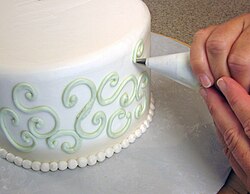
Decorating transforms a cake into a visual centerpiece. The most common covering is frosting or icing, typically made from powdered sugar, fat (butter, lard, or margarine), and flavorings like vanilla or cocoa.
Professional decorators use specialized tools such as piping bags, various tips (star, leaf, petal), and cake turntables. Advanced materials include royal icing, marzipan (almond paste), and fondant (sugar paste). For ceremonial cakes, such as wedding cakes, it is traditional to use rich fruit cakes covered in marzipan and finished with royal icing and wired sugar flowers.
Cake Summary Table
| Cake Type | Primary Leavening Source | Fat Source | Key Characteristic |
|---|---|---|---|
| Batter Cake | Chemical (Baking Powder/Soda) + Air | Butter/Shortening | Dense, rich texture |
| Foam Cake | Whipped Eggs (Air) | Minimal to None | Light, airy texture |
| Chiffon Cake | Whipped Eggs + Chemical | Oil | Moist, stable in fridge |
| Flourless Cake | Eggs/Dairy/Nut Meal | Butter/Chocolate | Dense, gluten-free options |
Cake Flour and Substitutions
In the United States, cake flour is a low-protein, bleached wheat flour with a high starch-to-gluten ratio, resulting in a lighter texture. This is often preferred for angel food cakes. In Europe, Australia, and New Zealand, bleached cake flour is banned; bakers instead use plain or self-raising flour. To substitute cake flour in the US, one can replace a small percentage of all-purpose flour with cornstarch.
Frequently Asked Questions
What is the difference between a cake and a bread?
While early cakes were essentially sweet breads, the modern distinction is that cakes are typically made from a liquid batter, whereas breads are made from a dough mixture.
Why do some cakes "fall" during baking?
A cake falls when it sinks or flattens, usually due to incorrect oven temperatures (too high or too low), underbaking, or an improper ratio of fat and leavening agents.
Is it safe to eat raw cake batter?
No. The CDC recommends against eating raw batter because raw flour can contain pathogens such as E. coli and Salmonella.
What is the purpose of using oil instead of butter in chiffon cakes?
Oil is used in chiffon cakes to prevent the cake from drying out when stored in a refrigerator, a common issue with butter-based cakes.
What is the difference between frosting and fondant?
Frosting is typically a creamy mixture of sugar and fat used for flavor and texture, while fondant is a pliable sugar paste used to create a smooth, sculpted surface on a cake.