Buyeo: The Ancient Kingdom and Ancestral Roots of Korean History
Centered in northern Manchuria in what is now modern-day northeast China, Buyeo was a significant ancient kingdom that played a foundational role in the development of Northeast Asian civilizations. Emerging around the 2nd century BCE, Buyeo maintained deep ethnic and cultural ties to the Yemaek people, who are widely regarded as the ancestors of modern Koreans. As a major predecessor to several later states, the legacy of Buyeo continues to resonate through the historical lineages of the Korean peninsula.
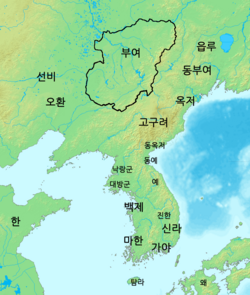
Key Facts
- Period: c. 2nd century BCE – 494 CE
- Location: Northern Manchuria (modern-day Northeast China)
- Ethnic Group: Yemaek
- Successor States: Eastern Buyeo, Galsa Buyeo, Goguryeo, and Paekche
- Government Type: Monarchy
- Religion: Shamanism
Founding Legends and Mythical Origins
The origins of Buyeo are steeped in legend, most notably through the figure of Hae Mo-su, often referred to as the "Dongmyeong of Buyeo" or the "Holy King of Buyeo." According to traditional accounts, Hae Mo-su was the father of several influential historical figures. One of his most famous descendants was Dongmyeong, the founder of the Goguryeo kingdom.
Historical texts offer varying perspectives on these genealogies. The Samguk yusa suggests that Dongmyeong and Hae Buru (the founder of Eastern Buyeo) were half-brothers with different fathers. In contrast, the Samguk sagi presents a different narrative involving Lady Yuhwa and a miraculous birth from an egg. Because these accounts were written by different authors with varying intentions, historians generally treat these founding stories as symbolic legends rather than literal historical facts.
The Rise and Geopolitical Relations of Buyeo
While the exact founding date remains uncertain, Buyeo likely emerged from Bronze Age polities in the region, potentially influenced by the introduction of iron technology via trade with the state of Yan. The kingdom's development was closely tied to its interactions with various Chinese dynasties.
Relations with Chinese Dynasties
During the Western Han period, Buyeo established ties with the Xuantu Commandery. Over time, it became a nominal tributary state and a practical ally of the Eastern Han. This alliance served mutual interests: the Han dynasty gained a buffer against the Xianbei and Goguryeo, while Buyeo elites gained legitimacy and access to prestigious trade goods.
However, the kingdom's stability was often challenged by regional shifts. In the 3rd century, the Chinese warlord Gongsun Du supported Buyeo to counter northern threats. Later, in 285 CE, invasions by the Murong tribe of the Xianbei forced the Buyeo court to relocate. Throughout the 4th century, continued pressure from the Murong and attacks from Goguryeo led to a steady decline in the kingdom's power.
: Buyeo locationCulture, Law, and Social Structure
The social and political structure of Buyeo was highly organized. The aristocracy was composed of rulers known as ka (加), who were distinguished by animal names such as the horse ka, cow ka, pig ka, and dog ka. The term "ka" is believed to share a similar origin with the title "khan."
Daily Life and Traditions
Historical records from the 3rd century describe the Buyeo as an agricultural people. Notably, they practiced a tradition of wearing minbok—white clothing made of linen, including wide-sleeved robes and trousers. This reverence for white clothing is thought to have been passed down to their descendants.
Legal System
Buyeo maintained a strict legal code. One notable law required a thief to reimburse the victim twelve times the value of the original stolen item, reflecting an "eye to eye" approach to justice and restitution.
The Decline and Historical Legacy
The end of Buyeo came in stages. By the mid-5th century, the kingdom had been significantly weakened by the Malgal and Somna peoples, and parts of its territory were absorbed by Paekche. In 494 CE, following attacks by the rising Wuji (Mohe) people, the Buyeo court surrendered to Goguryeo, marking the end of the kingdom as a sovereign entity.
Despite its demise, Buyeo's influence was profound. Both Goguryeo and Paekche viewed themselves as the rightful successors to Buyeo. In fact, the ruling class of Paekche even adopted the "Buyeo clan" name. This lineage of descent—from Buyeo to Goguryeo and Paekche—is a central pillar in the historical understanding of the formation of the Korean nationality.
Summary of Buyeo History
| Feature | Details |
|---|---|
| Primary Era | c. 2nd Century BCE – 494 CE |
| Core Ethnicity | Yemaek |
| Key Leaders | Hae Mo-su, Buru, Jan |
| Social Titles | Ka (distinguished by animal names) |
| Cultural Marker | Preference for white clothing (minbok) |
| Successors | Goguryeo, Paekche, Eastern Buyeo |
Frequently Asked Questions
What were the successor states of Buyeo?
Buyeo is considered a major predecessor to several kingdoms, including Eastern Buyeo, Galsa Buyeo, Goguryeo, and Paekche.
Who were the Yemaek people?
The Yemaek were the ethnic group inhabiting Buyeo and are considered the ancestors of the modern Korean people.
What was the significance of the "ka" system?
The "ka" system was a method of distinguishing aristocratic rulers through animal names, such as the horse ka or dog ka, similar to the title "khan."
How did Buyeo's legal system function?
Buyeo utilized a strict system of restitution; for example, a thief was required to pay twelve times the value of the stolen goods.
Why is Buyeo important to Korean history?
Buyeo is viewed as a foundational state that provided the cultural, ethnic, and political lineage for the Three Kingdoms of Korea, specifically Goguryeo and Paekche.