Bushshrikes: The Colorful Songbirds of Sub-Saharan Africa
Bushshrikes are small to medium-sized passerine (perching) birds known for their striking appearances and complex vocalizations. Endemic to sub-Saharan Africa, these birds are primarily found in scrublands, open woodlands, and occasionally in tropical forests or marshes. While they share a physical resemblance to true shrikes, they belong to their own distinct family, Malaconotidae—a name derived from the fluffy feathers found on their backs and rumps.
These birds are skilled hunters, often seen perched on bushes while scanning for insects and other small prey. While some species are secretive, others are known for their flamboyant displays, such as the puffbacks, which can expand their rump feathers to appear almost ball-like.
Key Facts
- Distribution: Found exclusively in sub-Saharan Africa (absent from Madagascar).
- Diet: Primarily insectivorous, though they may eat wild fruits, berries, and small rodents.
- Family: Malaconotidae, part of the superfamily Malaconotoidea.
- Behavior: Known for singing complex duets to mark territory or attract mates.
- Nesting: They build small, neat cup nests in trees, typically laying 2 to 4 eggs.
Taxonomy and Evolution
The classification of bushshrikes has evolved significantly. Originally grouped with true shrikes (Laniidae) due to their hooked bills, they were later separated into the family Malaconotidae. Scientists now believe the similarity between bushshrikes and true shrikes is a result of convergent evolution, where unrelated species evolve similar traits independently to adapt to similar environments.
Modern molecular and behavioral analysis places bushshrikes within the superfamily Malaconotoidea. This group includes other shrike-like birds such as helmetshrikes, ioras, vangas, and the Australian butcherbirds and magpies. Research suggests that bushshrikes are more closely related to vangas and the family Platysteiridae than to the true shrikes of the Laniidae family.
Genus Relationships
Within the family, the genus Laniarius (boubous and gonoleks) is well-supported as a monophyletic group, likely closely related to Telophorus and Rhodophoneus. Other genera, such as Dryoscopus (puffbacks) and Tchagra (tchagras), show close evolutionary ties, while Nilaus remains morphologically similar to helmetshrikes despite DNA evidence placing it firmly within the bushshrike family.
Physical Characteristics and Habitat
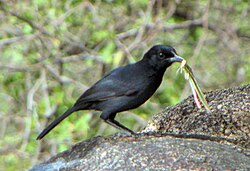
Bushshrikes are characterized by short, rounded wings and strong legs and feet. Their plumage varies widely: many are black, grey, or brown, while others exhibit vibrant yellows and greens. Some species are even distinguished by bright red throat patches or undersides.
Their preferred habitats include forest margins and savannah bush patches. Interestingly, some species have adapted to human-altered landscapes, such as coffee plantations, or survive in sacred groves where riparian vegetation is protected from farming.
Behavior and Communication
Bushshrikes are primarily insectivores that catch prey by gleaning from tree foliage. They are social foragers and frequently join mixed bird parties—loose groups of various passerine species searching for food together.
One of the most fascinating aspects of bushshrike behavior is their communication. They produce harsh or guttural calls, often performed as duets between males and females. Both sexes possess similarly sized repertoires and can learn songs of equal complexity.
Research on the slate-colored boubou (Laniarius funebris) has revealed that mating songs are triggered more by behavioral cues between the pair than by the male's own hormone levels. Specifically, a male's likelihood of singing is correlated with the female's estradiol levels rather than his own testosterone.
Summary of Bushshrike Classification
| Category | Details |
|---|---|
| Scientific Family | Malaconotidae |
| Superfamily | Malaconotoidea |
| Geographic Range | Sub-Saharan Africa |
| Primary Diet | Insects (Insectivorous) |
| Key Genera | Laniarius, Dryoscopus, Tchagra, Malaconotus, Chlorophoneus, Telophorus, Nilaus |
Frequently Asked Questions
Are bushshrikes the same as true shrikes?
No. While they look similar and both have hooked bills, bushshrikes (Malaconotidae) are a distinct family. Their resemblance to true shrikes (Laniidae) is attributed to convergent evolution rather than a close ancestral relationship.
Where can bushshrikes be found?
They are endemic to sub-Saharan Africa, inhabiting scrublands, open woodlands, forest margins, and occasionally tropical forests or marshes. They are notably absent from Madagascar.
What do bushshrikes eat?
Their diet consists mainly of large insects, which they glean from foliage. They occasionally supplement this with wild berries, fruits, and small rodents.
What is unique about their singing?
Bushshrikes are known for their guttural calls and complex duets. Unlike many bird species, both the male and female in a pair have similar song repertoires and capabilities.
How do puffbacks get their name?
Male puffbacks (genus Dryoscopus) are named for their ability to puff out the loose feathers on their lower back and rump, making them appear almost spherical during displays.