Bus Lanes: Enhancing Urban Transit Efficiency and Reliability
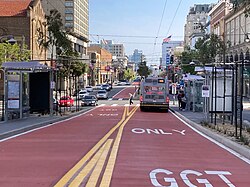
In the struggle against urban traffic congestion, bus lanes serve as a critical tool for improving the speed and reliability of public transportation. By restricting specific lanes to buses, cities can ensure that high-capacity vehicles are not held up by general automotive traffic, thereby making public transit a more attractive and efficient alternative to private car ownership.
While often used interchangeably, there are distinct differences between various transit priority measures. A bus lane is a restricted lane within a larger roadway. A busway is a roadway completely dedicated to buses, and a bus gate is a short, restricted segment often used as a shortcut for public transport. These elements are foundational to Quality Bus Corridors (QBC) and Bus Rapid Transit (BRT) networks.
Key Facts
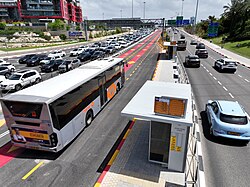
- Purpose: To increase bus travel speeds and reliability by reducing delays caused by other vehicles.
- Types: Includes with-flow lanes, contraflow lanes (traveling opposite to general traffic), and dedicated busways.
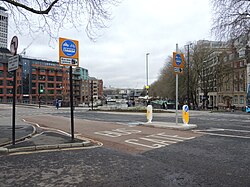
- Bus Gates: Short restricted sections that allow buses to bypass traffic or take shortcuts.
- Impact: Proper enforcement can increase passenger throughput by up to 12% and reduce journey times by up to 19%.
- Global Use: Implemented in major hubs worldwide, from London and Seoul to Bogotá and São Paulo.
The Evolution of Bus Priority
The history of dedicated transit lanes is marked by gradual experimentation across the globe. While some early efforts in Chicago in 1939 used reversible lanes to facilitate bus operations, the first dedicated busway in the United States was the East Side Trolley Tunnel in Providence, Rhode Island, converted in 1948. Nashville became the first U.S. city to implement on-street bus lanes in 1956.
In Europe, the concept gained traction in the early 1960s. By 1963, cities like Hamburg, Milan, and Rome had established bus lanes, with Rome utilizing contraflow systems. Germany played a pivotal role in standardizing these systems; after closing its tram system in Hamburg in 1963, the city converted tracks for bus use, leading to the official sanctioning of bus lanes in the German highway code by 1970.
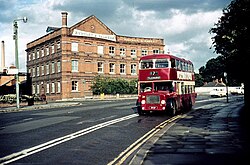
The United Kingdom also pioneered various models. London introduced its first contraflow bus lane in 1962 and its first bus gate in 1964. By October 1971, Runcorn opened the world's first Bus Rapid Transitway, featuring grade separation and signal priority. In the U.S., the El Monte Busway, constructed in 1974, became a landmark dedicated busway.
Design and Infrastructure
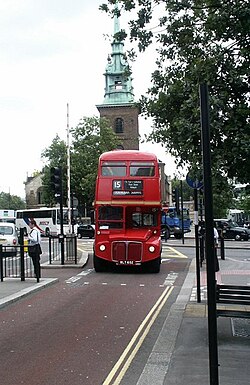
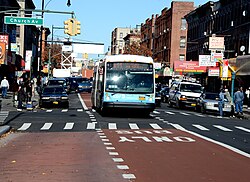
Bus lanes are designed flexibly to meet the specific needs of a city's geography. They may be located at the curb or in the center of the street. To prevent unauthorized vehicle entry, some lanes are physically separated using curbs, bollards, or other raised elements.
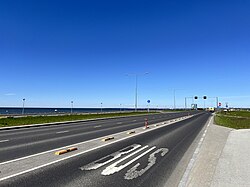
Bus Gates and Access Control
A bus gate is a specialized short-distance restriction. Over time, the methods used to enforce these gates have evolved from manual to automated systems:
- Pivoting Poles: Red-and-white poles used since the mid-1970s.
- Rising Bollards: Automated posts that replaced pivoting poles in the mid-1990s.
- Bus Plugs: Traffic lights triggered exclusively by buses.
- ANPR Technology: Automatic Number Plate Recognition cameras used for civil enforcement.
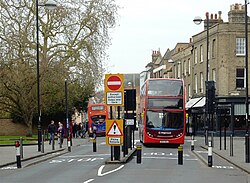
Operational Strategies and Enforcement
To maximize efficiency, many cities employ transit signal priority, where dedicated traffic signals allow buses to move through intersections faster. Some cities implement peak-only lanes, which are restricted only during rush hour and revert to general-purpose or parking lanes at other times.
In some jurisdictions, electric or hybrid vehicles were granted access to bus lanes to encourage green energy. However, this can lead to unintended congestion. For example, Oslo removed this exception in 2017 because the high volume of electric cars began slowing down the buses.
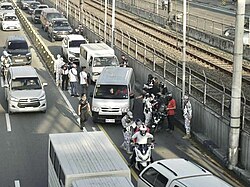
Enforcement is critical to the success of these lanes. Data from Brisbane demonstrates that when noncompliance rates were high (approaching 90%), efficiency suffered. Following enhanced enforcement, passenger throughput increased by up to 12%, and average journey times dropped by as much as 19%.
Global Network Comparison
Bus lane networks vary significantly by city size and transit demand. Some cities prioritize massive fleet numbers, while others focus on extensive lane mileage.
| City | Country | Buses | Bus Lanes (km) | Buses per 1 km |
|---|---|---|---|---|
| São Paulo | Brazil | 14,900 | 155 | 96 |
| Beijing | China | 26,000 | 294 | 88 |
| Hong Kong | China | 19,768 | 22 | 899 |
| London | England | 8,600 | 304 | 28 |
| Seoul | South Korea | 8,910 | 282 | 32 |
| New York | United States | 5,777 | 222.7 | 26 |
One of the busiest corridors in the U.S. is the Lincoln Tunnel XBL in New Jersey, which handles approximately 700 buses per hour during morning peaks—roughly one bus every 5.1 seconds.
Challenges and Criticisms
Despite their benefits, bus lanes are often met with resistance. Critics argue that they remove valuable space from other motorists or require road widening. In some cases, this expansion necessitates the use of eminent domain, where the government acquires private property for public use, leading to friction with local residents and business owners.
Frequently Asked Questions
What is the difference between a bus lane and a busway?
A bus lane is a restricted lane on a road that still allows general traffic in other lanes. A busway is a roadway entirely dedicated to buses, completely separated from general automotive traffic.
What is a contraflow bus lane?
A contraflow bus lane allows buses to travel in the opposite direction of the general flow of traffic on a one-way street, reducing route complexity and travel time.
How do bus gates work?
Bus gates are short sections of road restricted to buses (and sometimes other authorized vehicles). They are enforced via physical barriers like bollards or electronic systems like ANPR cameras to prevent unauthorized cars from using them as shortcuts.
Do bus lanes actually improve travel times?
Yes. When properly enforced, bus lanes reduce delays caused by congestion. Evidence from Brisbane shows that enhanced enforcement can reduce average bus journey times by up to 19%.
Can electric cars use bus lanes?
This depends on the city. While some cities previously allowed electric vehicles to use bus lanes to promote green transit, others, such as Oslo, have revoked this privilege to prevent the lanes from becoming congested and slowing down buses.