Bureau of Immigration Philippines
The Bureau of Immigration (Filipino: Kawanihan ng Pandarayuhan) serves as the primary regulatory and control body for immigration in the Philippines. Operating under the administrative supervision of the Department of Justice (DOJ), the Bureau is tasked with managing the entry, stay, and departure of foreign nationals, ensuring that all individuals within the country's borders comply with existing laws.
Guided by the motto "Patriotism, Integrity, Professionalism," the agency maintains a significant workforce of 2,257 employees as of 2024, supported by an annual budget of ₱1.61 billion (2023).
Key Facts
- Established: January 22, 1940, via the Philippine Immigration Act.
- Parent Agency: Department of Justice (DOJ).
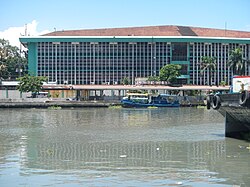
- Headquarters: Magallanes Drive, Intramuros, Manila.
- Current Commissioner: Joel Anthony Viado.
- Primary Role: Enforcement of immigration and foreign national registration laws.
Historical Evolution
The origins of the Bureau date back to 1899 during the American regime, when immigration functions existed as a division of the Bureau of Customs. At the time, the government prioritized the entry of goods and the generation of customs duties over the monitoring of foreign nationals.
In 1937, these functions were transferred to the Bureau of Labor to better manage the arrival of Chinese nationals who operated trade houses and restaurants. However, a pivotal shift occurred on January 22, 1940, when the Second National Assembly of the Philippine Commonwealth enacted the Philippine Immigration Act of 1940 (Commonwealth Act No. 613), officially creating the Bureau of Immigration.
War and Reorganization
The agency's location shifted several times due to geopolitical instability. During the Pacific War in December 1941, the Bureau moved to Bilibid Prison on Azcarraga Street. Following the war, it transitioned through various locations near the South Harbor and the Customs Bureau before being placed under the Department of Labor in 1945. By 1948, it returned to the jurisdiction of the Department of Justice, where it remains today.
The Commission Era and Modern Identity
Under the Integrated Reorganization Plan of 1972, the agency was renamed the Commission on Immigration and Deportation. This change transformed the office into a collegial body with both administrative and quasi-judicial functions, absorbing the duties of the former Deportation Board.
The agency regained its current name, the Bureau of Immigration, on July 25, 1987, through Executive Order No. 292 (the Administrative Code of 1987). Despite the name change, it retained the powers of the commission, and its leader continues to hold the title of Commissioner.
Core Functions and Responsibilities
The Bureau acts as the primary enforcement arm of the President and the DOJ. Its general mandate is to ensure that foreigners comply with Philippine laws and to protect national security, public safety, and public health by monitoring potential threats.
Specific Administrative and Quasi-Judicial Powers
The Board of Commissioners exercises authority over several critical areas:
- Border Control: Regulating the arrival, sojourn, and departure of foreign nationals and monitoring the movement of Filipino citizens.
- Visa and Permit Issuance: Managing non-immigrant, immigrant, and special non-immigrant visas, as well as Special Work Permits (SWP), Special Study Permits (SSP), and re-entry permits.
- Legal Enforcement: Investigating and executing orders for the exclusion, deportation, and repatriation of foreign nationals.
- Security Lists: Implementing Hold Departure Orders, Blacklists, Watchlists, and Alert List Orders.
- Facility Management: Operating the Bureau of Immigration Bicutan Detention Center and other holding facilities.
- Accreditation: Certifying law firms, travel agencies, and educational institutions authorized to enroll foreign students.
Recent Initiatives
In January 2024, the Bureau launched the #ShieldKids campaign, an interagency effort to prevent sex offenders from endangering children. A notable success of this initiative was the April 23, 2026, arrest of American fugitive Tom Talmadge in Cavite, who was wanted for a 1989 child abduction and rape case in Florida, USA.
Agency Governance
| Role | Official |
|---|---|
| Commissioner | Joel Anthony Viado |
| Deputy Commissioner | Joel Alejandro Nacnac |
| Deputy Commissioner | Aldwin Alegre |
| Deputy Commissioner | Theodore Pascual |
| Spokesperson | Dana Krizia Sandoval |
| Responsible Minister | Fredderick A. Vida (OIC, Secretary of DOJ) |
Frequently Asked Questions
What is the primary purpose of the Bureau of Immigration?
The Bureau is the regulatory body responsible for enforcing immigration laws in the Philippines, managing the entry and exit of foreign nationals, and ensuring that foreigners within the country comply with legal requirements.
Who oversees the Bureau of Immigration?
The Bureau operates under the administrative supervision of the Department of Justice (DOJ) and the President of the Philippines.
What is the difference between the Bureau and the former Commission on Immigration and Deportation?
Between 1972 and 1987, the agency was known as the Commission on Immigration and Deportation and functioned as a collegial body. While it was renamed back to the Bureau of Immigration in 1987, it retained the administrative and quasi-judicial powers it held during its time as a commission.
What types of permits does the Bureau issue?
The Bureau issues various documents, including immigrant and non-immigrant visas, Special Work Permits (SWP), Provisional Permits to Work (PPW), and Special Study Permits (SSP).
What is the #ShieldKids campaign?
Launched in January 2024, #ShieldKids is an interagency cooperation campaign designed to identify and arrest foreign sex offenders to prevent them from endangering children within the Philippines.