Buddhist Cave Temples of India
Buddhist cave temples are a unique underground evolution of the traditional monastery and temple complex. Their origins trace back to the Śramana Movement (8th to 7th century BC) and the ascetic traditions of the Upanishads, where practitioners sought solitude for meditation. Even Siddhartha Gautama, before attaining enlightenment, is said to have retreated to caves, such as the Dungeshwari Cave near Bodh Gaya. Later, as the Buddha, he utilized caves near Rajagriha for meditation, a practice documented in the 1st-century BC Pali Canon.
For early members of the Buddhist order, natural caves (known as kandara) provided an ideal environment, shielding them from sensory stimuli. These sites were more durable than the temporary bamboo and mat rain huts used during the monsoon season. Tradition also holds that the First Buddhist Council took place in a hall outside the Sattapanni cave on Mount Vebhara.
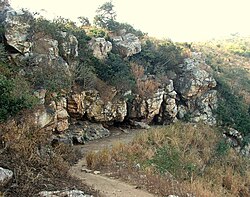
The Era of Emperor Ashoka and Early Construction
While natural caves were used early on, the construction of artificial rock-cut temples began during the reign of Maurya Emperor Ashoka in the 3rd century BC. Ashoka initially donated elementary rock-cut facilities to the Ajivika community, such as the Lomas Rishi cave. Buddhist practitioners later expanded these concepts into elaborate monastic centers featuring rich relief decorations.
Supported by wealthy laypeople, this style of Indian rock architecture flourished for a millennium, spreading along major trade routes. While other ancient civilizations like the Egyptians and Hittites practiced rock architecture, no clear link has been established between those Western styles and the Indian tradition.
Socio-Economic Context of Origin
The proliferation of these complexes in western India was driven by the growing prosperity of the artisan classes, fueled by increased trade with the Roman Empire starting in the 1st century AD. Buddhism was particularly attractive to the shudra (lower castes) because it devalued caste membership (varnas), rejected expensive Vedic rituals, and viewed lay followers as valid aspirants to salvation.
Unlike Hinduism, Buddhism relied heavily on urban culture. Merchant guilds funded the construction of monasteries, which in turn provided loans to local merchants. Contributing to these temples was considered a spiritually meritorious act (puṇya). This competition between guilds led to a golden age of rock art and sculpture, particularly under the Gupta dynasty (320 to 650 AD).
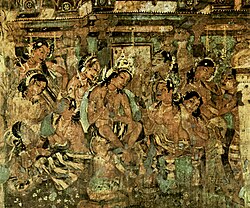
Monastic Daily Life
Monasteries were provided to religious practitioners on permanent loan and supported by local villagers who provided food, medicine, and clothing. A monk's day was strictly structured: waking before sunrise to songs or verses, cleaning the monastery, offering flowers, begging for food, meditating, studying texts, and attending doctrinal presentations.
Building Structure and Technology
Although called "temples," early Buddhist rock buildings were primarily monastic complexes rather than dwellings for deities. They generally fall into two categories: those housing sacred objects and those serving monastic life.
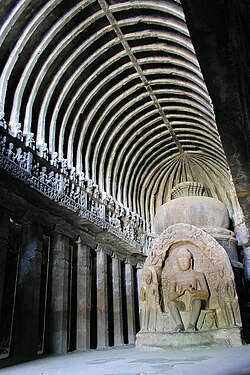
The Chaitya Hall (Prayer Hall)
The Chaitya Hall is a basilica-like prayer hall designed for the ritual circumambulation of a stupa (a bell-shaped reliquary casket). These halls typically feature a central nave with a barrel-vaulted ceiling and two side naves separated by columns. A horseshoe-shaped window above the entrance originally worked with a wooden facade to create atmospheric lighting around the stupa.
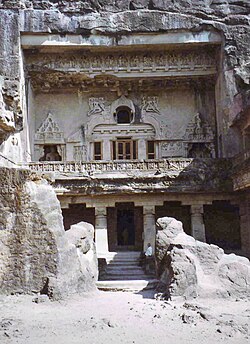
The Vihara (Monastery)
The Vihara served as the residential and meditation area. These complexes consisted of a central pillared hall (maṇḍapa) or courtyard surrounded by narrow living cells (bhikṣu-gṛha) designed for two people. They also included practical facilities like cisterns and magazines.
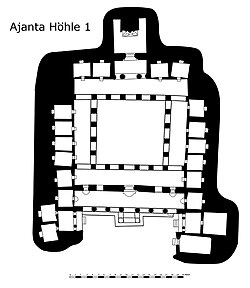
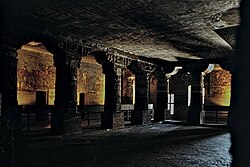
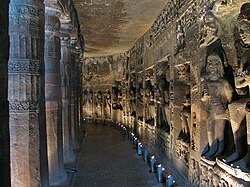
Later Mahayana Buddhist monasteries (5th to 8th centuries CE) introduced cult image chapels and large-scale murals depicting the Buddha's previous existences.
Construction Techniques
Stonemasons used only pickaxes, hammers, and chisels. They worked from the top down: first cutting the facade vertically, then excavating the ceiling and the deepest parts of the cave. This method eliminated the need for scaffolding, as workers stood on the rock they had not yet removed to carve the levels below.
Evolution into Monumental Schools
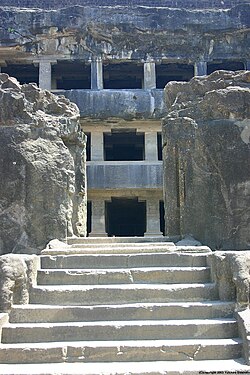
As the Vedic-Brahman religion grew stronger, Buddhist caves evolved into monastic schools. This led to the creation of the Dharmashala (teaching hall), characterized by long rows of stone benches. In Ellora's Tin Thal (Cave 12), for example, up to 30 students could sit and listen to a teacher's interpretations.
Distribution and Major Sites in India
India has approximately 1,200 known temple caves across Buddhist, Hindu, and Jain traditions. About 1,000 of these are located in Maharashtra, with others in Andhra Pradesh, Gujarat, Rajasthan, and Madhya Pradesh.
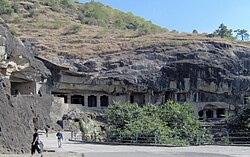
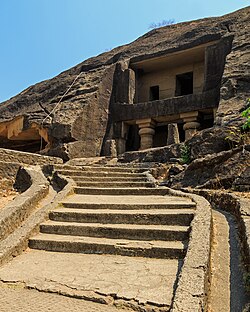
Several sites are recognized as UNESCO World Heritage sites, including Ajanta (29 Buddhist caves), Ellora (34 caves of Buddhist, Hindu, and Jain faiths), and Elephanta. Other notable sites include the monolithic temples of Mamallapuram.
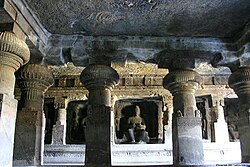
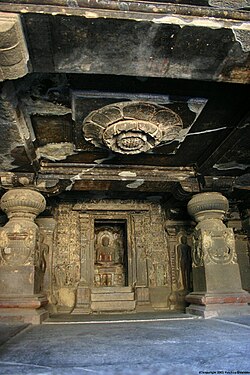
| State | Site/Caves | Period | Key Features |
|---|---|---|---|
| Maharashtra | Ajanta | 2nd c. BC - 7th c. AD | 29 caves, famous murals |
| Maharashtra | Ellora | 6th - 12th c. CE | 34 caves, multi-religious |
| Maharashtra | Kanheri | 1st c. BC - 9th c. CE | Over 100 caves |
| Bihar | Barabar | 2nd c. BC | Among the oldest rock-cut caves |
| Madhya Pradesh | Bagh | 5th - 7th c. CE | 9 caves, extensive paintings |
| Andhra Pradesh | Guntupalli | 2nd c. BC | Early Buddhist site |
Key Facts
- Origins: Rooted in the ascetic Śramana Movement and the meditation practices of Siddhartha Gautama.
- Ashoka's Influence: Emperor Ashoka initiated artificial rock-cut construction in the 3rd century BC.
- Two Main Types: Chaitya (prayer halls with stupas) and Vihara (monastic living quarters).
- Construction: Carved from the top down using only hammers, chisels, and pickaxes.
- Social Driver: Supported by urban merchant guilds and attractive to lower castes due to the rejection of the caste system.
- Concentration: The majority of India's 1,200 temple caves are located in Maharashtra.
Frequently Asked Questions
What is the difference between a Chaitya and a Vihara?
A Chaitya is a prayer hall designed for worship and the ritual circumambulation of a stupa, while a Vihara is a residential monastery containing living cells for monks and common areas for meditation.
How were these caves constructed without scaffolding?
Stonemasons used a top-down excavation method. They first carved the facade and ceiling, then worked their way downward, using the remaining rock floor as their platform.
Why did Buddhist monasteries attract the lower castes?
Buddhism offered a path to salvation that devalued caste membership and rejected the expensive, complex Vedic sacrificial rituals required by the Brahmanical society of the time.
What is a Dharmashala in the context of cave temples?
A Dharmashala is a large teaching or preaching hall, often featuring stone benches, where Buddhist teachers could provide doctrinal interpretations to groups of students.
Which Indian state has the highest concentration of cave temples?
Maharashtra has the highest concentration, housing approximately 1,000 of the 1,200 known temple caves in India.