British Expedition to Tibet: The Younghusband Mission and the Great Game
Between December 1903 and September 1904, the British Indian Armed Forces conducted a temporary invasion of the southern Tibetan Plateau. Known as the Younghusband expedition, this military campaign was a manifestation of the "Great Game"—the strategic rivalry between the British Empire and the Russian Empire for influence in Central Asia.
While the official mission of the Tibet Frontier Commission was to resolve border disputes between Tibet and Sikkim and establish diplomatic ties, the operation was driven by deeper geopolitical anxieties. At the time, Tibet was ruled by the 13th Dalai Lama under the Ganden Phodrang government, existing as a state nominally under the suzerainty (overlordship) of the Chinese Qing dynasty.
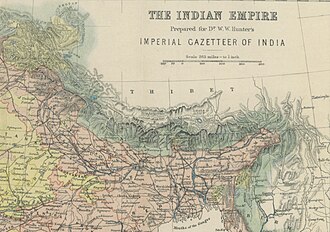
Key Facts
- Duration: December 1903 – September 1904.
- Primary Objective: To establish diplomatic relations and secure the border against Russian influence.
- Key Figures: Col. Francis Younghusband (British Commissioner) and the 13th Dalai Lama.
- Outcome: British-Indian victory resulting in the Convention of Lhasa.
- Casualties: Approximately 613 British/Indian deaths (combat and non-combat) versus 2,000–3,000 Tibetan deaths.
The Geopolitical Spark: Russia and the Great Game
The British colonial government feared that Tibet had entered a secret agreement with Russia. These suspicions were fueled by the activities of Agvan Dorzhiev, a Siberian-born Mongolian Buddhist lama and tutor to the 13th Dalai Lama. Dorzhiev acted as a liaison between the Dalai Lama and the Tsar of Russia, leading to discussions about a Russian consulate in Tibet and the delivery of Russian arms and ammunition to the Tibetan government.
For the British Raj, Russian influence in Tibet represented a direct threat to the security of British India, potentially bypassing the buffer states that separated the two empires.
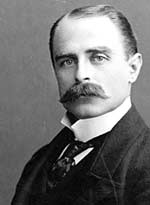
The Advance and the Tibet Frontier Commission
In August 1903, Colonel Francis Younghusband and Lieutenant Colonel Herbert Brander began attempting to provoke a confrontation at Khampa Dzong. The expedition officially pressed into Tibetan territory in December 1903, following a minor incident involving the herding of Nepalese yaks across the border, which the British characterized as "Tibetan hostility."
Despite initial claims that they were not at war, the British force—consisting of 3,000 soldiers and 7,000 support troops—advanced toward Lhasa. The military wing was led by Brigadier General James Ronald Leslie Macdonald, who trained his troops in the border country before pushing forward in March 1904.
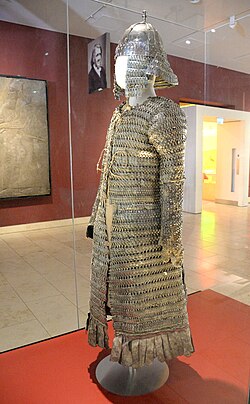
The Massacre of Chumik Shenko
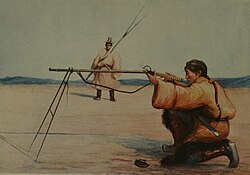
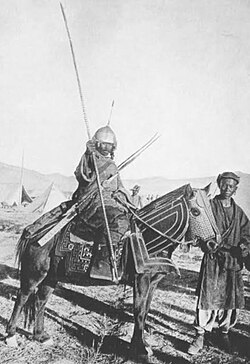
The first major clash occurred on March 31, 1904, at Chumik Shenko. A Tibetan force of 3,000, armed with antiquated matchlock muskets and protected by a rock wall and sangars (stone breastworks), blocked the road. The British refused to halt, and the resulting engagement left between 600 and 700 Tibetans dead. British casualties were minimal, with only 12 wounded.
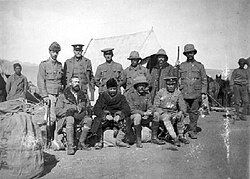
High-Altitude Warfare at Karo La
Following the initial clash, Lieutenant Colonel Brander launched an attack on Tibetan forces at Karo La on May 5–6, 1904. This engagement is noted as possibly the highest altitude action in military history, with Gurkha riflemen and Sikh Pioneers fighting at altitudes exceeding 5,700 meters.
The Fall of Gyantse and Entry into Lhasa
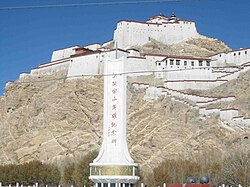
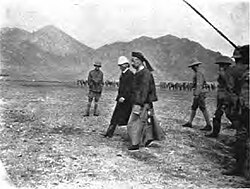
The British force continued its push, eventually storming the Gyantse Dzong (fortress) before arriving in Lhasa on August 3, 1904. Upon their arrival, they discovered that the 13th Dalai Lama had fled to Urga in Outer Mongolia.
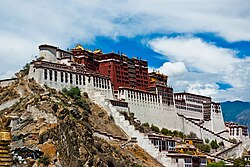
With the Dalai Lama absent, Younghusband pressured the Tibetan regent, Ganden Tri Rinpoche, and the Tsongdu (National Assembly) to sign a treaty. This agreement, signed at the Potala Palace on September 7, 1904, became known as the Convention of Lhasa.
The Convention of Lhasa and Its Aftermath
The treaty was heavily weighted in favor of British interests. The primary terms included:
- Tibet was prohibited from having relations with any other foreign powers.
- A massive indemnity of 7.5 million rupees was imposed on Tibet.
- The British established a trade agent at Gyantse with the right to visit Lhasa.
- The British occupied the Chumbi Valley as security until the indemnity was paid.
| Category | British-Indian Forces | Tibetan Forces |
|---|---|---|
| Personnel | 3,000 soldiers; 7,000 support | Several thousand conscripts |
| Key Leaders | Francis Younghusband, James Macdonald | 13th Dalai Lama, Dapon Tailing |
| Casualties | 202 KIA; 411 non-combat deaths | 2,000–3,000 killed |
| Outcome | Victory; Convention of Lhasa | Defeat; payment of indemnity |
Despite the military success, the expedition was controversial in London. Many viewed the war as unnecessary and the massacre of unarmed men at Chumik Shenko as a moral failure. In the long term, the mission's impact was eclipsed by the 1910 Qing military expedition and the subsequent 1950–1951 Chinese invasion of Tibet.
Frequently Asked Questions
Why did Britain invade Tibet in 1903?
The primary motivation was the "Great Game"—the fear that Russia was establishing a secret alliance with the 13th Dalai Lama to gain a strategic foothold near the borders of British India.
What was the significance of the Convention of Lhasa?
The convention forced Tibet to cease relations with other foreign powers, imposed a heavy financial indemnity, and allowed Britain to maintain a trade agent in the region and occupy the Chumbi Valley.
Who was Colonel Francis Younghusband?
He was the British Commissioner who led the expedition. While he achieved his goal of securing the border and removing Russian influence, his methods were criticized by some in Britain as overly aggressive.
How did the Tibetan forces fare in battle?
The Tibetan forces were severely outmatched by the modern weaponry and experience of the British-Indian army. They suffered thousands of casualties, particularly at Chumik Shenko, where their traditional amulets failed to provide the magical protection promised by their lamas.
What happened to Tibet after the expedition?
Tibet experienced a period of de facto independence from 1912 to 1951 following the collapse of the Qing dynasty, before eventually being incorporated into the People's Republic of China.