British Armed Forces
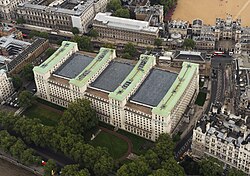
The British Armed Forces constitute the primary military organization of the United Kingdom, tasked with national defense and international security operations. Managed by the Ministry of Defence (MoD), the forces are composed of three primary service branches: the Royal Navy, the British Army, and the Royal Air Force. These branches work in coordination to provide a comprehensive defense capability spanning sea, land, and air.
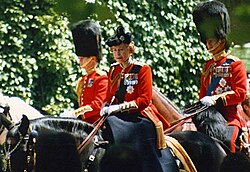
The leadership of the forces is a blend of constitutional and professional command. While King Charles III serves as the Head of the Armed Forces, operational and strategic direction is provided by the Prime Minister and the Secretary of State for Defence. The professional military hierarchy is led by the Chief of the Defence Staff.
Key Facts

- Total Personnel: Approximately 182,060 (as of October 2025), including regulars, reserves, and other personnel.
- Annual Budget: £62.0 billion for the 2025/26 period.
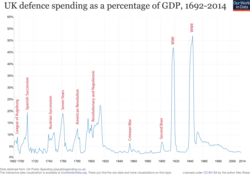
- GDP Contribution: Defence spending accounted for 2.33% of the UK's GDP in 2024.
- Core Branches: Royal Navy (including Royal Marines), British Army, and Royal Air Force.
- Nuclear Capability: Maintains a strategic deterrent via the Trident missile system.
Organizational Structure and Personnel
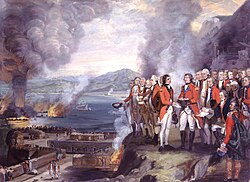
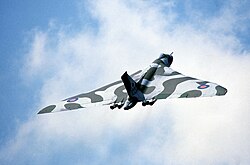
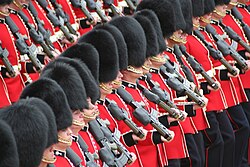
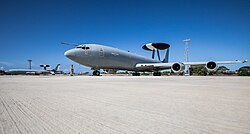
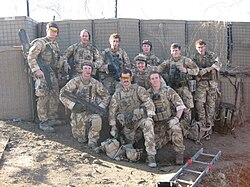
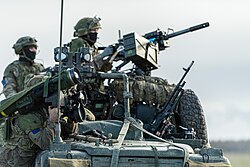
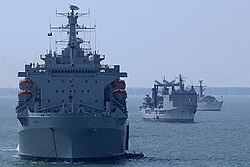
The British Armed Forces are organized into distinct branches, each with a specific domain of expertise. The Royal Navy manages maritime security and power projection, while the Royal Marines provide specialized amphibious warfare capabilities. The British Army handles land-based operations, including the specialized Gurkha regiments, and the Royal Air Force (RAF) secures the skies and provides airborne strategic capabilities.
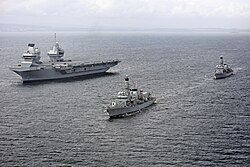
Personnel are divided into regular forces and volunteer reserves. Recruitment typically begins at age 18, though individuals aged 16–17 may join with parental consent, provided they do not serve in combat roles. The UK does not currently utilize conscription, relying instead on a professional volunteer force.
Personnel Distribution (as of October 1, 2025)
| Service | Regular | Volunteer Reserve | Other Personnel | Total |
|---|---|---|---|---|
| Navy | 32,160 | 3,210 | 2,520 | 37,880 |
| Army and Gurkhas | 78,500 | 25,710 | 4,840 | 109,060 |
| Air Force | 30,670 | 3,020 | 1,430 | 35,130 |
| Total | 141,330 | 31,940 | 8,790 | 182,060 |
Defence Expenditure and Industry

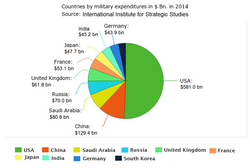
The financial scale of the UK's military is significant, with a budget of £62.0 billion (approximately US$83.3 billion) for 2025/26. This funding supports the maintenance of high-tech equipment and the operation of overseas military installations.
The UK maintains a robust domestic defence industry, partnering with major suppliers such as BAE Systems, Rolls-Royce Holdings, Babcock International, MBDA, Qinetiq, and Serco. Additionally, the UK engages in international trade, importing and exporting military technology with partners including the United States, France, Germany, and South Korea. Between 2014 and 2022, annual exports averaged $1.074 billion, while imports averaged $568.1 million.
Strategic Capabilities and Equipment

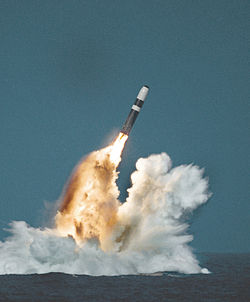
The UK's strategic posture is defined by its nuclear deterrent, specifically the Trident II submarine-launched ballistic missiles (SLBM) deployed on Vanguard-class submarines. This ensures a continuous at-sea deterrent capability.
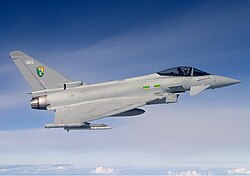
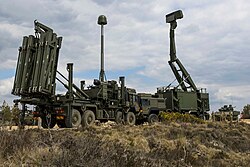
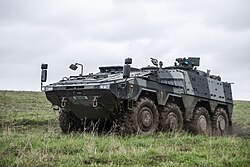
Beyond nuclear capabilities, the forces utilize a wide array of advanced hardware. The Royal Air Force employs the Eurofighter Typhoon for multirole combat, while the Army utilizes Boxer mechanised infantry vehicles and Javelin anti-tank guided missiles. Air defence is bolstered by the Sky Sabre system.
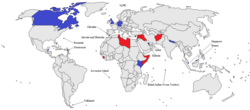
The UK also maintains an expeditionary force capability, allowing it to intervene in global conflicts. Since 2000, this has included operations such as Operation Telic (Iraq), Operation Herrick (Afghanistan), and Operation Shader (against the Islamic State).
Frequently Asked Questions
Who is the current head of the British Armed Forces?
The formal Head of the Armed Forces is King Charles III, while operational leadership is managed by the Prime Minister and the Secretary of State for Defence.
What is the minimum age to join the British military?
Individuals can join at 16 or 17 with parental consent; however, a minimum age of 18 is required to serve in combat roles or to join without parental permission.
Does the UK use conscription?
No, the British Armed Forces are composed of professional regular personnel and volunteer reserves; there is no mandatory conscription.
What is the primary nuclear deterrent of the UK?
The UK's primary strategic nuclear deterrent is the Trident II SLBM system, which is launched from Vanguard-class submarines.
How much does the UK spend on defence?
For the 2025/26 period, the budget is set at £62.0 billion, which represented 2.33% of the UK's GDP in 2024.