Brill Publishing: A History of Academic Excellence from 1683 to Today
For over three centuries, Brill has stood as a cornerstone of scholarly communication. Based in Leiden, Netherlands, the firm has evolved from a small bookseller's shop into a global powerhouse of academic publishing, specializing in the humanities and social sciences. Its journey reflects not only the evolution of the printing industry but also the shifting geopolitical landscapes of Europe.
The Luchtmans Era (1683–1848)
The origins of the company date back to May 17, 1683, when the Leiden booksellers' guild registered Jordaan Luchtmans (1652–1708) as a bookseller. Luchtmans strategically integrated bookselling with publishing, focusing on high-intellect fields such as theology, biblical studies, ethnography, and Asian languages.
To ensure the quality and relevance of its output, the business established deep connections with the University of Leiden, which was a premier center for these research areas in the Netherlands. The Luchtmans family maintained control of the enterprise for 165 years, until 1848, when the final heir chose a career in academia over the family business.
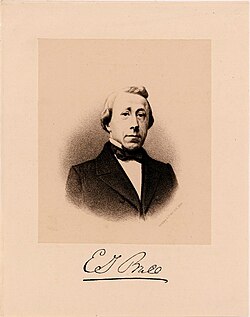
The Transition to E.J. Brill (1848–1896)
In 1848, ownership passed to Evert Jan (E.J.) Brill, a former employee whose father, Johannes, had served as the company's steward for several decades. To settle inherited financial obligations, Brill liquidated the Luchtmans' book inventory through a series of auctions between 1848 and 1850.
While Brill maintained the company's core academic focus, he occasionally branched into other subjects, such as the 1882 publication of the Leerboek der Stoomwerktuigkunde (Handbook of Steam Engineering). However, his most significant contribution to the firm's reputation was demonstrating its technical prowess. In 1855, the publication of Het Gebed des Heeren in veertien talen (The Lord's Prayer in Fourteen Languages) showcased Brill's ability to typeset complex non-Latin alphabets, including Arabic, Sanskrit, Coptic, Syriac, Hebrew, Aramaic, and Samaritan.
Corporate Expansion and the World War II Period (1896–1945)
Following the deaths of successors A. P. M. van Oordt and Frans de Stoppelaar—both businessmen with academic interests—Brill became a public limited company in 1896. The firm saw a period of dramatic, albeit controversial, growth under the leadership of Theunis Folkers, who took over in 1934.
When Folkers began his tenure, annual turnover was 132,000 guilders. During World War II, the company expanded rapidly by cooperating with German occupying forces. Brill produced military manuals, including guides for German officers to identify Russian army insignias, as well as foreign-language textbooks used by the Germans to manage occupied territories. By 1943, this collaboration pushed the company's turnover to 579,000 guilders.
Post-War Recovery and Modern Evolution (1945–Present)
The aftermath of the war brought legal scrutiny. The Dutch denazification committee discovered "enemy money" in the company's accounts, leading to the arrest of Theunis Folkers in September 1946 and his permanent ban from managerial roles. The company itself survived by paying a negotiated fine of 57,000 guilders.
The late 20th century brought new challenges. Between 1988 and 1991, Brill faced a crisis caused by poor management, over-expansion, and industry shifts. Under new leadership, the company underwent a rigorous restructuring. This included closing foreign offices in London and Cologne and selling off its printing business—a move described as "amputating its own limb"—to ensure the survival of the publishing house. Notably, no jobs were lost during this reorganization.
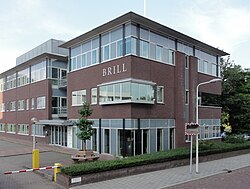
This strategic pivot allowed Brill to thrive in the modern era. By 2008, the company was producing approximately 100 journals and 600 books annually, with a turnover of 26 million euros. The most recent chapter in its history began in October 2023, with the announcement that the German publisher De Gruyter would acquire Brill for €51.1 million, creating the entity De Gruyter Brill by the second quarter of 2024.
Key Facts
- Founded: May 17, 1683, by Jordaan Luchtmans.
- Core Specializations: Theology, biblical studies, Asian languages, and ethnography.
- Technical Milestone: Demonstrated mastery of non-Latin typesetting in 1855.
- WWII Impact: Experienced rapid financial growth through cooperation with German forces, leading to post-war fines and the removal of director Theunis Folkers.
- Modern Scale: As of 2008, publishing ~600 books and 100 journals per year.
- Recent Acquisition: Acquired by De Gruyter in 2023 for €51.1 million.
| Period | Key Leadership/Owner | Primary Focus/Event | Financial/Scale Note |
|---|---|---|---|
| 1683–1848 | Luchtmans Family | Founding & University ties | Established core academic niches |
| 1848–1896 | E.J. Brill | Technical expansion (non-Latin scripts) | Liquidation of old inventory |
| 1896–1945 | Public Ltd / T. Folkers | WWII cooperation | Turnover rose to 579,000 guilders |
| 1945–2023 | Various / New Management | Restructuring & Modernization | 2008 turnover: €26 million |
| 2024+ | De Gruyter Brill | Merger/Acquisition | Acquisition price: €51.1 million |
Frequently Asked Questions
Who founded the company that became Brill?
The company was founded by Jordaan Luchtmans, who was registered as a bookseller in Leiden on May 17, 1683.
What technical capability made Brill famous in the 19th century?
Brill became known for its ability to typeset a wide variety of non-Latin alphabets, including Sanskrit, Arabic, Hebrew, Coptic, Syriac, Aramaic, and Samaritan, as demonstrated in an 1855 publication.
What happened to Brill after World War II?
The company was fined 57,000 guilders for holding "enemy money," and its director, Theunis Folkers, was arrested in 1946 and barred from managerial positions due to his cooperation with German forces.
How did Brill survive the crisis of the late 1980s?
Between 1988 and 1991, the company underwent a major restructuring that involved closing foreign offices in London and Cologne and selling its printing business to save the overall publishing operation.
Who owns Brill now?
In October 2023, it was announced that the German publisher De Gruyter would acquire Brill for €51.1 million, forming the new company De Gruyter Brill.