Brachiopoda: The Evolutionary History and Anatomy of Lamp Shells
Brachiopods, often referred to as lamp shells, are a phylum of marine invertebrates that have existed for over 500 million years. While they superficially resemble bivalve molluscs like clams, they are biologically distinct animals with a unique anatomical structure and a rich fossil record. From the early Cambrian period to the modern oceans, Brachiopoda have played a significant role in marine ecosystems.
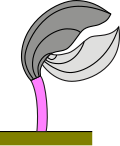
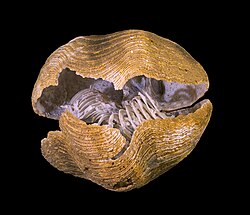
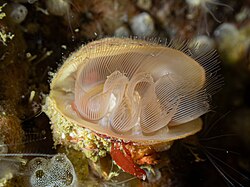
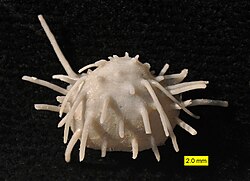
The most defining characteristic of a brachiopod is its two-valved shell. Unlike clams, where the shells are mirror images covering the sides of the animal, brachiopod valves cover the dorsal (top) and ventral (bottom) surfaces. These valves are unequal in size and structure, each possessing its own symmetrical form.
Key Facts
- Temporal Range: 530 million years ago to the present.
- Diversity: Approximately 100 living genera and over 5,000 fossil genera.
- Defining Feature: A lophophore, a specialized ciliated feeding organ.
- Shell Orientation: Dorsal and ventral valves, unlike the lateral valves of molluscs.
- Size Range: Modern species are typically 10–30 mm, though extinct species reached 38 cm.
Anatomy and Biological Systems
Shell Structure and Biomineralization
Brachiopod shells are formed through a process of biomineralization guided by conserved genes, including homeobox genes. The composition of these shells varies significantly between groups. Some utilize apatite (calcium phosphate), while others use calcite (calcium carbonate). The shell typically consists of a periostracum (outer layer), a primary mineralized layer, and an inner mineralized layer.
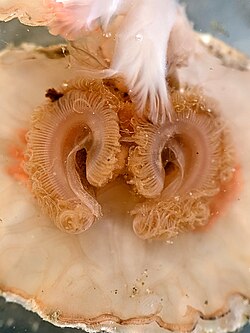
The Lophophore and Feeding
The lophophore is a complex, crown-like organ used for filter feeding. It consists of paired tentacles that capture food particles from the water. This organ is supported internally by a structure called the brachidium in some species.
Attachment and Movement
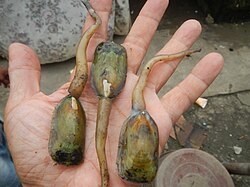
Many brachiopods attach themselves to the seafloor using a pedicle, a fleshy stalk that extends through an opening in the ventral valve. Depending on the species, the pedicle may be long for burrowing into soft sediment or short for anchoring to hard surfaces. Some species lack a pedicle entirely and are cemented directly to the substrate.
![A lingulid in its burrow, in "up" and retracted positions[26]](/images/02/01/0201ba26b33ce8bb964a8b21ed8faf01c54b6ab6ded203431cc90dcd98f00296.png)
Taxonomy and Classification
The classification of Brachiopoda has evolved as scientists move from traditional morphological observations to molecular phylogeny. Modern classification generally divides the phylum into three main subphyla:
- Linguliformea: Primarily inarticulate forms, such as the "living fossil" Lingula.
- Craniiformea: Including the order Craniida.
- Rhynchonelliformea: Articulate forms that include the diverse Rhynchonellida and Terebratulida.
The term articulate refers to brachiopods with a hinge featuring teeth and sockets that lock the valves together, whereas inarticulate species lack this complex hinge mechanism.
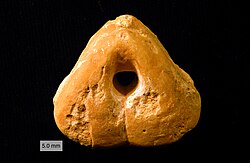
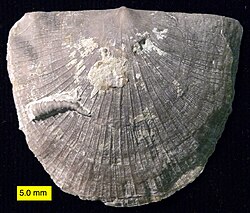
Evolutionary History and Ecology
The fossil record of Brachiopoda is extensive, with over 12,000 recognized species. They first appeared in the early Cambrian, with inarticulate forms emerging shortly before articulate ones. While they suffered severe mass extinctions, certain groups like the Rhynchonellida have persisted since the Ordovician.
Recent paleontological discoveries have suggested that brachiopods may have evolved from tommotiids. Fossils of Eccentrotheca, a tommotiid with an organophosphatic tube, suggest a sessile lifestyle similar to phoronids—animals that are now widely considered a sub-group of brachiopods.
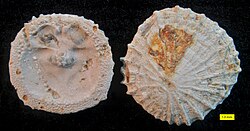
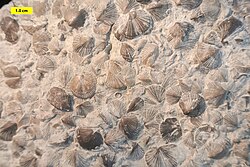
Comparative Summary of Brachiopod Groups
| Feature | Linguliformea | Rhynchonelliformea | Craniiformea |
|---|---|---|---|
| Hinge | None | Teeth and Sockets | None |
| Pedicle | Long, burrowing | Short, attached | None (cemented) |
| Shell Mineral | Apatite / Chitin | Calcite | Calcite |
| Larvae | Planktotrophic | Lecithotrophic | Lecithotrophic |
Frequently Asked Questions
How are brachiopods different from clams?
While both have shells, clams (bivalve molluscs) have shells that cover the left and right sides of the body. Brachiopods have shells that cover the top (dorsal) and bottom (ventral) surfaces. Additionally, brachiopods use a lophophore for feeding, which clams do not possess.
What is a "living fossil" in the context of brachiopods?
The genus Lingula is often called a living fossil because its modern forms are remarkably similar to fossilized genera found as far back as the Ordovician period.
What is the function of the pedicle?
The pedicle is a muscular stalk used for attachment. It allows the animal to anchor itself to hard rocks or burrow into soft sediment, providing stability in marine currents.
Are phoronids related to brachiopods?
Yes, molecular phylogeny studies have increasingly concluded that phoronids—sessile animals that also feed using a lophophore—are actually a sub-group of the phylum Brachiopoda.
What is the largest brachiopod that ever lived?
While modern species rarely exceed 100 mm, extinct genera such as Gigantoproductus and Titanaria from the Lower Carboniferous could reach widths of 30 to 38 centimeters.