Bonzo Dog Doo-Dah Band: The Surreal Architects of British Comedy Music
The Bonzo Dog Doo-Dah Band (also known as the Bonzo Dog Band or simply the Bonzos) was far more than a musical group; they were a comedic powerhouse that blurred the lines between performance art, satire, and music. Formed by a group of British art-school students in the 1960s, the band became legendary for blending music hall (a traditional British variety entertainment), trad jazz, and psychedelia with a sharp sense of surreal humor.
They first captured the public's imagination through high-profile appearances in the Beatles' 1967 film Magical Mystery Tour and the influential ITV comedy series Do Not Adjust Your Set. By combining avant-garde art with pop sensibilities, the Bonzos created a unique sonic landscape that influenced generations of comedic musicians.

Key Facts
- Origin: London, England.
- Active Years: Primarily 1962–1970, with reunions in 1972, 1988, and 2006–2019.
- Core Genres: Comedy, satire, trad jazz, pop, rock, and psychedelia.
- Biggest Hit: "I'm the Urban Spaceman," which reached No. 5 on the UK Singles Chart.
- Key Members: Vivian Stanshall, Neil Innes, and "Legs" Larry Smith.
The Origins of the Bonzos
Formation and the Dadaist Influence
The band's journey began in September 1962 when Vivian Stanshall joined the group. Along with Rodney Slater, they renamed the ensemble the Bonzo Dog Dada Band. The name was born from a cut-up technique—a Dadaist word game where phrases are randomly re-assembled from torn strips of paper. The resulting name combined "Bonzo," after a popular 1920s cartoon dog created by George Studdy, and "Dada," referring to the early 20th-century avant-garde art movement.
The Classic Lineup
By 1965, the band had stabilized into a diverse lineup featuring Stanshall on lead vocals and mime, Neil Innes on piano and guitar, and Rodney Slater on saxophones. A pivotal addition was "Legs" Larry Smith, a friend of Stanshall from the Central College of Art. Despite having limited musical talent at the time, Smith brought immense charisma and showmanship to the group, incorporating a tap-dance extravaganza into their stage shows inspired by the film The Rise and Fall of Legs Diamond.
Musical Evolution and Television Success
From Jazz to Psychedelic Rock
While they started with trad jazz, the band evolved toward rock and psychedelia. The period between 1968 and 1970 saw significant personnel shifts, particularly in the bass position, moving from Vernon Dudley Bowhay-Nowell to Dave Clague, Joel Druckman, and finally Dennis Cowan.
During this era, the Bonzos became staples of BBC Radio 1's Top Gear, hosted by John Peel. These sessions allowed them to experiment with complex works like the musical suite SofaHead and The Brain Opera, a concept piece co-written with Arthur Brown.
Television and Film Appearances
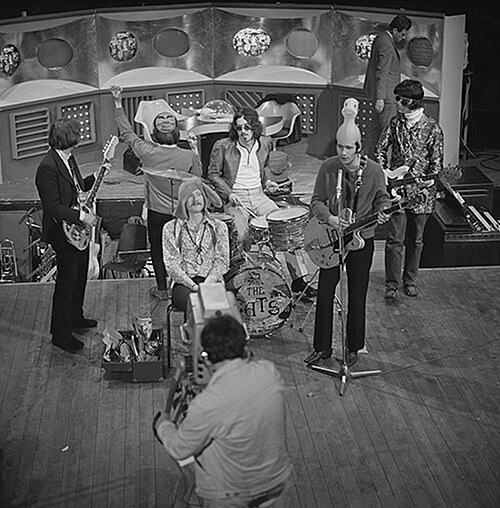
The band's visual comedy was perfectly suited for television. They appeared weekly on Do Not Adjust Your Set and were featured on Blue Peter and the German show Beat-Club. Beyond TV, they produced a short "silent" film in 1969 titled The Adventures of the Son of Exploding Sausage, which featured a soundtrack of music and culminated in a live performance of "We Are Normal."
Reunions and Later Years
Although the group formally disbanded in 1970, they reunited several times. In 1972, they recorded the album Let's Make Up and Be Friendly to fulfill contractual obligations. A 1988 reunion produced the political single "No Matter Who You Vote For the Government Always Gets In (Heigh Ho)," which was eventually released in 1992.
A major 40th-anniversary concert took place at the London Astoria on January 28, 2006. The event featured surviving members and celebrity impersonators of Vivian Stanshall, including Stephen Fry and Paul Merton. This era also saw the release of their first new studio album in 35 years, Pour l'Amour des Chiens, in 2007.
The band's legacy continued through various spinoffs and smaller configurations, such as Three Bonzos and a Piano and Almost the Bonzo Dog Doo Dah Band, until the final performances of these groups around 2019.
Band Summary and Discography
| Category | Details |
|---|---|
| Primary Labels | Parlophone, Liberty, Imperial, United Artists |
| Key Studio Albums | Gorilla (1967), The Doughnut in Granny's Greenhouse (1968), Tadpoles (1969), Keynsham (1969), Let's Make Up and Be Friendly (1972), Pour l'Amour des Chiens (2007) |
| Notable Spinoffs | The World, BiG GRunt, GRIMMS, Bob Kerr's Whoopee Band, Three Bonzos and a Piano |
| Major Film Credit | Magical Mystery Tour (1967) |
Frequently Asked Questions
How did the band get the name "Bonzo Dog Doo-Dah Band"?
The name was created using a Dadaist cut-up technique, where words were randomly re-assembled. It combined "Bonzo Dog," referring to a 1920s cartoon character by George Studdy, and "Dada," referring to the avant-garde art movement.
Who was "Legs" Larry Smith?
Larry Smith was a member of the classic lineup known for his charisma and showmanship. Despite limited musical ability initially, he became a key part of the band's stage presence, specifically through his tap-dancing performances.
What was the band's most successful single?
Their most successful single was "I'm the Urban Spaceman," released in 1968, which reached number 5 on the UK Singles Chart.
Did the band ever reunite after their initial 1970 split?
Yes, they reunited in 1972 for a final contractual album, in 1988 for a political single, and again in 2006 for a 40th-anniversary celebration and a new studio album in 2007.
What was the "cut-up technique" mentioned in their history?
The cut-up technique is a Dadaist method of creating new phrases by writing words on paper, tearing them into strips, and randomly re-assembling them to form new, often surreal, meanings.