Bohemianism: The History and Evolution of an Artistic Counterculture
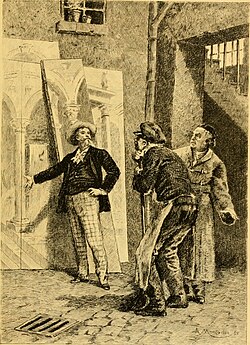
Bohemianism is a social and cultural movement centered on a way of life that deliberately diverges from conventional societal norms and expectations. Originating from the French term bohème, the movement first gained prominence in the mid-19th century to describe the non-traditional lifestyles of artists, writers, journalists, musicians, and actors living in major European cities.
At its core, the bohemian identity is a literary and historical topos—a recurring theme—that associates young metropolitan intellectuals, particularly those in the Latin Quarter of Paris, with a specific set of values: the idealization of art, the appreciation of deep friendship, a contempt for material wealth, and a willingness to endure poverty and hunger for their craft.
Key Facts
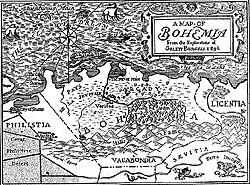
- Etymology: The term comes from the French bohémiens, originally referring to the Romani people who were believed to have entered France via Bohemia (the western part of the modern Czech Republic).
- Core Values: Emphasis on artistic devotion, non-conformity, frugality, and often a rejection of establishment political or social viewpoints.
- Haute Bohème: A term used to describe wealthy or aristocratic circles that adopt bohemian traits.
- Modern Evolution: The concept has shifted from voluntary poverty to the "Bobo" (Bourgeois Bohemian) lifestyle of the middle class.
The European Roots of Bohemianism
The association between artists and the Romani people was rooted in the perceived roving, lawless nature of the latter. This connection is immortalized in Georges Bizet's 1875 opera Carmen, where the protagonist is described as a bohémienne and love is characterized as a "gypsy child" that obeys no laws.
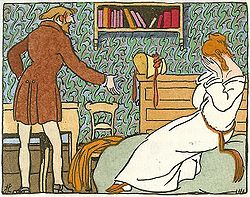
Literature played a pivotal role in romanticizing this lifestyle. Henri Murger's 1845 collection, Scenes of Bohemian Life, sought to legitimize the bohemian experience and later served as the foundation for Giacomo Puccini's 1896 opera La bohème.
In England, the concept was popularized through William Makepeace Thackeray's 1848 novel Vanity Fair and George du Maurier's 1894 bestseller Trilby, which depicted the lives of expatriate English artists in Paris. Similarly, Spanish literature explored these impulses in Ramón del Valle-Inclán's 1920 play Luces de Bohemia.
Bohemianism in the United States
Bohemian culture arrived in the U.S. via immigration in the 1850s. One of the first notable hubs was New York City's Pfaff's beer cellar, where a group of cultured journalists—including Walt Whitman and Henry Clapp Jr.—gathered until the start of the American Civil War in 1861.
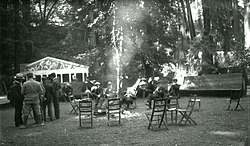
During the war, the term "bohemian" became synonymous with newspaper writers and war correspondents. In San Francisco, journalist Bret Harte adopted the persona of "The Bohemian" in 1861, later publishing his satirical works in Bohemian Papers (1867). This spirit led to the 1872 formation of the Bohemian Club, though the club eventually redefined bohemianism to include successful bons vivants and sportsmen.
Throughout the 20th century, the bohemian impulse manifested in various American subcultures, including the 1940s hipsters, the 1950s Beat Generation (led by figures like Jack Kerouac and Allen Ginsberg), the 1960s counterculture, and the hippies of the 1960s and 70s.
Contemporary Shifts and the "Bobo"
By the 21st century, the traditional image of the "starving artist" began to fade. In 2001, columnist David Brooks coined the term Bourgeois Bohemians, or "Bobos," to describe well-to-do middle-class Americans who adopt bohemian cultural values while maintaining economic privilege.
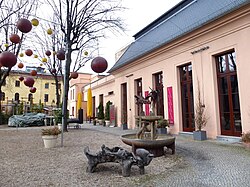
This shift is mirrored in Germany with the term Bionade-Biedermeier, used to describe the affluent, organic-focused lifestyle in Berlin's Prenzlauer Berg district.
Summary of Bohemian Archetypes
| Type | Primary Characteristics | Focus |
|---|---|---|
| Beat | Non-materialist drifters | Art |
| Dandy | Appear wealthy despite lack of funds | Status/Aesthetics |
| Gypsy | Expatriates seeking a personal nirvana | Travel/Idealism |
| Nouveau | Wealthy individuals joining the culture | Contemporary Culture |
| Zen | Post-beat spiritualists | Spirituality |
Frequently Asked Questions
Where does the word "bohemian" come from?
The term originates from the French word bohémiens, which was used to describe the Romani people. It was believed that the Romani had arrived in France from Bohemia, a region in the western part of the modern Czech Republic.
Is bohemianism related to the people of the Czech Republic?
No. In the context of the social and cultural movement, the term is not connected to the native inhabitants (Czechs) of the historical region of Bohemia.
What is a "Bobo"?
A "Bobo" is a Bourgeois Bohemian—a person who blends the unconventional, artistic values of bohemianism with the financial security and social status of the middle or upper class.
Who was Aimée Crocker?
Known as the "queen of Bohemia" in the 1910s, Aimée Crocker was an American heiress and mystic who lived a non-conformist life, traveling the world and associating with famous artists like Oscar Wilde and Henri Matisse.
What is the difference between a Beat and a Zen bohemian?
According to Laren Stover, Beats are non-materialist drifters focused on art, while Zen bohemians are "post-beat" and focus more on spirituality than artistic production.