Boedo: A Cultural and Working-Class Heart of Buenos Aires
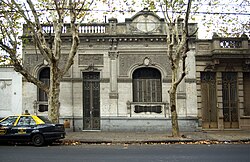
Nestled within the Autonomous City of Buenos Aires, Boedo is a traditional working-class barrio (neighborhood) that embodies the authentic spirit of Argentina's capital. Named after Mariano Boedo, a prominent figure in the struggle for Argentine independence, this district is more than just a residential area; it is a sanctuary of literature, sport, and the soulful rhythms of tango.
Historically characterized by its tight-knit community and industrial roots, Boedo remains a vital part of the city's social fabric, blending a rich intellectual history with a grounded, everyday urban atmosphere.
Key Facts
- Location: Comuna C5, Buenos Aires, Argentina.
- Population: 48,231 (as of 1991).
- Population Density: 19,000 per square kilometer.
- Total Area: 2.6 square kilometers.
- Sports Landmark: Home to the San Lorenzo de Almagro football club.
- Cultural Identity: Strongly associated with working-class values and tango music.
Cultural and Literary Heritage
The Boedo Literary Group
During the 1920s, the neighborhood became the epicenter for the Boedo group, a collective of left-leaning writers from Argentina and Uruguay. This group focused on social realism and the struggles of the working class. Notable members included Enrique Amorim, Leónidas Barletta, Elías Castelnuovo, Roberto Mariani, Nicolás Olivari, Lorenzo Stanchina, César Tiempo, and Álvaro Yunque.
The group's ideas were disseminated through influential magazines such as Dínamo, Extrema Izquierda, and Los Pensadores, as well as through Antonio Zamora's publishing house, Claridad. While the Boedo group was deeply political, some figures bridged the gap to the less political Florida group; Nicolás Olivari was a founder of Boedo who later joined Florida, and the writer Roberto Arlt maintained associations with both circles.
Tango and the Esquina Homero Manzi
Boedo is immortalized in the music of tango. The 1928 song "Boedo," written by Julio De Caro with lyrics by Francisco Bautista Rímoli, personifies the neighborhood as a refuge for the poor and a cradle of tango music.
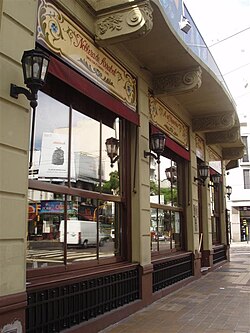
One of the most iconic spots in the district is the corner of San Juan and Boedo. Mentioned in the opening verse of the beloved tango "Sur," this location is now officially known as Esquina Homero Manzi, named after the song's lyricist. Today, it serves as a vibrant venue for various tango festivals.
Geography and Transportation
Boedo is strategically positioned with clear boundaries: Boedo Avenue to the south, San Juan and Directorio to the east, and Independencia and Alberdi to the west.
The neighborhood is highly accessible, offering residents and visitors numerous bus lines that connect to the city center and the nearby Primera Junta transportation hub. Additionally, the area is served by the subte (subway) via the E Line, ensuring efficient movement across the metropolis.
| Category | Details |
|---|---|
| Country | Argentina |
| City | Buenos Aires (Comuna C5) |
| Area | 2.6 km² |
| Time Zone | UTC-3 (ART) |
| Key Landmark | Esquina Homero Manzi |
| Major Sports Club | San Lorenzo de Almagro |
Frequently Asked Questions
Who was the Boedo neighborhood named after?
The neighborhood and its principal street were named in honor of Mariano Boedo, who was a leading figure in the movement for Argentine independence.
What is the significance of the Boedo Literary Group?
The Boedo group consisted of left-leaning Argentine and Uruguayan writers in the 1920s who used their work to highlight social issues and the experiences of the working class.
Which famous football club is based in Boedo?
Boedo is the home of the San Lorenzo de Almagro football club.
What is Esquina Homero Manzi?
It is the corner of San Juan and Boedo, named after the lyricist Homero Manzi. It is famous for its mention in the tango "Sur" and currently hosts tango festivals.
How can visitors get to Boedo?
Boedo is accessible via the E Line of the subte (subway) and various bus lines that lead to the city center and the Primera Junta transportation hub.