Boa Constrictor: Biology, Distribution, and Behavior of the Red-Tailed Boa
The Boa constrictor is one of the most recognizable snakes in the world. While many snakes are constrictors, this specific species is the only one commonly referred to by its scientific binomial name in everyday English. Part of a diverse group of New World boids known as "red-tailed" boas, it is often abbreviated as "BCC" in the exotic pet trade to distinguish it from its close relative, Boa imperator (BCI).
These heavy-bodied serpents are apex predators in their native habitats, utilizing strength and stealth to manage local prey populations. From their complex reproductive cycles to their wide distribution across South America, the boa constrictor represents a fascinating study in reptilian adaptation.
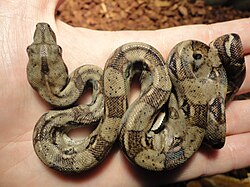
Key Facts
- Conservation Status: Least Concern (IUCN 3.1).
- Distribution: Native to South America; introduced in Florida, Cozumel, and St. Croix.
- Reproduction: Ovoviviparous (gives birth to live young).
- Size: Typically ranges from 3 to 13 feet (0.91 to 3.96 m).
- Trade Status: Listed under CITES Appendix II (B. c. occidentalis is Appendix I).
Physical Characteristics
Size and Weight
The boa constrictor is a large, heavy-bodied snake. While modest compared to the green anaconda or reticulated python, it remains a formidable predator. Lengths typically vary between 3 and 13 feet (0.91 to 3.96 m) based on locality and prey availability. There is clear sexual dimorphism—the physical difference between sexes—with females generally being larger in both length and girth.
Mature females usually measure between 7 and 10 feet (2.1 to 3.0 m), though captive females can reach 12 to 14 feet (3.7 to 4.3 m). The largest documented dry skin measures 14.6 feet (4.5 m). Males are typically smaller, ranging from 6 to 8 feet (1.8 to 2.4 m). In terms of weight, large specimens can reach 27 kg (60 lb), with some rare individuals potentially exceeding 45 kg (100 lb).
Coloring and Subspecies
The species is divided into several subspecies based on geographic range and physical traits. These include the red-tailed boa constrictor (B. c. constrictor), the long-tailed boa (B. c. longicauda) of northern Peru, the Argentine boa (B. c. occidentalis), and Orton's boa (B. c. ortonii) of northwestern Peru.
Distribution and Habitat
Native populations are found throughout South America north of 35°S, spanning countries such as Colombia, Ecuador, Peru, Venezuela, Brazil, Bolivia, Uruguay, and Argentina, as well as various coastal islands. Due to the pet trade, introduced populations have established themselves in extreme southern Florida, Cozumel, and St. Croix in the U.S. Virgin Islands.
Reproduction and Development
Boa constrictors are ovoviviparous, meaning the eggs develop inside the mother's body, and she gives birth to live young. Breeding typically occurs during the dry season (April to August). The species is polygynous, meaning one male may mate with multiple females.
The mating process involves the female emitting pheromones from her cloaca to attract males. After copulation, which can last from minutes to several hours, the female can store sperm for up to one year. Following ovulation, a midbody swell occurs, followed by a "post-ovulation shed" that lasts 2 to 3 weeks. The gestation period is approximately 100 to 120 days.
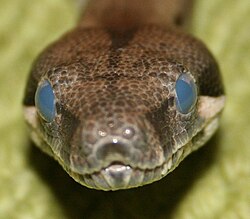
Litter sizes average 25 young, though they can range from 10 to 65. Newborns average 15 to 20 inches (38 to 51 cm) in length and are independent at birth. They reach sexual maturity at 3 to 4 years of age.
Genetic Anomalies and Sex Determination
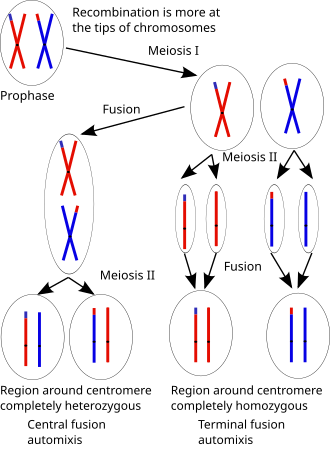
While reproduction is almost exclusively sexual, a rare case of parthenogenesis (asexual reproduction) was documented in 2010. Specifically, the Colombian rainbow boa (Epicrates maurus) demonstrated facultative parthenogenesis via terminal automixis, where two haploid products of meiosis fuse to form a zygote.
Research in 2017 also revealed that boa constrictors possess XY sex-determining chromosomes in males and XX in females, marking a significant discovery of male heterogamety in snakes.
Captivity and Economic Impact
In captivity, boa constrictors can live between 20 and 30 years, with the oldest recorded individual, "Popeye" from the Philadelphia Zoo, reaching over 40 years. However, up to 41.5% of captive boas may test positive for eosinophilic inclusion bodies, a health concern for the species.
Economically, the boa constrictor is highly valued in the exotic pet trade. Historically, massive imports of wild-caught snakes—such as the 113,000 imported into the U.S. between 1977 and 1983—put pressure on wild populations. They are also hunted for their skins, making them one of the most commonly killed snakes for leather products after the reticulated python.
| Scientific Name | Common Name | Geographic Range |
|---|---|---|
| B. c. constrictor | Red-tailed Boa | South America (General) |
| B. c. longicauda | Long-tailed Boa | Northern Peru |
| B. c. occidentalis | Argentine Boa | Argentina and Paraguay |
| B. c. ortonii | Orton's Boa | Northwestern Peru |
Frequently Asked Questions
How large do boa constrictors actually get?
Most adult females range from 7 to 10 feet, while males are typically 6 to 8 feet. In captivity, females can occasionally reach 12 to 14 feet, with the largest documented dry skin measuring 14.6 feet.
Do boa constrictors lay eggs?
No, they are ovoviviparous. This means the embryos develop inside the female's body, and she gives birth to live, independent young.
Are boa constrictors endangered?
The species is listed as "Least Concern" by the IUCN. However, they are protected under CITES Appendix II to regulate trade, with the Argentine boa (B. c. occidentalis) receiving stricter protection under Appendix I.
What is the difference between a BCC and a BCI?
In the pet trade, "BCC" refers to Boa constrictor constrictor, while "BCI" refers to Boa constrictor imperator (now often classified as Boa imperator).
How long do boa constrictors live in captivity?
They typically live between 20 and 30 years, though some exceptional individuals have been recorded living over 40 years.