Blyth's Reed Warbler
The Blyth's reed warbler (Acrocephalus dumetorum) is a slim, understated songbird belonging to the family Acrocephalidae. While it shares characteristics with tree warblers, this species is distinguished by its specific migratory patterns and subtle plumage. Breeding across the Palearctic zoogeographical region and wintering in South Asia, the Blyth's reed warbler has recently gained attention for expanding its range westward into Europe.
First described in 1849 by English zoologist Edward Blyth, the species is named in his honor. Its scientific name reflects its nature: the genus Acrocephalus derives from the Ancient Greek words akros ("highest") and kephale ("head"), while the specific epithet dumetorum comes from the Latin dumetum, meaning "thicket."
Key Facts
- Conservation Status: Least Concern (IUCN 3.1).
- Size: 12 to 14 cm in length; weighs between 8 and 16 g.
- Range: Breeds from the Baltic Sea to Lake Baikal; winters in South Asia.
- Habitat: Prefers damp broadleaved woodland edges, scrub, and gardens during breeding.
- Dietary Behavior: Known for a variable song featuring mimicry and harsh ticks.
Physical Description and Identification
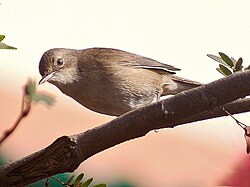
The Blyth's reed warbler is a modest bird in appearance, lacking the warmer tones found in many of its relatives. It possesses a long bill, relatively short wings, and a slim build. Its upperparts are a plain olive brown, while the underparts are off-white.
Key identifying marks include a short, whitish supercilium (the stripe of feathers above the eye) and a dusky stripe running through the eye. The bill is greyish brown, featuring a pale pinkish-brown base on the lower mandible—a color that is mirrored in the bird's legs and feet.
Distribution and Habitat
The breeding grounds of A. dumetorum stretch from the Baltic Sea in eastern Europe to Lake Baikal in Siberia, with an additional isolated population located in Central Asia. During the winter months, the species migrates to India, Sri Lanka, Nepal, Bangladesh, and Myanmar.
Historically, the species was a rare vagrant in western Europe. However, it has been steadily increasing in number and expanding its territory. Notable milestones in this expansion include breeding records in the Netherlands in 2022 and in Scotland in 2024.
Preferred Environments
- Breeding Season: Damp broadleaved woodland edges, clearings, wooded gullies, parks, gardens, scrub, and coniferous forests.
- Winter Season: Various trees in both wet and dry habitats.
Biology and Breeding Habits
Blyth's reed warblers are typically monogamous, though instances of polygyny (one male mating with multiple females) have been recorded. They are solitary and highly territorial; for example, in Finland, territories range from 600 to 1,300 square meters.
The breeding cycle occurs between late May and July. The pair constructs a compact cup-shaped nest using plant materials and spiders' webs, typically positioned 20 to 60 cm above the ground. A clutch consists of 3 to 6 eggs, which are incubated for 12 to 13 days. While both parents participate in incubation and feeding, the female handles the majority of the incubation.
Chicks fledge between 11 and 13 days old and remain dependent on their parents for another 10 to 22 days. In some cases, the male may abandon the brood after fledging to seek another mate, leaving the female to provide the remaining care.
Species Summary
| Feature | Details |
|---|---|
| Scientific Name | Acrocephalus dumetorum |
| Family | Acrocephalidae |
| Average Length | 12–14 cm |
| Average Weight | 8–16 g |
| Breeding Range | Eastern Europe to Siberia |
| Wintering Range | South Asia (India, Sri Lanka, Nepal, Bangladesh, Myanmar) |
| Clutch Size | 3–6 eggs |
Frequently Asked Questions
What is the conservation status of Blyth's reed warbler?
The species is currently classified as Least Concern according to the IUCN 3.1 criteria.
How does the song of the Blyth's reed warbler sound?
Its song is highly variable, blending melodious whistles and mimicry with harsher sounds such as ticks, chaks, and churrs.
Where has the species recently expanded its breeding range?
The Blyth's reed warbler has been moving westward into Europe, with confirmed breeding in the Netherlands in 2022 and Scotland in 2024.
What are the nesting habits of this bird?
They build compact cup nests from plant material and spiders' webs, usually placed 20 to 60 cm above the ground in woodland edges or scrub.
Who is the bird named after?
The bird is named in honor of Edward Blyth, the English zoologist who first formally described the species in 1849.