Black Isle: The Scenic Peninsula of the Scottish Highlands
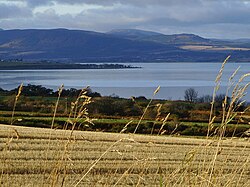
The Black Isle (Scottish Gaelic: an t-Eilean Dubh) is a striking peninsula located within Ross and Cromarty in the Scottish Highlands. Despite its name, it is not an island, but a landmass surrounded by water on three sides. Home to approximately 12,000 residents, this region blends a rich historical tapestry with breathtaking natural landscapes, serving as a gateway to some of Scotland's most iconic vistas.
The peninsula is defined by its coastal borders: the Cromarty Firth to the north, the Beauly Firth to the south, and the Moray Firth to the east. Its western boundary is marked by rivers, specifically the River Conon in the northwest and either the River Beauly or a minor tributary of the Beauly separating Beauly and Muir of Ord in the southwest.
Key Facts
- Geography: A peninsula, not an island, located in Ross and Cromarty.
- Population: Approximately 12,302 residents across seven civil parishes (2011 census).
- Wildlife: Famous for bottlenose dolphin sightings at Chanonry Point.
- Transport: Crossed by the A9 trunk road and the North Coast 500 scenic route.
- Economy: Primarily driven by forestry, arable farming, and commuting to Inverness.
Geography and Infrastructure
The Black Isle offers diverse panoramic views. To the north, visitors can see Dingwall, Ben Wyvis, Fyrish, and the deepwater anchorage at Invergordon. To the south, the skyline is dominated by Inverness and the Monadhliath Mountains.
Connectivity is provided by modern road bridges across the Cromarty and Beauly Firths, which carry the A9 trunk road. While most travel is by road, a summer ferry service still operates between Cromarty and Nigg. The region is well-supported by nearby infrastructure, including Inverness Airport, the cruise ship terminal at Invergordon, and railway stations at Inverness and Dingwall on the Far North Line.
Regional Administration
The area is divided into several civil parishes: Killearnan, Knockbain, Avoch, Rosemarkie, Cromarty, Resolis, and Urquhart. Ecclesiastically, the entire peninsula falls under the Presbytery of Ross.
History and Heritage
The origin of the name "Black Isle" is subject to various theories. One prominent theory suggests that because snow rarely lies on the promontory in winter, the land appears black against the white, snow-covered surrounding country. Historically, it was known as Ardmeanach, meaning "height of the monk," referring to a religious house at Mulbuie.
The region's history is marked by significant figures and events. It was once Munro country before passing through various hands, including the Mackenzies of Gairloch. The area was also among the first in the northern Highlands to undergo the clearances, leading to settlement by Lowland farmers and shepherds.
Notable Figures
- Hugh Miller: A self-taught geologist and writer born in Cromarty.
- Alexander Mackenzie: The explorer who crossed Canada overland in 1793 and is buried near Avoch.
- Sir George Mackenzie: The founder of the Advocates' Library in Edinburgh, who resided at Rosehaugh.
Castles and Architecture
The Black Isle is dotted with fortifications, ranging from well-preserved structures to ancient mounds. Redcastle, dating from 1179, is cited as the earliest inhabited house in the north of Scotland and was once visited by Mary, Queen of Scots.
Other notable sites include:
- Kinkell Castle: A tower house restored in the late 1960s by sculptor Gerald Laing.
- Castlecraig and Kilcoy Castle: Historic castle sites within the region.
- Cromarty House: Built using reclaimed stone and timbers from the former Cromarty Castle.
- Lost Sites: No physical remains exist for Tarradale, Chanonry, or Ormond castles.
Nature and Wildlife
The peninsula is a haven for biodiversity and includes several legally protected areas. It is most renowned for its bottlenose dolphins, which can be viewed from the beach at Chanonry Point or via boat trips from Avoch and Cromarty.
In a successful conservation effort between 1989 and 1994, 93 red kites of Swedish origin were reintroduced to the local environment, helping to restore the raptor population.
Culture and Education
The Black Isle possesses a unique cultural identity. While Gaelic heritage is strong, the region once had its own dialect of North Northern Scots. This dialect became extinct in October 2012 following the death of its last native speaker, Bobby Hogg.
Local folklore includes the legend of the Brahan Seer, a prophet said to have been murdered at Chanonry Point. The region also continues to inspire artists, including writer Anne MacLeod, musician Neil Grant, singer Corrina Hewat, and fashion designer Siobhan Mackenzie.
Education System
Fortrose Academy serves as the primary secondary school for the region, recognized as one of the top 100 secondary schools in Scotland as of 2023. It is fed by various primary schools, including those in Avoch, Cromarty, Culbokie, Munlochy, and North Kessock, while others feed into Dingwall Academy or Charleston Academy.
| Category | Details |
|---|---|
| Status | Peninsula |
| Surrounding Waters | Cromarty Firth, Beauly Firth, Moray Firth |
| Main Towns | Cromarty, Fortrose |
| Population (2011) | 12,302 |
| Primary Industries | Arable farming, Forestry |
Frequently Asked Questions
Is the Black Isle actually an island?
No, despite its name, the Black Isle is a peninsula surrounded by the sea on three sides and connected to the mainland on the west.
Where is the best place to see dolphins on the Black Isle?
The beach at Chanonry Point, located between Rosemarkie and Fortrose, is the most famous spot for viewing bottlenose dolphins at close range.
What is the significance of Redcastle?
Dating back to 1179, Redcastle is said to be the earliest inhabited house in the north of Scotland and was once a royal castle visited by Mary, Queen of Scots.
How do people travel across the Black Isle?
The A9 trunk road is the primary artery, crossing the peninsula via bridges over the Cromarty and Beauly Firths. The North Coast 500 scenic route also crosses the base of the peninsula.
What happened to the local Scots dialect?
The unique North Northern Scots dialect of the Black Isle became extinct in October 2012 upon the death of Bobby Hogg, the last native speaker.