Birdland: The Jazz Corner of the World (1949–1965)
Located below street level at 1678 Broadway, Birdland was more than just a venue; it was a cultural landmark that defined the golden era of jazz in New York City. Established in 1949, the club earned the nickname "Jazz Corner of the World," serving as a sanctuary for virtuoso musicians and a magnet for the global elite.
The venue was purchased in 1949 from Joseph "Joe the Wop" Catalano by a partnership including Irving Levy, Morris Levy, and Oscar Goodstein, along with six other partners. They chose the name "Birdland" to capitalize on the fame of the legendary saxophonist Charlie "Yardbird" Parker.
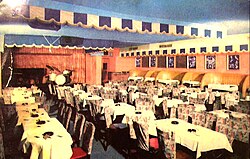
The Grand Opening and Early Years
While originally slated to open on September 8, 1949, delays in securing a liquor license pushed the official opening to December 15. The debut event, titled "A Journey Through Jazz," featured a chronological showcase of jazz styles performed by a powerhouse lineup: Maxie Kaminsky, Hot Lips Page, Lester Young, Charlie Parker, Harry Belafonte, Stan Getz, and Lennie Tristano.
Despite the club being named in his honor, Charlie Parker performed infrequently due to his struggles with drug addiction. While he remained professional with management, he frequently requested money from Oscar Goodstein. It wasn't until 1954 that Gene Ramey persuaded Goodstein to allow Parker and his band to perform on Monday nights.
Atmosphere and Layout
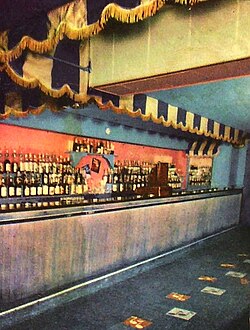
Birdland was designed to accommodate both intimacy and grandeur. The venue seated 500 people and featured a bandstand large enough for a full big band, making it a regular home for the Count Basie Orchestra. The interior boasted a long bar, booths, and a "bullpen"—a fenced-in area with folding chairs where patrons could sit close to the bandstand for a modest admission fee of $1.50.
The club's aesthetic included caged finches, a literal nod to the "Bird" in its name. While Irving and Morris Levy held primary ownership, Oscar Goodstein managed the daily operations, from taking tickets to tending the bar. By the late 1950s, Goodstein operated from a back hallway, where he spent time reading prolific letters from musicians like Charlie Mingus.
A Hub for Musical Legends and Celebrities
Birdland became a recording hotspot, capturing some of the most significant performances in jazz history. Notable recordings include Art Blakey's A Night at Birdland (1954), John Coltrane's Live at Birdland, the Toshiko-Mariano Quartet's Live at Birdland, and Basie at Birdland. The stage hosted a who's who of jazz, including Dizzy Gillespie, Thelonious Monk, Miles Davis, Louie Bellson, Bud Powell, Johnny Smith, Stan Getz, and Lester Young. The club's influence was so pervasive that George Shearing wrote the jazz standard "Lullaby of Birdland" in 1952.
Beyond the music, the club was a fashionable destination for A-list celebrities. Regulars included Frank Sinatra, Ava Gardner, Gary Cooper, Marlon Brando, Marilyn Monroe, Sugar Ray Robinson, Marlene Dietrich, Joe Louis, and Judy Garland.
Key Facts
- Location: 1678 Broadway, New York City (below street level).
- Capacity: 500 seats.
- Admission: $1.50 for the folding chair bullpen area.
- Famous Residents: The Count Basie Orchestra was a regular booking.
- Notable Recording: "Lullaby of Birdland" (1952) by George Shearing.
- Closing Date: 1965.
Turmoil and Transition
The club's history was not without tragedy and conflict. On August 25, 1959, Miles Davis was beaten by a New York City policeman on the sidewalk outside the venue during one of his engagements. Even more shocking was the death of co-owner Irving Levy, who was stabbed to death inside the club on January 26, 1959. The crime occurred unnoticed by patrons while Urbie Green's group was performing; the body was later found near the service area.
Following Irving's death, his brother Morris took over his role. The club continued to find success into the early 1960s under the management of Johnnie Garry, a historian and production coordinator for the Jazzmobile project.
The Final Curtain
By the mid-1960s, financial difficulties mounted. In June 1964, Birdland filed for Chapter 11 bankruptcy. The creditors included president Oscar Goodstein ($22,490), NLP Restaurant ($12,275), and saxophonist Gerry Mulligan ($3,500). In a final attempt to survive, the club pivoted away from "way-out" (experimental) jazz in favor of more traditional styles.
These efforts were not enough, and Oscar Goodstein closed Birdland in 1965. The space was subsequently taken over by R&B and rock-and-roll singer Lloyd Price, who renamed the venue the Turntable.
| Category | Details |
|---|---|
| Operating Years | 1949–1965 |
| Key Owners/Operators | Irving Levy, Morris Levy, Oscar Goodstein |
| Signature Feature | "Jazz Corner of the World" neon sign and caged finches |
| Notable Artists | Charlie Parker, Miles Davis, Count Basie, John Coltrane |
| Successor Venue | The Turntable (Lloyd Price) |
Frequently Asked Questions
Why was the club named Birdland?
The owners named the venue Birdland to capitalize on the popularity and profile of the influential jazz saxophonist Charlie "Yardbird" Parker.
Who was the master of ceremonies at Birdland?
The original MC was Pee Wee Marquette, a four-foot-tall entertainer known for intentionally mispronouncing the names of musicians who did not tip him.
What happened to the venue after it closed in 1965?
After closing, the premises were taken over by R&B and rock-and-roll singer Lloyd Price, who renamed the club the Turntable.
Which famous song was inspired by the club?
The jazz standard "Lullaby of Birdland," written by George Shearing in 1952, was named in honor of the venue.
How did the club handle broadcasts?
Early in its existence, DJ Symphony Sid broadcast live on WJZ. Later, in the 1950s, broadcasts were organized with the musicians' union and relayed across network radio featuring guests like critic Leonard Feather.