Biological Symmetry: Patterns of Form in Nature
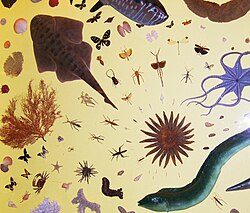
In the natural world, symmetry is more than just an aesthetic quality; it is a fundamental aspect of biological design. Biological symmetry refers to the balanced distribution of duplicate body parts or shapes within an organism, spanning bacteria, fungi, plants, and animals. While mathematical symmetry is absolute, biological symmetry is always approximate—for instance, a leaf may appear symmetrical, but its two halves rarely match perfectly when folded.
Symmetry can be external, such as the mirrored halves of a human face or the spiral of a pine cone, or internal, such as the cylindrical tubes that transport nutrients and gases in the human body. These patterns emerge through natural selection, providing evolutionary advantages that shape how organisms move, feed, and survive.
Key Facts
- Bilateria comprises 99% of all animals, characterized by a single plane of symmetry.
- Radial symmetry involves repeating patterns around a central axis, often in multiples of 4, 5, 6, or 8.
- Icosahedral symmetry is common in viruses, allowing them to build complex shells from a limited number of proteins.
- Asymmetry can be an adaptive trait, such as the offset ears of certain owls for better prey localization.
- Symmetry breaking is the genetic process that creates distinct left and right sides during embryonic development.
Types of Biological Symmetry
Bilateral Symmetry
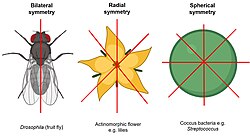
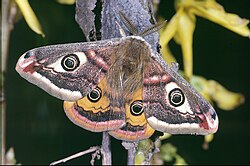
Bilateral symmetry occurs when an organism has a single sagittal plane that divides it into roughly mirrored left and right halves. This is the most common body plan in the animal kingdom, defining the group known as the bilateria, which includes over 32 phyla and 1 million described species. Even in these organisms, internal asymmetry often exists; for example, the human heart and liver are positioned asymmetrically.
Radial and Biradial Symmetry
Organisms with radial symmetry are arranged around a central axis, meaning they can be divided into several identical pieces like a pie. This is often categorized by the number of repetitions: tetramerism (4), pentamerism (5), hexamerism (6), or octamerism (8). These organisms lack left and right sides but typically possess a top and bottom surface.
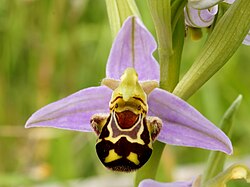
Biradial symmetry is an intermediate form where an organism exhibits features of both radial and bilateral symmetry. Biradial organisms can only be divided equally along two planes. This is most evident in ctenophores, where the planes of symmetry are defined by the pharynx and the tentacles.


![The Ediacaran phylum Trilobozoa possess a wide variety of body shapes, mostly tri-radial symmetry, although their most famous member, Tribrachidium, possesses a triskelion body shape.[25]](/images/ca/ef/caef8920597c9695204af56722871545543af3948112df8eb60effa343b72ccd.jpg)
Spherical and Icosahedral Symmetry
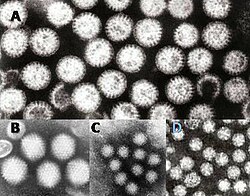
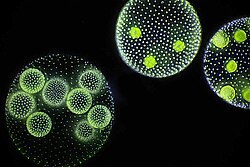
Spherical symmetry is found in some microorganisms, such as certain bacteria and algae. A more complex version is icosahedral symmetry, found in many viruses. An icosahedron consists of 20 equilateral triangle faces and 12 corners, totaling 60 subunits. This structure is evolutionarily efficient because it allows a virus to build a protective shell using a limited number of structural proteins, saving space in the viral genome.
The Role of Asymmetry
While symmetry is common, asymmetry (the absence of symmetry) is often a specialized adaptation. Some animals, like sponges (phylum Porifera), are naturally asymmetrical. In other cases, asymmetry provides a survival edge.
| Organism/Group | Asymmetrical Feature | Adaptive Benefit |
|---|---|---|
| Certain Owls | Ear size and position | Precise localization of prey |
| Flatfish | Eyes on one side of the head | Ability to blend into the ocean floor |
| Scale-eating Cichlid | Mouth and jaw structure | More effective scale removal from prey |
| Humans | Internal organs (e.g., lungs) | Optimized internal space and function |
Another form of asymmetry is fluctuating asymmetry, which refers to small, random deviations from perfect symmetry in bilateral features, such as the eyes or wrists. This variation differs between individuals.

The Genetics of Symmetry Breaking
The transition from a symmetrical embryo to an asymmetrical adult is known as symmetry breaking. In chick embryos, this is driven by specific signaling pathways. The left side expresses the genes NODAL and LEFTY2, which activate PITX2 to signal the development of left-side structures. The right side does not express PITX2, leading to the development of right-side structures.
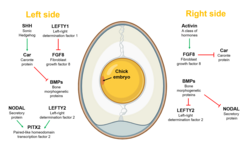
Similar processes occur in plants. For example, the model plant Arabidopsis exhibits left-handed helical growth, a process involving genes (LEFTY1 and LEFTY2) that are closely related to those found in animals.
Frequently Asked Questions
What is the difference between radial and bilateral symmetry?
Radial symmetry involves a repeating pattern around a central axis, allowing the organism to be divided into multiple identical slices. Bilateral symmetry involves a single plane of symmetry that divides the organism into mirrored left and right halves.
Why do viruses use icosahedral symmetry?
Icosahedral symmetry allows viruses to construct a stable shell using a small number of repetitive protein subunits. This efficiency minimizes the amount of genetic information required in the viral genome to build the particle.
Can asymmetry be beneficial for an organism?
Yes. Asymmetry is often an adaptation. For example, flatfish have both eyes on one side to better camouflage on the seabed, and some owls have asymmetrical ears to pinpoint the exact location of their prey.
What is biradial symmetry?
Biradial symmetry is a hybrid form where an organism shows both radial and bilateral characteristics. Unlike purely radial organisms, biradial organisms can only be divided equally along two specific planes.
How does symmetry breaking work in embryos?
Symmetry breaking occurs when specific genes are expressed on one side of the embryo but not the other. In chicks, the expression of NODAL and LEFTY2 activates PITX2 on the left side, directing the development of left-specific organs.