Bill C-18 and the Conflict Between Tech Giants and Canadian News
The landscape of digital journalism in Canada underwent a seismic shift following the royal assent of Bill C-18, a piece of legislation designed to ensure that tech platforms compensate news organizations for the content they share. While intended to support the sustainability of local journalism, the law triggered a high-stakes standoff between the Canadian government and global technology leaders Google and Meta Platforms.
At the heart of the dispute is the concept of mandatory bargaining, where platforms are required to pay publishers for the news links that drive traffic to their sites. While the government viewed this as a matter of fairness, the tech giants viewed it as an unworkable financial burden.
Key Facts
- Google's Resolution: Google reached an agreement in November 2023 to pay approximately $100 million CAD annually into a collective fund for the media sector.
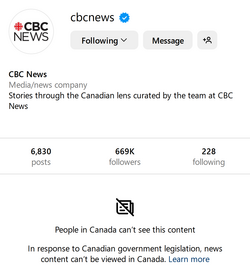
- Meta's Stance: Meta continues to block news content and news organization accounts on Facebook and Instagram for users in Canada.
- Traffic Impact: By December 2023, official news pages on Facebook lost roughly 5 million views per day.
- Government Response: The Canadian federal government, along with several provinces and the CBC, suspended advertising spending on Meta platforms in protest.
- Legal Challenges: A Competition Act complaint was filed against Meta by the CBC, News Media Canada, and the Canadian Association of Broadcasters.
The Reaction of Tech Giants
Google's Strategy and Settlement
Google initially labeled Bill C-18 as "unworkable," citing uncapped financial liability. As a result, the company withdrew Canadian publishers from the Google News Showcase—a program where Google pays outlets to curate highlighted stories in widgets. While Google was initially open to paying its share of the estimated $150 million in annual revenue generated by the bill, it insisted on contributing to a single fund rather than paying individual publishers.
This tension culminated on November 29, 2023, when Google agreed to pay around $100 million CAD annually to a collective fund managed by the media sector. Some critics, including legal expert Michael Geist, argued that this settlement undermined the original intent of the bill by allowing the government to negotiate a deal through regulations rather than sticking to the law's original framework.
Meta's Hardline Approach
Unlike Google, Meta Platforms took a more aggressive route. Starting in late July 2023, Meta began blocking all links to news content and news organization accounts for Canadian users on Facebook and Instagram. This block applied regardless of whether the news organization was based in Canada or abroad.
The implementation was not without errors; the satire site The Beaverton was briefly blocked due to automated metadata classification, though this was later corrected. More seriously, concerns emerged that removing legitimate news would leave a vacuum filled by fake news content.
Widespread Consequences and Backlash
Impact on Local and Indigenous Media
The news ban disproportionately affected smaller outlets and Indigenous communities. Organizations such as Ku'ku'kwes News, Shubie FM, and the Mohawk Council of Kahnawà:ke saw their public service announcements and content blocked. Other small outlets, including Nunatsiaq News, CHCO-TV, and the River Valley Sun, also expressed deep concern over the loss of reach.
Public Safety and Government Retaliation
The timing of the block coincided with the 2023 Canadian wildfires, leading government officials to argue that Meta was hindering the distribution of critical, up-to-date safety information. In response to Meta's refusal to compensate publishers, the federal government—led by then-Minister Pablo Rodriguez and later Pascale St-Onge—suspended all advertising purchases on Facebook and Instagram.
This move was mirrored by the provinces of Quebec and British Columbia, the CBC, and labor unions such as Unifor and FTQ, all of whom pulled their advertising from Meta's platforms.
Market Analysis and Legal Disputes
The conflict extended into the legal arena when the CBC, News Media Canada, and the Canadian Association of Broadcasters filed a complaint under the Competition Act. They alleged that Meta abused its dominant market position to deny fair compensation to news businesses.
However, this claim was contested by observers like Michael Geist, who noted that social media only accounted for 17-30% of news website traffic. He argued that blocking news was a "business choice" for compliance rather than an exercise of substantial market control.
| Feature | Meta (Facebook/Instagram) | |
|---|---|---|
| Current Status | Reached agreement with government | Continuing news block in Canada |
| Financial Commitment | ~$100 million CAD annually | Refused to pay compensation |
| Content Availability | Available via agreements/fund | Blocked for Canadian users |
| Primary Argument | Uncapped financial liability | Compliance via business choice |
Frequently Asked Questions
What is Bill C-18?
Bill C-18 is a Canadian law designed to require large digital platforms to negotiate fair compensation with news organizations for the content shared on their services.
Why did Meta block news in Canada?
Meta blocked news content to avoid the financial obligations and mandatory bargaining requirements imposed by Bill C-18, viewing the legislation as unworkable.
How did Google resolve its conflict with the Canadian government?
Google agreed to pay approximately $100 million CAD per year into a collective fund managed by the media sector to comply with the law's objectives.
Who was most affected by Meta's news ban?
While all news outlets saw a decline in traffic, smaller local news sites and Indigenous media organizations suffered the most, with some losing over half of their audience.
Did the news ban affect Meta's user base?
No. Despite the loss of news content, the number of people using Facebook and Instagram in Canada remained stable over the nine months following the ban.