Bernard Leach: The Bridge Between Eastern and Western Ceramics
Bernard Leach was a transformative figure in the world of ceramics, spending his life synthesizing the artistic traditions of the East and West. By blending the philosophies of Japanese and Chinese pottery with European techniques, he helped define the modern studio pottery movement, advocating for a lifestyle where art, design, and craft intersect.
Early Years and Japanese Influence
Born in Hong Kong, Leach spent his first three years in Japan before returning to Hong Kong in 1890. His formal artistic training took place in England at the London School of Art and the Slade School of Fine Art, where he studied etching under Frank Brangwyn. However, a deep fascination with Japan, sparked by the writings of Lafcadio Hearn, eventually led him back to the East.
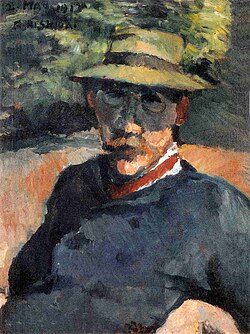
In 1909, Leach moved to Japan with his wife, Muriel. While he initially intended to teach etching—instructing pupils such as Satomi Ton, Kojima Kikuo, and Ryūsei Kishida—he soon became immersed in the local intellectual scene. He associated with the "Shirakaba-Group," a circle of thinkers including Yanagi Sōetsu and Shiga Naoya who sought to introduce Western art to Japan.
Leach's transition to ceramics began around 1911 after attending a Raku-yaki (a type of Japanese hand-molded pottery) party. He began studying under Urano Shigekichi, the 6th generation in the tradition of Ogata Kenzan. During this period, he was assisted by potter Tomimoto Kenkichi, who served as an interpreter for technical terms. After a brief period in Peking (Beijing) in 1915, where he adopted the name 李奇聞, Leach returned to Japan and established the Tōmon-gama kiln in Yanagi's garden.
Establishing the Leach Pottery in St Ives
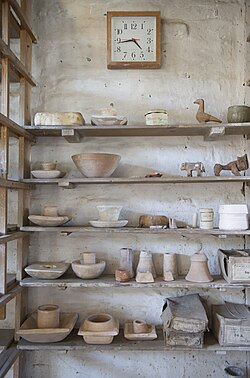
In 1920, Leach returned to England at the invitation of Frances Horne, who was forming a Guild of Handicrafts in the artist colony of St Ives, Cornwall. Alongside his wife Muriel and the young Japanese potter Hamada Shōji, Leach founded the Leach Pottery near the Stennack river.
A landmark achievement of this venture was the construction of the first noborigama (a traditional Japanese climbing kiln) in the West. Although the initial structure was poorly built, it was reconstructed in 1923 by Matsubayashi Tsurunosuke.
Philosophy and the "Standard Ware" Movement
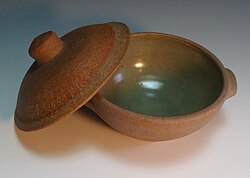
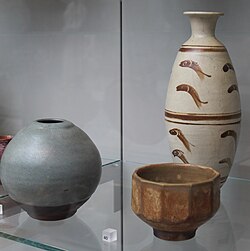
Leach viewed pottery not merely as a product, but as a combination of philosophy, design, and craft. He promoted a synthesis of traditional Korean, Japanese, and Chinese styles with English and German techniques, such as salt glaze ware and slipware (pottery decorated with liquid clay).
In 1940, he published A Potter's Book, a seminal text that detailed his craft philosophy and techniques. This work brought him international recognition and established his preference for utilitarian forms—functional pieces designed for daily use—over "fine art pots" that prioritized aesthetics over function. This approach led to the creation of "standard ware," handmade pottery accessible to the general public.
Global Influence and Legacy
Leach's influence extended far beyond the shores of England. His studio became a global hub for apprentices. Notable students included Michael Cardew and David Leach in Britain, Warren MacKenzie and Byron Temple in the United States, Len Castle in New Zealand, and Nirmala Patwardhan in India. In Canada, apprentices such as John Reeve and Glenn Lewis helped shape the pottery scene on the West Coast.
Leach was also a key organizer of the 1952 International Conference of Potters and Weavers at Dartington Hall. This event is credited with organizing the modern studio pottery movement and elevating the status of leaders like Leach, Hamada, and Yanagi. He further influenced a new generation of artists through a 1952 seminar at Black Mountain College.
Key Facts
- First Noborigama: Leach and Hamada Shōji built the first Japanese climbing kiln in the West in 1920.
- Seminal Work: A Potter's Book (1940) defined the philosophy of the modern studio pottery movement.
- Utilitarian Focus: He championed "standard ware" over purely aesthetic "fine art pots."
- Global Reach: His apprentices influenced ceramic arts in the US, Canada, New Zealand, and India.
- Spiritual Journey: He formally joined the Baháʼí Faith in 1940, which informed his desire to unite Eastern and Western cultures.
| Period/Category | Key Details |
|---|---|
| Early Training | Slade School of Fine Art; studied under Urano Shigekichi in Japan. |
| Major Establishment | Leach Pottery, St Ives, Cornwall (est. 1920). |
| Core Philosophy | Synthesis of East/West techniques; focus on utilitarianism. |
| Key Collaborators | Hamada Shōji, Yanagi Sōetsu, Mark Tobey. |
| Major Publication | A Potter's Book (1940). |
Frequently Asked Questions
What is a noborigama?
A noborigama is a traditional Japanese climbing kiln, characterized by a series of chambers built on a slope. Bernard Leach and Hamada Shōji constructed the first one of this type in the Western world in 1920.
What was the difference between "standard ware" and "fine art pots"?
Leach advocated for "standard ware," which consisted of simple, handmade, utilitarian pottery designed for everyday use. He opposed "fine art pots," which he believed focused too heavily on aesthetic concerns at the expense of function.
How did Bernard Leach influence pottery in North America?
Through the publication of A Potter's Book and the training of American apprentices like Warren MacKenzie, Leach's style and philosophy significantly influenced counter-culture and modern design in North America during the 1950s and 1960s.
What role did the Baháʼí Faith play in his life?
Introduced to the faith by Mark Tobey in 1940, Leach's beliefs intensified his commitment to uniting Eastern and Western cultures through his art and his spiritual practice.
Is the Leach Pottery still active today?
Yes, the Leach Pottery remains in operation and includes a museum that displays the works of Bernard Leach and his students.