Bermejo River: The Red Waterway of Bolivia and Argentina
The Bermejo River, whose name in Spanish means "Red River," is a significant South American waterway that traverses the rugged landscapes of Bolivia and Argentina. Known for its striking color and volatile nature, the river serves as both a natural boundary and a complex hydrological system that shapes the environment of the Gran Chaco plains.
Beyond its Spanish name, the river holds deep cultural significance for indigenous peoples. In the Wichí language, it is known as Teuco, while in Guaraní, it is called Ypitá.
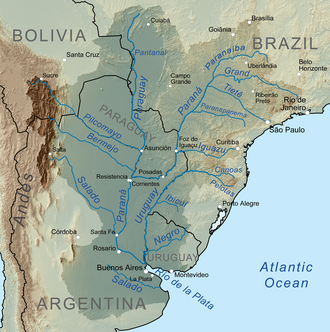
Key Facts
- Total Length: 1,060 kilometers (660 miles).
- Drainage Basin: 123,000 square kilometers (47,000 square miles).
- Course: Flows from the Sierra de Santa Victoria in Bolivia to the Paraguay River.
- Distinctive Feature: High sediment load that gives the water a red hue and alters the river's course.
- Navigability: Non-navigable due to shallow waters and heavy sedimentation.
Geography and Course
The Bermejo River originates in the Sierra de Santa Victoria mountain range near Tarija, Bolivia. Specifically, it begins a few kilometers southeast of Chaguaya and is located near La Quiaca in the Jujuy Province of Argentina. From its source, the river generally flows in a southeastern direction.
In its upper reaches, the river is fed by several primary tributaries, including the Lipeo River, followed further downstream by the Grande de Tarija, the Iruya River, and the San Francisco River. For a portion of its journey, the Bermejo serves as the international boundary between Bolivia and Argentina.
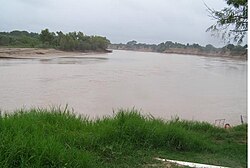
The Split: Teuco and Bermejito
As the river reaches the plains of the Argentine Gran Chaco near the Tropic of Capricorn, it splits into two distinct branches:
- The Northern Branch: Known as the Teuco River (or Bermejo Nuevo), this is the main stem of the river. It marks the boundary between the provinces of Chaco and Formosa after leaving Salta.
- The Southern Branch: Known as the Río Bermejito, this is the bed of the old Bermejo River. It is an intermittent and meandering stream that passes through the El Impenetrable jungle in Chaco Province.
The two branches eventually rejoin near Villa Río Bermejito (25°39′S 60°11′W), forming the Lower Bermejo River before finally emptying into the Paraguay River opposite the city of Pilar, Paraguay.
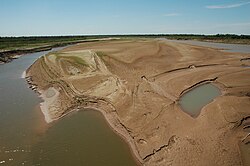
Hydrology and Environmental Challenges
The Bermejo is characterized by its extreme irregularity. Its mean annual discharge fluctuates wildly, ranging from a low of 20 cubic metres per second to a peak of 14,000 cubic metres per second.
The river is famous for carrying massive amounts of red-colored sediments. These deposits create irregular accumulations on the riverbed, which can physically shift the river's course over time, leaving behind wet depressions where the water once flowed. This high sediment load and the resulting shallow depths made 19th-century attempts to establish commercial navigation unsuccessful.
Historical Remnants
The shifting nature of the Bermejito branch has left behind ghosts of the past. Along its shores, one can still find the ruins of former settlements, including Concepcion del Bermejo, San Bernardo de Vértiz, and La Cangayé.
Bermejo River Summary
| Feature | Detail |
|---|---|
| Total Length | 1,060 km (660 mi) |
| Basin Area | 123,000 km² (47,000 sq mi) |
| Discharge Range | 20 to 14,000 m³/s |
| Source | Sierra de Santa Victoria, Bolivia |
| Mouth | Paraguay River |
| Indigenous Names | Teuco (Wichí), Ypitá (Guaraní) |
Frequently Asked Questions
Why is the Bermejo River called the "Red River"?
The river earns its name from the high volume of red-colored sediments it carries, which tints the water.
Is the Bermejo River navigable for ships?
No, the river is not navigable. Efforts to open it for commercial use in the late 19th century failed because the water is too shallow and contains too much sediment.
What are the two main branches of the river in Argentina?
The river splits into the northern branch, known as the Teuco River (or Bermejo Nuevo), and the southern branch, known as the Río Bermejito.
Where does the Bermejo River eventually end?
The river flows into the Paraguay River, opposite the city of Pilar in Paraguay.
Which countries does the Bermejo River flow through?
The river flows through Bolivia and Argentina, serving as an international boundary between the two nations for part of its course.