Belo Horizonte Metropolitan Region
Located in the heart of the state of Minas Gerais, Brazil, the Metropolitan Region of Belo Horizonte—commonly referred to as Greater Belo Horizonte—stands as one of the most significant urban centers in South America. Serving as a vital economic and administrative hub, this expansive region integrates a diverse array of municipalities that support the primary city of Belo Horizonte.
As of 2020, the region boasts a total population of 6,006,887 inhabitants, ranking it as the third largest metropolitan area in Brazil. This dense population center operates within the UTC-3 time zone (Brasília Time).
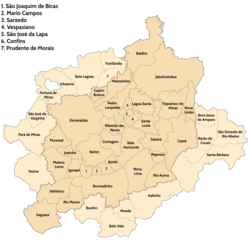
Key Facts
- Total Population: 6,006,887 (as of 2020).
- National Rank: 3rd largest metropolitan area in Brazil.
- Composition: 34 core municipalities.
- State: Minas Gerais, Brazil.
- Primary City: Belo Horizonte.
Regional Structure and Municipalities
The metropolitan region is a complex network of 34 municipalities that collaborate to manage urban growth and infrastructure. While Belo Horizonte is the most populous city and the central anchor of the region, the surrounding municipalities provide essential residential, industrial, and agricultural support.
Core Municipalities
The 34 municipalities comprising the metropolitan area include:
- Baldim, Belo Horizonte, Betim, Brumadinho, Caeté, Capim Branco, Confins, Contagem, Esmeraldas, Florestal, Ibirité, Igarapé, Itaguara, Itatiaiuçu, Jaboticatubas, Nova União, Juatuba, Lagoa Santa, Mário Campos, Mateus Leme, Matozinhos, Nova Lima, Pedro Leopoldo, Raposos, Ribeirão das Neves, Rio Acima, Rio Manso, Sabará, Santa Luzia, São Joaquim de Bicas, São José da Lapa, Sarzedo, Taquaraçu de Minas, and Vespasiano.
The Metropolitan Belt
Beyond the core metropolitan region lies the Metropolitan Belt (known in Portuguese as Colar Metropolitano). This is a secondary ring of 16 municipalities that maintain strong socio-economic ties to the central hub, extending the region's influence further into the state of Minas Gerais.
The municipalities that form this belt are:
- Barão de Cocais, Belo Vale, Bom Jesus do Amparo, Bonfim, Fortuna de Minas, Funilândia, Inhaúma, Itabirito, Itaúna, Moeda, Pará de Minas, Prudente de Morais, Santa Bárbara, São Gonçalo do Rio Abaixo, São José da Varginha, and Sete Lagoas.
| Category | Details |
|---|---|
| Common Name | Greater Belo Horizonte |
| State/Country | Minas Gerais, Brazil |
| Population (2020) | 6,006,887 |
| Core Municipalities | 34 |
| Belt Municipalities | 16 |
| Time Zone | UTC-3 (BRT) |
Frequently Asked Questions
What is Greater Belo Horizonte?
Greater Belo Horizonte is the common name used to describe the Metropolitan Region of Belo Horizonte, which consists of 34 integrated municipalities in the state of Minas Gerais, Brazil.
How large is the population of the region?
According to 2020 data, the total population of the metropolitan region is 6,006,887, making it the third largest metropolitan area in Brazil.
What is the Colar Metropolitano?
The Colar Metropolitano, or Metropolitan Belt, is a group of 16 additional municipalities that surround the core metropolitan area and are economically linked to it.
Which city is the largest in the region?
Belo Horizonte is the largest city by population within the metropolitan area.
Where is the region located geographically?
The region is located in the state of Minas Gerais, Brazil, at the coordinates 19°55′S 43°56′W.