Belgrade Astronomical and Meteorological Observatory: A Legacy of Science
The scientific landscape of Serbia was fundamentally transformed in the late 19th century with the formalization of weather and celestial monitoring. What began as a centralized effort to collect data evolved into a sophisticated hub for astronomy, meteorology, and geophysics, shaping the region's understanding of the natural world.
The Foundation of a Unified Network
The journey began on September 27, 1888, during the Feast of the Cross. Following a request from Nedeljković, the Minister of Education, Vladan Đorđević passed the Regulation on the establishment of a unified network of meteorological stations across the Kingdom of Serbia. This legislative move designated the Observatory as the central meteorological station responsible for nationwide data collection.
The Astronomical-Meteorological Observatory
Initially operating out of the Gajzler house, the institution moved on May 1, 1891, to a purpose-built facility at 8 Bulevar Oslobođenja. Designed by architect Dimitrije T. Leko, the new building was equipped with modern instruments for both astronomical and meteorological observations and featured two small astronomical pavilions.
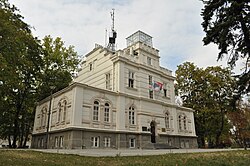
The facility served as a practical "workshop" for students of the Grand School and operated as a People's Observatory. Utilizing Bardu field glasses located on an artificial hill, the site became a popular destination for citizens and prominent figures. A notable highlight occurred in 1910, when visitors gathered to observe Halley's Comet.
Pioneering Seismic and Geomagnetic Research
Under the leadership of Nedeljković, the Observatory became the birthplace of seismic and geomagnetic research in Serbia. Through a partnership with Miklós Konkoly, the founder of modern Hungarian astronomy and meteorology, the facility acquired its first seismograph—an instrument used to detect and record earthquakes.
War, Destruction, and Recovery
The end of World War I brought significant hardship. In 1918, during the Austro-Hungarian army's withdrawal from Belgrade, the observatory's instruments were completely destroyed. However, Nedeljković successfully secured new equipment through German war reparations, ensuring that no state funds were spent. These instruments, which arrived in 1922, were valued at three times the original cost of the observatory building itself.
By 1924, the Faculty Council officially divided the institution into two distinct entities: the Astronomical Observatory and the Meteorological Observatory of Belgrade University.
Evolution of Meteorological Services
The institute's role in public safety and science expanded rapidly at the turn of the century. In August 1902, it initiated the coded international exchange of weather data and began producing its first weather forecasts. By 1912, the daily newspaper Politika began publishing these reports and forecasts for the general public.
Meteorology saw further advancement under the leadership of Vujović in the early 20th century. This era also marked the beginning of the influential work on climatology by Milutin Milanković. The legacy of this scientific pursuit is honored today in the Park Milutin Milanković, which was planted around the observatory in the 1950s and officially named in 2010.
Global Integration and the WMO
Serbia's commitment to global science was cemented on September 22, 1947, in Washington, where representatives of the FHMI signed the Convention to establish the World Meteorological Organization (WMO). The FHMI was one of the 45 founding meteorological services of the WMO. Following the abolition of the FHMI in April 2003, the RHSS became its legal successor, inheriting all responsibilities and international cooperation duties.
Key Facts
- Established: Unified network regulation passed September 27, 1888.
- Location: Purpose-built facility opened May 1, 1891, at 8 Bulevar Oslobođenja.
- Key Figures: Nedeljković (Founder/Leader), Dimitrije T. Leko (Architect), and Milutin Milanković (Climatologist).
- Major Event: Observation of Halley's Comet in 1910.
- Recovery: Instruments replaced in 1922 via German war reparations.
- Global Role: Founding member of the World Meteorological Organization (WMO) in 1947.
| Year | Event | Significance |
|---|---|---|
| 1888 | Regulation passed | Creation of unified meteorological network |
| 1891 | Move to Bulevar Oslobođenja | Establishment of dedicated scientific facility |
| 1902 | International data exchange | Start of coded weather data and forecasting |
| 1918 | Instrument destruction | Loss of equipment during WWI withdrawal |
| 1924 | Institutional split | Separation into Astronomical and Meteorological Observatories |
| 1947 | WMO Convention | Founding of the World Meteorological Organization |
Frequently Asked Questions
Who designed the observatory building?
The building located at 8 Bulevar Oslobođenja was designed by the architect Dimitrije T. Leko.
How were the instruments replaced after World War I?
Nedeljković acquired new instruments using war reparations from Germany, meaning no state funds were used for the replacement.
When did the observatory start providing public weather forecasts?
The institute began making forecasts in 1902, and the newspaper Politika started publishing them in 1912.
What is the significance of the Park Milutin Milanković?
The park was planted around the observatory in the 1950s and named in 2010 to honor Milutin Milanković, who began his climatology work during the observatory's development.
What happened to the FHMI in 2003?
The FHMI was abolished in April 2003, and the RHSS became its legal successor, taking over its responsibilities and international cooperation roles.