The Incredible World of Beetles: An Exploration of Order Coleoptera
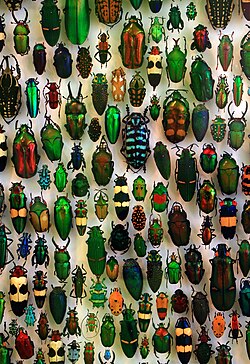
With an estimated 400,000 described species, beetles represent the largest order of insects on Earth. Belonging to the order Coleoptera, these resilient creatures make up nearly 40% of all described arthropods and approximately 25% of all known animal species. While scientists estimate the true number of species could be anywhere between 0.9 and 2.1 million, one thing is certain: beetles are a dominant force in our planet's ecosystems.
Key Facts
- Scientific Order: Coleoptera
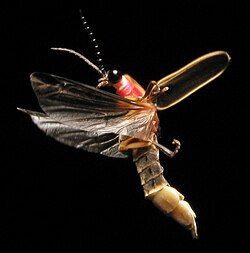
- Defining Feature: Hardened forewings known as elytra.
- Species Diversity: ~400,000 described; up to 2.1 million estimated.
- Temporal Range: Present for approximately 299 million years.
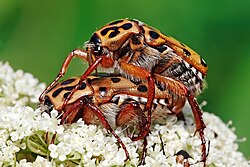
- Global Impact: They serve as pollinators, predators, decomposers, and even pests.
Evolutionary History
The history of beetles spans hundreds of millions of years, dating back to the Late Paleozoic era. Their evolutionary journey has seen them adapt to nearly every environment on Earth.
The Permian and Triassic Eras
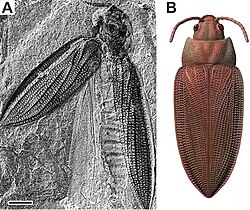
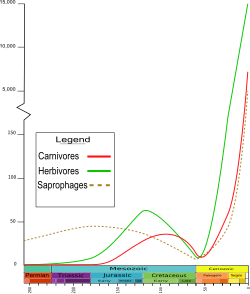
During the Permian and Triassic periods, early beetle genera were primarily detritivores—organisms that feed on dead organic material. Fossil evidence, such as Moravocoleus permianus, provides a glimpse into the morphology of these ancient ancestors.
The Jurassic and Cretaceous Periods
As the Mesozoic era progressed, beetle diets diversified. During the Jurassic, herbivorous (plant-eating) and carnivorous (meat-eating) genera became more common. By the Cretaceous, beetles were deeply integrated into complex food webs, interacting with dinosaurs and early flowering plants.
The Cenozoic Era to Present
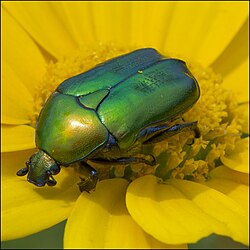
In the Cenozoic era, beetle diversity exploded across all trophic levels. Modern beetles have developed highly specialized traits, including structural coloration—a type of iridescent coloring caused by the physical structure of the insect's surface rather than pigment.
![Fossil buprestid beetle from the Eocene (50 mya) Messel pit, retaining its Structural coloration[45]](/images/28/67/28677ba429dba613c38ec21db9aa45a72055c9be54f1f2361219a42711a8a9c3.jpg)
Anatomy and Physiology
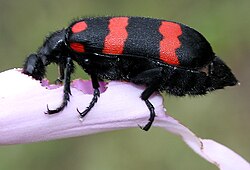
What truly sets a beetle apart from other insects is its unique body structure. The most distinguishing feature is the elytra, which are the hardened front pair of wings that act as protective covers for the delicate flight wings underneath.
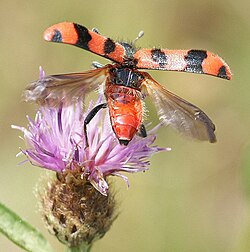
External Morphology
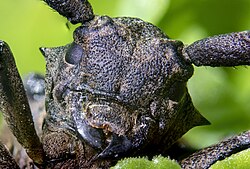
A beetle's body is divided into three primary sections: the head, the thorax, and the abdomen. Each section houses specialized structures for survival.
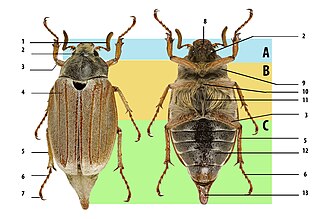
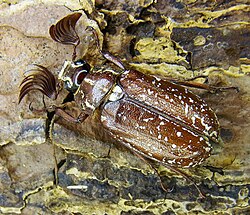
- Head: Contains the mouthparts and sensory organs like the compound eyes and antennae. Antennae vary wildly in shape, from fan-like structures to simple filaments.
- Thorax: The locomotive center, consisting of the prothorax, mesothorax, and metathorax. It supports the legs and wings.
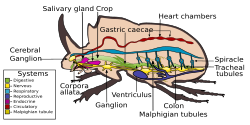
- Abdomen: Houses the vital internal organs and often features spiracles—small openings used for respiration.
Specialized Adaptations
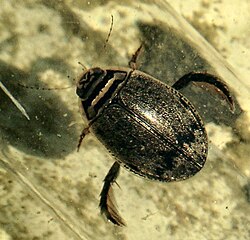
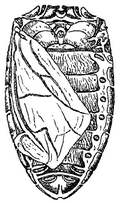
Beetles have evolved extraordinary ways to navigate their environments. For example, diving beetles have adapted their hind legs into swimming limbs, and some species use air bubbles trapped against their abdominal spiracles to breathe underwater.
Life Cycle and Reproduction
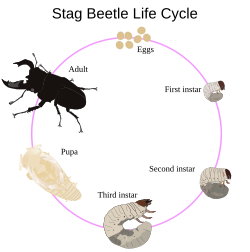
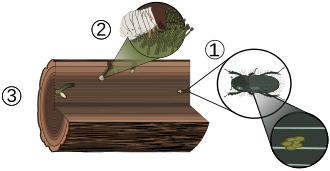
Most beetles undergo holometabolous development, meaning they pass through four distinct life stages: egg, larva, pupa, and adult. This process, known as complete metamorphosis, allows the larvae and adults to occupy different ecological niches, reducing competition for food.
The Larval Stage
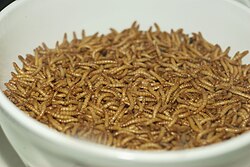
The larval stage is often the most active period for feeding. Depending on the species, larvae can take many forms, such as the "scarabaeiform" (grub-like) larvae seen in many heavy-bodied beetles.
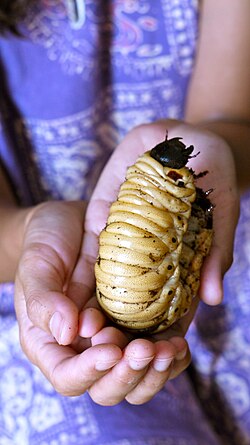
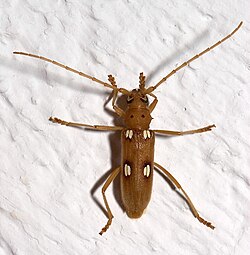
Some species are remarkably long-lived during this stage. For instance, the ivory-marked beetle can live inside hardwoods for up to 40 years before reaching adulthood.
Ecological Roles and Human Interaction
Beetles are essential to the health of our planet, but their relationship with humans is complex. They can be vital allies, devastating pests, or even sources of food.
Beneficial Roles
- Pollination: Many beetles assist in the reproduction of flowering plants.
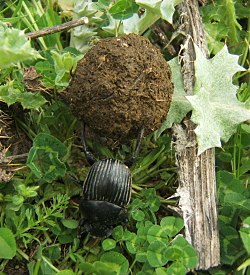
- Decomposition: Dung beetles and other detritivores recycle nutrients back into the soil.
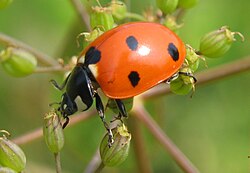
- Pest Control: Predatory beetles, such as ladybugs (coccinellids), help control agricultural pests.
- Mutualism: Some beetles live in symbiotic relationships, such as ambrosia beetles that carry fungal spores to feed their larvae.
Challenges and Pests
Not all beetle interactions are positive. Certain species, like the Colorado potato beetle, are significant agricultural pests. Others, such as the Mountain Pine Beetle, can undergo massive outbreaks that impact entire forest ecosystems.
Cultural and Scientific Significance
Throughout history, beetles have appeared in art, religious symbols (like the Egyptian scarab), and even as jewelry. In the scientific community, they have long been a subject of intense study. The naturalist Alfred Russel Wallace, for example, collected over 83,000 beetles, discovering 2,000 new species in the process.
!["Remarkable Beetles Found at Simunjon, Borneo".[c] A few of the 2,000 species of beetle collected by Alfred Russel Wallace in Borneo](/images/3b/fe/3bfe35e3b5eb146858c6bd5721415f6da6f08acdf0eaa8e50f3a2af857e4874f.jpg)
Summary of Beetle Diversity and Traits
| Category | Examples/Traits | Ecological Impact |
|---|---|---|
| Trophic Levels | Detritivores, Herbivores, Carnivores | Regulates food webs and nutrient cycling |
| Morphology | Elytra (hardened wings), diverse antennae | Provides protection and sensory capability |
| Human Relation | Pollinators, Pests, Food source | Supports agriculture or causes crop damage |
| Development | Complete metamorphosis (Egg, Larva, Pupa, Adult) | Reduces competition between life stages |
Frequently Asked Questions
What is the main difference between a beetle and other insects?
The primary distinguishing feature of the order Coleoptera is the presence of elytra. These are the front pair of wings that have evolved into hard, protective cases that cover the functional hind wings.
How do beetles breathe?
Beetles use a respiratory system involving spiracles, which are small openings located along the sides of their bodies. These openings allow air to enter the tracheal system to reach internal tissues.
Are all beetles harmful to humans?
No. While some species are significant agricultural pests, many others are highly beneficial. They act as pollinators, decomposers, and natural predators that control other insect populations.
How long do beetles live?
Life spans vary wildly by species. Some may live only a few weeks as adults, while others, like the ivory-marked beetle, can spend decades in their larval stage within wood.What is metamorphosis in beetles?
Beetles undergo complete metamorphosis, a process where they transition through four distinct stages: egg, larva, pupa, and adult. This allows the young (larvae) and the adults to eat different foods and live in different environments.