Bed and Breakfast Trends and Regulations Worldwide
The bed and breakfast (B&B) concept is a global phenomenon, offering travelers a more intimate and personalized alternative to traditional hotels. While the core premise—a room for the night and a morning meal—remains consistent, the way B&Bs are regulated, branded, and operated varies significantly across different cultures and legal jurisdictions.
From the rustic boutique hotels of China to the highly regulated chambre d’hôtes of France, these establishments reflect the local economy and tourism priorities of their respective nations.
Key Facts
- The United States hosts approximately 17,000 B&Bs, while Australia has around 7,000.
- In France, B&Bs are legally limited to five rooms and 15 guests.
- Japan's minshuku typically includes dinner in addition to breakfast.
- Israel's B&B industry, known as zimmer, grew significantly in the 1990s as a response to declining agricultural profitability.
- India utilizes a Gold and Silver categorization system for its approved B&Bs and homestays.
B&B Landscapes in North America and Oceania
In the United States, B&Bs are typically private family homes or converted small buildings. Most feature between four and eleven rooms, with an average of six. These establishments provide short-term lodging where the room rate includes a full breakfast.
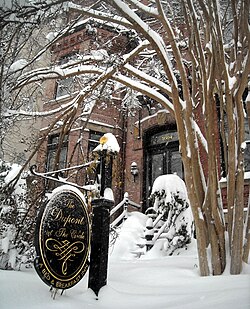
Canada's approach varies by province; in Quebec, B&Bs are recognized as tourist accommodations within a private residence where the operator lives on-site and provides an all-inclusive price for the room and breakfast.
Across the Pacific, Australia's B&B industry is a significant economic driver, generating roughly $132 million in annual revenue from approximately 7,000 establishments. Similarly, New Zealand markets these as "hosted accommodation," emphasizing the guest's placement within the host's own home.
European Variations and Standards
Europe offers a diverse array of B&B styles, often tied to strict national or regional laws. In France, the chambre d’hôtes must be hosted by the resident and is strictly capped in size to maintain its character.
The United Kingdom features B&Bs in city centers, the countryside, and seaside towns. In England, quality is monitored by VisitEngland—which offers star ratings and "Visitor Ready" accreditation—and the AA, which evaluates both physical quality and guest experience. In Northern Ireland, the definition specifically requires a cooked breakfast and daily room servicing, though evening meals are not mandatory. Most UK B&Bs provide en suite facilities.
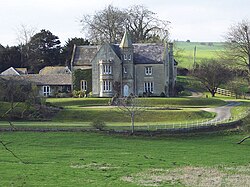
Ireland's 3,000 B&Bs range from townhouses to farmhouses, with 750 certified by Fáilte Ireland. Meanwhile, Italy manages its B&Bs through a combination of national law (Legge 29 marzo 2001, n. 135) and specific regional regulations.
Asian and Middle Eastern Hospitality
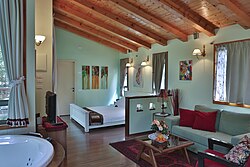
In Asia, B&Bs often blend traditional architecture with modern tourism. China has seen a rise in rustic boutique hotels in picturesque rural areas, often remodeled by immigrants. While initially catering to foreign tourists, these are increasingly popular with domestic travelers.
Japan offers the minshuku, a style of hospitality rooted in the ryokan (traditional inn) tradition, which distinguishes itself by offering dinner alongside bed and breakfast.
India's B&B sector received a significant boost leading up to the 2010 Commonwealth Games in Delhi. The Ministry of Tourism now manages the "Incredible India Bed & Breakfast and Homestay" scheme, categorizing properties as Gold or Silver based on specific criteria.
Israel's unique version is the zimmer (German for 'room'). This industry flourished in the 1990s, particularly in the Galilee and Upper Galilee regions, as families in kibbutzim, moshavim, and farms diversified their income. Recently, this trend has expanded into the southern Negev region.
Global B&B Comparison Summary
| Country/Region | Local Term/Scheme | Key Characteristic | Scale/Regulation |
|---|---|---|---|
| United States | B&B | Private family homes | ~17,000 establishments |
| France | Chambre d’hôtes | Resident-hosted | Max 5 rooms / 15 guests |
| Japan | Minshuku | Includes dinner | Ryokan tradition |
| Israel | Zimmer | Agricultural diversification | Strong in Galilee & Negev |
| India | Incredible India Scheme | Government approved | Gold and Silver categories |
| Australia | B&B | Economic driver | ~7,000 establishments |
| South Africa | B&B / Guesthouse | Graded system | 1 to 5 stars + Premium |
Frequently Asked Questions
What is a zimmer in Israel?
A zimmer is the Israeli term for a bed and breakfast. The industry grew in the 1990s as farming families in moshavim and kibbutzim sought new revenue streams, primarily in northern Israel and more recently in the Negev.
How does a Japanese minshuku differ from a standard B&B?
Unlike a standard B&B that only provides breakfast, a minshuku follows the ryokan tradition and typically offers dinner as part of the stay.
What are the legal limits for B&Bs in France?
Under the French Tourism Code, a chambre d’hôtes is limited to a maximum of five rooms and 15 guests, and the property must be hosted by the resident.
How are B&Bs graded in South Africa?
The Tourism Grading Council of South Africa uses a star system ranging from 1 to 5 stars, with an additional 5-star Premium category available for high-end establishments.
What is the average size of a B&B in the United States?
While they typically range from four to eleven rooms, the average American B&B has six rooms.