Bazaars and Souks: The History and Architecture of Traditional Marketplaces
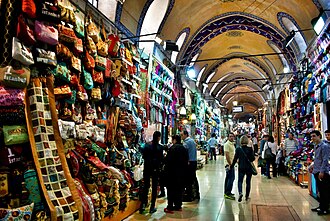
Across West Asia, North Africa, the Balkans, Central Asia, and South Asia, the traditional marketplace serves as the beating heart of the city. Known as a bazaar or souk, these vibrant commercial hubs consist of multiple small stalls and shops, typically arranged along vaulted or covered streets. More than just centers of trade, they have historically functioned as the primary nodes for the exchange of goods, culture, and information.
The terminology reflects the diverse linguistic landscape of these regions. The word "bazaar" originates from Persian, referring to a town's public market district, while "bazaari" describes the collective group of merchants, bankers, and craftsmen who operate within them. Similarly, "souk" is the Arabic term for marketplaces found predominantly in West Asia and North Africa.
Key Facts
- Ancient Origins: Evidence of market districts dates back to approximately 3000 BCE in ancient West Asia.
- Architectural Features: Characterized by roofed streets and caravanserais (courtyard buildings providing lodging for traders).
- Global Reach: Found across a vast geography including Iran, Turkey, Morocco, Syria, and Jordan.
- Cultural Impact: Heavily featured in the 19th-century Orientalist art movement and Romantic literature.
- UNESCO Recognition: Several historic bazaars, including those in Fez, Aleppo, and Tabriz, are protected World Heritage Sites.
The Evolution of the Marketplace
Origins in Antiquity
While archaeological evidence is limited, historical records suggest that the concept of the bazaar existed in Iran as early as 3000 BCE. Ancient Mesopotamia also showed signs of dedicated commercial districts, and international trade centers likely existed in Egypt. During the Achaemenid Persian period (550–330 BCE), markets near Persepolis sold various crafts.
These marketplaces often formed networks along ancient caravan trade routes, linking major cities. Interestingly, the Greeks also regulated trade in city centers using stoa (covered walkways), a planning concept that spread to West Asia following the conquests of Alexander the Great during the Seleucid period.
Development in the Islamic Period
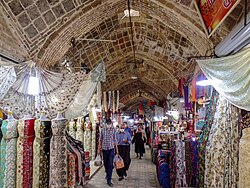
In the early Islamic era, the organization of markets evolved significantly. While early prohibitions against permanent market buildings existed, these were disregarded by the Umayyad period (7th to 8th centuries). Caliphs such as Mu'awiya I and Hisham ibn Abd al-Malik began constructing permanent structures and levying taxes in markets like Medina, Basra, Fustat, and Kairouan.
Architecturally, the most prestigious markets were usually situated near the city's central Friday mosque. In cities like Cairo and Aleppo, bazaars often started as a single main street before branching out into a complex web of alleys.
Regional Growth and Patronage
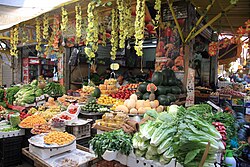
In Iran, bazaars often developed in the suburbs outside the shahristān (the formal city) until the 11th century, after which they were typically enclosed within expanded city walls. By the 10th century, the bazaar had become the city's financial center, patronized by ruling elites.
Under the Mamluk Sultanate and the Ottoman Empire, sultans and royal family members sponsored the construction of commercial buildings. These were often managed as a waqf (a legal endowment), where the revenues generated by the shops were used to maintain religious complexes.
Architecture and Preservation
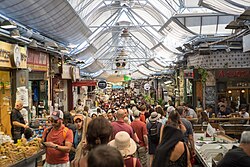
The physical structure of the bazaar is designed for both commerce and climate protection. The use of vaulted ceilings and covered streets protects merchants and shoppers from the sun and rain. One of the oldest preserved urban commercial structures is the Khan al-Mirjan in Baghdad, built in 1359.
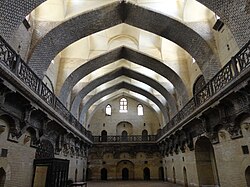
Today, several of these historic sites are recognized for their global significance:
- Medina of Fez, Morocco: A UNESCO World Heritage Site since 1981, featuring long market streets like Tala'a Kebira.
- Al-Madina Souk, Aleppo: The world's largest covered historic market, stretching approximately 13 kilometers.
- Bazaar Complex, Tabriz: Listed by UNESCO in 2010.
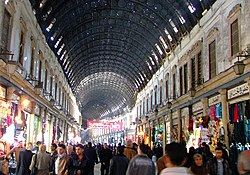
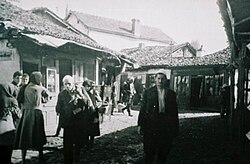
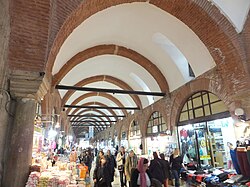
Other notable examples include the Old Bazaar of Pristina in Kosovo, the Al-Hamidiyah Souq in Damascus, and the arasta of the Selimiye Mosque complex in Edirne.
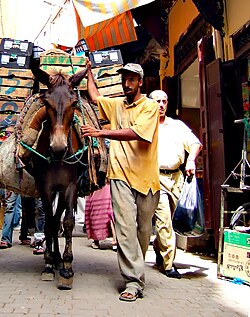
In some traditional quarters, such as the car-free Medina of Fes, traditional transport like mules is still used to move goods through the narrow streets.
Bazaars in Art and Literature
The exoticism of the bazaar captured the imagination of 19th-century European artists and writers, a movement known as Orientalism. Painters such as Jean-Léon Gérôme, Delacroix, and Edwin Lord Weeks produced detailed works depicting the vibrant street scenes and commerce of the East.
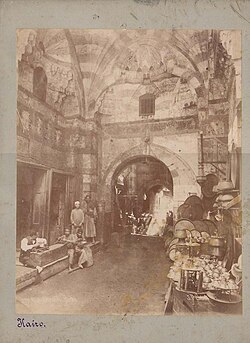
In literature, the popularity of The Arabian Nights inspired a genre of "Oriental tales." While often unreliable or romanticized, the travel narratives of authors like Olympe Audouard and Jacques Majorelle provided detailed, if stylized, descriptions of these marketplaces.
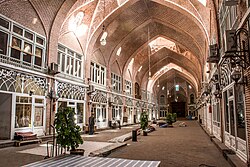
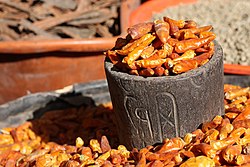
From the covered streets of Tabriz to the spice-filled air of Sanaa, these markets remain enduring symbols of regional heritage.
Market Summary Table
| Term | Origin | Primary Regions | Notable Example |
|---|---|---|---|
| Bazaar | Persian | Central Asia, Iran, Turkey, South Asia | Grand Bazaar (Istanbul) |
| Souk | Arabic | North Africa, West Asia | Al-Madina Souk (Aleppo) |
| Landa Bazaar | South Asia | South Asia | Second-hand goods markets |
Frequently Asked Questions
What is the difference between a bazaar and a souk?
The primary difference is linguistic and regional. "Bazaar" comes from Persian and is commonly used in Iran, Central Asia, and Turkey, while "souk" is the Arabic term used predominantly in North Africa and West Asia.
What is a caravanserai?
A caravanserai is a courtyard building that traditionally provided lodging, food, and security for traders and their animals along ancient caravan trade routes.
How were historic bazaars funded?
Many were sponsored by sultans or ruling elites through a waqf, a legal endowment where the profits from the commercial shops were used to fund the upkeep of religious institutions.
Which is the largest covered historic market in the world?
The Al-Madina Souk in Aleppo, Syria, is the largest, with an approximate length of 13 kilometers.
What is a "Landa bazaar"?
A Landa bazaar is a specific type of terminal market found in South Asia that specializes in the sale of second-hand goods.