Battle of Tigranocerta: Rome's Tactical Triumph Over the Armenian Empire
On October 6, 69 BC, the rolling landscapes of ancient Armenia became the stage for one of the most striking tactical victories of the Roman Republic. The Battle of Tigranocerta pitted the disciplined legions of Rome against the numerically superior forces of King Tigranes the Great. This clash was not merely a territorial dispute but a pivotal moment in the Third Mithridatic War, demonstrating how superior strategy and discipline could dismantle a massive imperial army.
The conflict centered on the city of Tigranocerta, a flourishing center of Hellenistic culture founded by Tigranes. The battle would ultimately see the Roman commander, Lucius Licinius Lucullus, secure a decisive victory that sent shockwaves through the Near East.
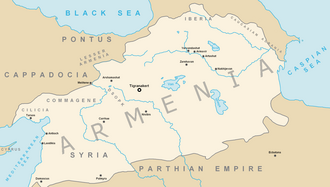
Key Facts
- Date: October 6, 69 BC.
- Location: Tigranocerta, Armenia (modern-day Silvan, Turkey).
- Outcome: Decisive Roman victory and capture of the capital city.
- Roman Commander: Lucius Licinius Lucullus.
- Armenian Commander: King Tigranes the Great.
- Defining Tactic: A flanking maneuver that targeted the unarmored legs of Armenian cataphracts.
The Road to War: Background and Escalation
The roots of the battle lay in the ambitions of Tigranes the Great, who had expanded the Kingdom of Armenia into a vast empire stretching across Mesopotamia and the Levant. His power was bolstered by an alliance with his father-in-law, Mithridates VI of Pontus. However, as Rome achieved successive victories in the Roman–Mithridatic Wars, Mithridates was forced to flee to Armenia for sanctuary.
The Roman Senate, seeking the surrender of Mithridates, sent an ambassador, Appius Claudius, to demand his extradition. When Tigranes refused, Lucius Licinius Lucullus took the initiative. Despite lacking a formal mandate from the Senate, Lucullus invaded Armenia in the summer of 69 BC, marching his troops across Cappadocia and the Euphrates River.
Tigranes was caught off guard by the speed of the Roman advance. After a failed attempt to slow the Romans with a small cavalry force under General Mithrobarzanes, Tigranes retreated to the Taurus Mountains to gather a larger army, leaving the defense of Tigranocerta to a commander named Mancaeus.
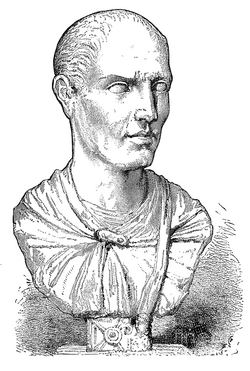
The Siege and the First Chemical Warfare
Lucullus arrived at Tigranocerta to find a heavily fortified city with walls reaching 25 meters in height. The siege was marked by a notable technological clash: the defenders used naphtha (a flammable liquid hydrocarbon) to repel Roman siege engines. Some historians cite this as one of the earliest recorded instances of chemical warfare.
Despite the walls, the city's internal stability was fragile. Tigranes had populated Tigranocerta with forcibly relocated peoples, including Greeks, Jews, and Arabs. Their lack of loyalty to the Armenian crown became evident when they began cheering for the Roman army from the walls, signaling a willingness to betray Tigranes.
Comparing the Forces
The disparity in numbers between the two armies was immense, though ancient sources vary wildly in their estimates. While some accounts claim Tigranes led hundreds of thousands, modern scholars suggest a more realistic, yet still daunting, force of 70,000 to 100,000 men.
The Armenian army relied heavily on cataphracts—elite, heavily armored cavalry clad in mail and armed with lances. In contrast, the Romans relied on their veteran legionaries and a smaller contingent of allied Galatian, Thracian, and Bithynian troops.
| Belligerent | Estimated Infantry | Estimated Cavalry | Total Estimated Strength |
|---|---|---|---|
| Roman Republic | 11,000–40,000 | 1,000–3,300 | 12,000–43,300 |
| Kingdom of Armenia | 10,000–150,000+ | 10,000–55,000 | 70,000–200,000+ |
The Engagement: Tactical Brilliance
The two armies met near the Batman-Su river. Tigranes positioned his forces on the east bank, with his elite cataphracts in the center and vassal kings leading the flanks. Lucullus, facing a superstitious army that feared fighting on October 6 (the anniversary of the Roman defeat at Arausio), famously declared he would make the day lucky for Rome.
Lucullus employed a simplex acies (a single wide line) to maximize his frontage against the cavalry. He feigned a retreat, leading Tigranes to believe the Romans were withdrawing. Instead, Lucullus led a daring maneuver, fording the river and circling a nearby hill to attack the Armenian right flank from the rear.
The Roman infantry were ordered to target the horses' legs and thighs—the only parts of the cataphracts not protected by armor. This precise strike caused the lumbering armored cavalry to panic and crash into their own infantry. The Armenian army, largely composed of raw peasant levies, collapsed into chaos and fled the field.
Aftermath and Legacy
The victory allowed the Romans to enter Tigranocerta, where the inhabitants opened the gates. The city was looted and burned, and the royal treasury—estimated at 8,000 talents—was seized. Each Roman soldier received a bonus of 800 drachma.
While the battle resulted in massive Armenian casualties (estimated between 10,000 and 100,000) and significant territorial losses south of the Taurus Mountains, it did not end the war. Tigranes and Mithridates escaped north, and the conflict continued until Lucullus' own troops mutinied in 68 BC, forcing a Roman withdrawal from Armenia.
Frequently Asked Questions
Why was the Battle of Tigranocerta significant?
It is historically significant because it demonstrated the Roman Republic's ability to defeat a numerically superior force through superior tactics and discipline, specifically by neutralizing the threat of heavy cataphract cavalry.
What were cataphracts?
Cataphracts were elite heavy cavalry units where both the rider and the horse were protected by mail armor, making them formidable shock troops in ancient warfare.
How did the Romans win despite being outnumbered?
Lucullus used a feigned retreat to lure the enemy and then executed a flanking maneuver. By attacking the unarmored legs of the cataphract horses, he turned the Armenian strength into a liability, causing the army to collapse from within.
Was chemical warfare used during the siege?
Yes, the defenders of Tigranocerta used naphtha to repel Roman siege engines, which is considered by some scholars to be one of the first uses of chemical warfare in history.
What happened to the city of Tigranocerta after the battle?
The city was captured, looted, and burned by the Roman army after the inhabitants opened the gates to them.