Basketball: History, Rules, and Evolution of the Game
Basketball is a globally beloved sport characterized by its fast pace, athletic demands, and strategic depth. From its humble beginnings in a Massachusetts gymnasium to the glittering arenas of the NBA and the Olympic Games, the sport has evolved into a worldwide phenomenon. At its core, basketball is a game of precision and teamwork, where two teams compete to outscore one another by shooting a ball through a raised hoop.
Key Facts

- Inventor: Created by James Naismith in 1891.
- Governing Body: The International Basketball Federation (FIBA) is the highest governing body.
- Team Size: Standard games feature 5 players per side.
- Olympic Status: A core Summer Olympic sport since 1936, with 3x3 basketball added in 2020.
- Primary Objective: Score points by throwing the ball through the opponent's basket from above.
The Origins of the Game
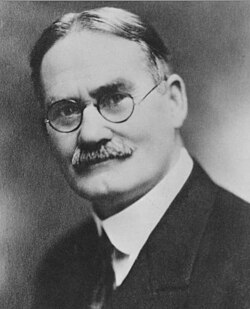
The sport was born out of a need for an indoor activity during the harsh New England winters. In early 1892, Frank Mahan suggested the name "basketball" to James Naismith, who agreed that since the game involved a basket and a ball, the name was fitting.
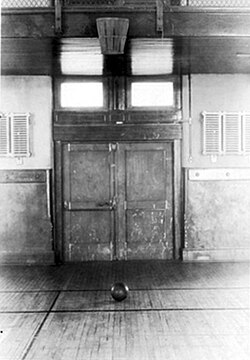
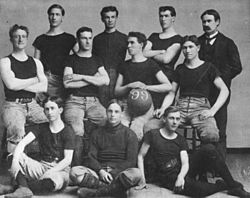
The first official game took place on January 20, 1892, at the YMCA gymnasium in Albany, New York. This inaugural match featured nine players per side and ended with a score of 1–0. The winning shot was made from 25 feet (7.6 m) on a court only half the size of a modern professional court.
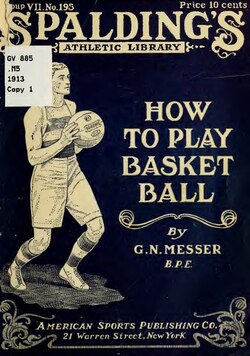
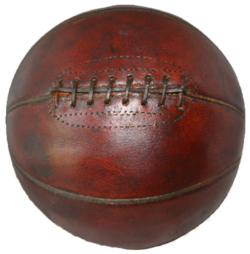
Early equipment was rudimentary. The first basketballs used were actually association footballs (soccer balls), and the courts were far simpler than the polished hardwood floors seen today.
Evolution of Competitive Play
College and High School Growth
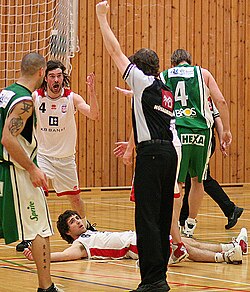
Basketball quickly spread through educational institutions. The National Association of Intercollegiate Basketball tournament (now the NAIA) was organized in 1937. This was followed by the National Invitation Tournament (NIT) in 1938 and the NCAA national tournament in 1939. However, the sport faced challenges between 1948 and 1951, when gambling scandals involving game-fixing and point shaving damaged the reputation of the NIT, leading to the rise of the NCAA tournament.
Professional and International Expansion
The professional landscape is dominated by the NBA, which later established a developmental system. In 2001, the NBA formed a developmental league, now known as the NBA G League, which consists of 31 teams as of the 2023–24 season.
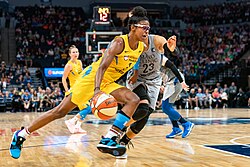
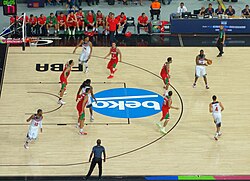
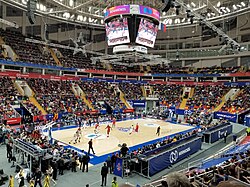
Internationally, the game has seen massive growth, with FIBA overseeing global competitions and the sport becoming a staple of the Summer Olympics. The game is also inclusive of athletes with disabilities through Wheelchair basketball.
Women's Basketball
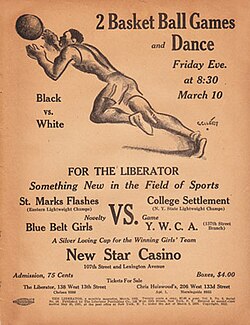
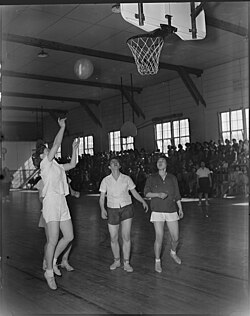
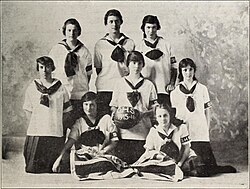
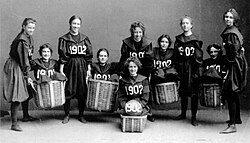
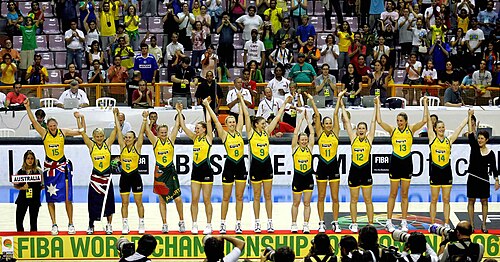
Women have been integral to the sport since its early years, with teams forming in the early 20th century. From early collegiate teams to the professional WNBA and international triumphs—such as the Australian women's victory in the 2006 FIBA World Championship—women's basketball continues to grow in popularity and skill.

Rules and Regulations
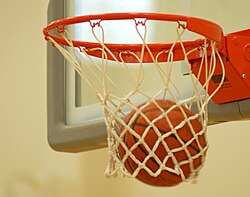
The primary goal is to score more points than the opponent. Points are awarded based on the location of the shot:
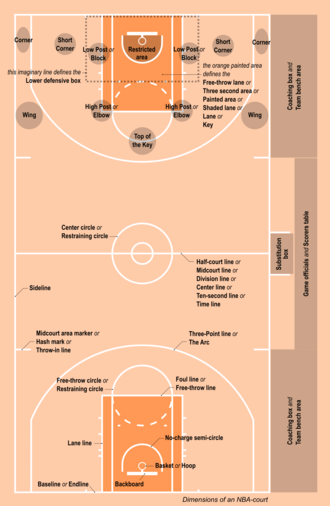
- Three-Point Shot: Awarded for shots taken beyond the three-point arc (6.75 meters in international play; 23 feet 9 inches in the NBA).
- Two-Point Shot: Awarded for any successful field goal made inside the arc.
- One-Point Shot: Awarded for successful free throws taken from the foul line after a foul.
Court and Equipment Specifications
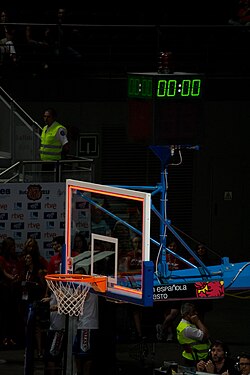
A standard international court measures 28 meters by 15 meters, while NBA and NCAA courts are slightly larger at 94 by 50 feet. Most professional courts use maple wood flooring.
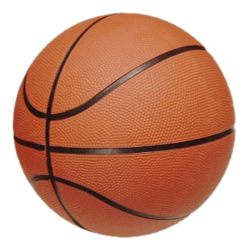
The ball size varies by category:
- Men: Size 7 (29.5 inches circumference, 22 oz).
- Women: Size 6 (28.5 inches circumference, 20 oz).
- 3x3 Basketball: A specialized ball with the size of a women's ball but the weight of a men's ball.
Gameplay and Techniques
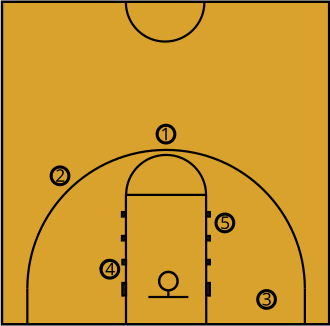
Basketball is played with five players per side, typically filling specific roles: the point guard, shooting guard, small forward, power forward, and center.
Core Skills
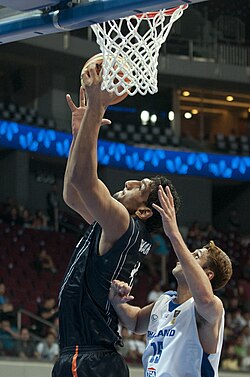
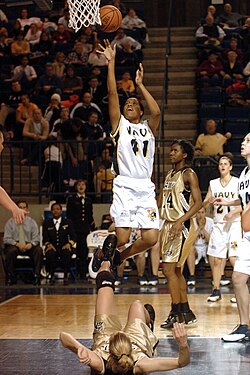
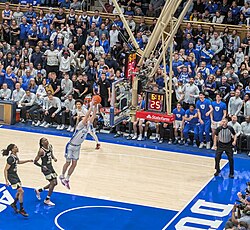
Players utilize various techniques to move the ball and score. Dribbling allows a player to move across the court, while passing is used to find open teammates. Scoring can occur through layups, jump shots, or dunks.



Defensive and Physical Dynamics
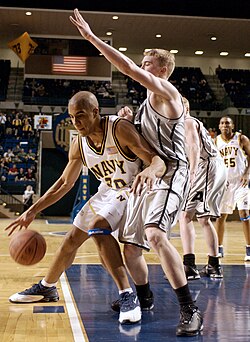
Defense involves guarding opponents to prevent them from scoring, often involving blocking shots or securing an offensive rebound to regain possession.
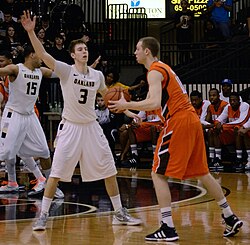
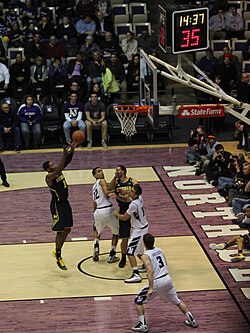
Physical stature often plays a role in positioning. For example, centers are typically the tallest players, often exceeding 7 feet, while point guards are generally shorter and more agile.


Variations of the Game
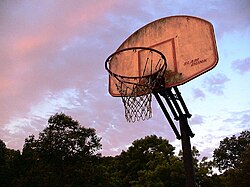
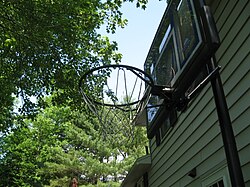
Beyond the traditional 5-on-5 game, several variations exist. Streetball is a popular outdoor version, while 3x3 basketball has become a formalized competition recognized by FIBA and included in the Olympics. Other recreational versions include H-O-R-S-E, Knockout, and 21.

| Feature | International (FIBA) | NBA / NCAA |
|---|---|---|
| Court Dimensions | 28m x 15m | 94ft x 50ft |
| 3-Point Line Distance | 6.75 meters | 23 feet 9 inches |
| Men's Ball Size | Size 7 (29.5") | Size 7 (29.5") |
| Women's Ball Size | Size 6 (28.5") | Size 6 (28.5") |
Frequently Asked Questions
Who invented basketball and when?
Basketball was invented by James Naismith in 1891, with the first official game played in January 1892.
How many players are on a standard basketball team?
A standard basketball team has five players on the court at one time.
What is the difference between a 2-point and a 3-point shot?
A 3-point shot is awarded when the ball is thrown from beyond the three-point arc; any successful shot made inside this arc is worth 2 points.
What is 3x3 basketball?
3x3 is a formalized half-court version of the game played with three players per team, which has gained official recognition from FIBA and is an Olympic sport.
What are the standard positions in basketball?
The five traditional positions are point guard, shooting guard, small forward, power forward, and center.
How does the ball size differ between men's and women's games?
Men use a size 7 ball (29.5 inches in circumference), while women use a size 6 ball (28.5 inches in circumference).