Baroque Pop: The Orchestral Fusion of Rock and Classical Music
Imagine the raw energy of 1960s rock colliding with the refined elegance of a European concert hall. This is the essence of baroque pop (also known as baroque rock), a fusion genre that emerged in the mid-1960s. By blending rock music with classical elements, artists of the era sought a majestic, orchestral sound that moved beyond the simple structures of early pop, introducing a sense of maturity, drama, and occasional melancholy to the airwaves.
The genre is most easily identified by its use of contrapuntal melodies (two or more independent melodic lines played simultaneously) and functional harmony patterns. While standard rock instruments remained, they were joined by classical staples such as the harpsichord, oboes, French horns, and string quartets.

Key Facts
- Origins: Emerged in the mid-1960s across the United Kingdom and the United States.
- Defining Instrument: The harpsichord is the most prominent signature instrument of the genre.
- Core Influence: Fuses rock and pop with the compositional styles of the Baroque period (approx. 1600–1750).
- Key Pioneers: The Beatles, The Left Banke, and producers like George Martin and Brian Wilson.
- Legacy: Influenced 1970s Philadelphia soul and 1990s chamber pop.
The Evolution of the Baroque Sound
Early Forerunners (1960–1965)
While harpsichords had appeared in pop hits since the 1940s, they didn't move to the foreground until the 1960s. Early adopters included American producers Phil Spector and Brian Wilson of the Beach Boys. The instrument's "stinging" timbre was particularly well-suited to the treble-heavy soundscapes of the time. Notable early examples include The Jamies' "Summertime, Summertime" (1958) and The Yardbirds' "For Your Love" (1965).
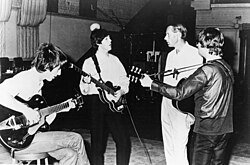
In the UK, the Zombies' 1964 single "She's Not There" is cited as a starting point due to its restrained, almost medieval arrangement. However, the true catalyst for the movement was often the collaboration between the Beatles and their producer, George Martin. A classically trained musician, Martin introduced a baroque harpsichord solo on "In My Life" (1965), which prompted other producers to adopt the sound.
The Golden Era (1965–1968)
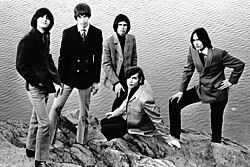
By 1966, the movement had solidified. The New York-based band The Left Banke became synonymous with the style; their hit "Walk Away Renée" is often called the quintessence of baroque pop for its elegant harpsichord and soaring violins. The term "baroque rock" was actually coined in promotional materials for this band.
Other major practitioners included the Moody Blues and Procol Harum. The Beatles continued to push the boundary with tracks like "Eleanor Rigby" and the album Sgt. Pepper's Lonely Hearts Club Band, which blended everyday lyrics with Edwardian-style parlour music. During this time, the genre reflected a broader cultural interest in retrospective fashion and the burgeoning psychedelic scene in London.
Dissipation and Modern Revivals
By the 1970s, the mainstream popularity of baroque pop faded as hard rock, disco, and punk rock took center stage. The genre's perceived "quaintness" even became a target for parody. However, its spirit lived on through the lush arrangements of Philadelphia soul in the 70s and the emergence of chamber pop in the 1990s—a response to the lo-fi production trends of that decade.
In recent years, the style has seen a revival. The Divine Comedy contributed to the 1990s resurgence, while modern acts like Panic! at the Disco (on their 2008 album Pretty. Odd.) and the Arctic Monkeys (on Tranquility Base Hotel & Casino and The Car) have integrated baroque pop elements into their sound.
![The Irish band the Divine Comedy contributed to a baroque pop revival beginning in the 1990s.[3]](/images/09/ef/09ef210345d312a5fba6425cf607feb3e41fd596bf013218894bc2c62f5421d0.jpg)
Baroque Pop Summary
| Feature | Details |
|---|---|
| Primary Instruments | Harpsichord, String Quartets, Oboe, French Horn |
| Musical Techniques | Contrapuntal melodies, functional harmony, layered harmonies |
| Peak Period | 1965–1968 |
| Key Artists | The Beatles, The Left Banke, The Zombies, Procol Harum |
| Derivative Genres | Philadelphia Soul, Chamber Pop |
Frequently Asked Questions
What exactly is baroque pop?
Baroque pop is a fusion genre that combines rock and pop music with classical elements, specifically those from the Baroque period. It is characterized by orchestral arrangements, the use of instruments like the harpsichord, and a more formal, majestic compositional style.
How does baroque pop differ from chamber pop?
While closely related, baroque pop specifically refers to the 1960s movement influenced by Baroque-era music. Chamber pop is a broader, later derivative (prominent in the 1990s) that incorporates orchestral arrangements as a reaction against low-fidelity (lo-fi) production.
Which song is considered the "quintessence" of the genre?
Journalist Matthew Guerriri identified The Left Banke's "Walk Away Renée" (1966) as the quintessence of baroque pop due to its elegantly jangling harpsichord and stately arrangement.
Did the Beatles invent baroque pop?
Not exclusively, but they were highly influential. While producers like Phil Spector and Brian Wilson were already using classical elements, the Beatles' collaboration with George Martin—particularly on "In My Life"—popularized the sound and encouraged other producers to experiment with the genre.
Why did the genre lose popularity in the 1970s?
The rise of more aggressive or dance-oriented genres, such as punk rock, hard rock, and disco, pushed the refined and "quaint" sound of baroque pop out of the mainstream.