Exploring Baoding: A Journey Through History and Modernity in Hebei
Located in central Hebei province, approximately 150 kilometers southwest of Beijing, Baoding is a city where ancient legacies meet rapid modern development. Known by its nickname, the "Boot-Shaped City" (靴城), Baoding serves as a vital hub in Northern China. Its name itself carries a profound meaning: "protect (the capital) and stabilize (the territory)."
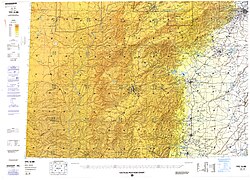
With a population exceeding 11 million as of the 2020 census, Baoding is one of only 13 Chinese cities to surpass the 10-million mark. It is a sprawling prefecture-level city that encompasses 5 districts, 4 county-level cities, and 15 counties, making it a massive administrative and economic engine for the region.
Key Facts
- Location: Central Hebei Province, China (approx. 150 km from Beijing).
- Population: Over 11.5 million (2020 census).
- Nickname: Boot-Shaped City (靴城).
- Economic Focus: High-tech industries and renewable energy (wind turbine manufacturing).
- Major Landmark: The Xiong'an New Area development zone.
- Historical Significance: Former capital of the Yan State and former provincial capital of Hebei.
A Deep Dive into History
Ancient Roots and Imperial Eras
The history of the Baoding region stretches back to prehistory. During the Yan State period, the area of Yi County served as the capital, known as Xiadu. Between 400 and 300 BC, this may have been one of the largest cities in the world, with an estimated population exceeding 300,000.
During the Song dynasty (960 AD), the administrative office of Bao prefecture was established in what is now Baoding. The region faced significant upheaval during the Mongol invasions of 1213, which left the area in ruins. It was eventually reconstructed during the Yuan dynasty, and the name "Baoding" was officially adopted in 1275.
Modern Transitions
Baoding has played a central role in the political shifts of Hebei province. The provincial capital moved to Tianjin in 1958, returned to Baoding in 1966, and finally moved to Shijiazhuang in 1968. In recent years, the city has seen massive transformation through the designation of the Xiong'an New Area in 2017, a major development zone intended to serve as a hub for the Beijing-Tianjin-Hebei region.
Geography and Climate
Baoding covers a vast area of 22,185 km². The landscape is diverse, with elevations ranging from a low of 7 meters to a high of 2,286 meters. The city experiences a seasonal climate with significant temperature variations.
Summers can be quite warm, with record highs reaching 41.9°C (107.4°F), while winters can be cold, with record lows dropping to -23.3°C (-9.9°F). The region sees its highest precipitation during the summer months, particularly in July.
City Statistics at a Glance
| Category | Data |
|---|---|
| Total Area (Prefecture-level) | 22,185 km² |
| Total Population (2020 Census) | 11,544,036 |
| GDP (Prefecture-level) | CN¥ 408.7 billion |
| Highest Elevation | 2,286 m |
| Time Zone | UTC+8 (China Standard) |
Culture and Landmarks
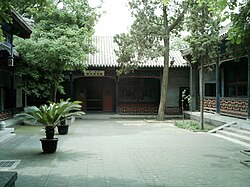
Baoding is a treasure trove of cultural heritage, boasting 16 designated state-level cultural relics. Visitors can explore the Great Wall at Zijinguan Pass, the ancient Mancheng Han Tombs, or the historic Zhili Provincial Governor Office.
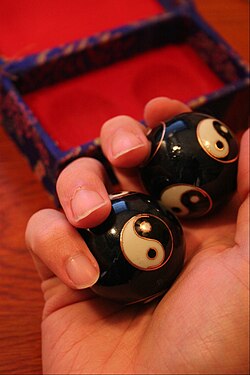
Beyond its monuments, the city is known for local specialties like Baoding balls and its unique linguistic identity. While the local dialect is a form of Ji-Lu Mandarin, it shares more similarities with the Tianjin dialect than the Beijing dialect.
Notable Historic Sites
- Yan State Capital Relics: Located in Yixian County.
- Western Qing Tombs: A significant imperial site in Yixian County.
- Baoding Military Academy: A site of historical importance from 1902 to 1923.
- Geyuan Temple: A historic religious site in Laiyuan County.
Economy and Infrastructure
Industrial Strength
Baoding is a significant player in the renewable energy sector. It hosts one of China's largest manufacturing plants for wind turbine blades. Companies like Tianwei Wind Power Technology have been instrumental in producing wind turbine generators for the domestic market.
Transportation Hub
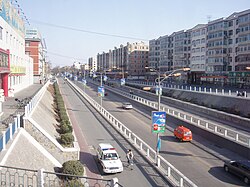
The city is well-connected via an extensive rail and road network. The Jingguang Railway provides frequent services to Beijing West, and the Baoding East railway station serves the Beijing–Guangzhou–Shenzhen–Hong Kong high-speed railway, facilitating rapid travel across the country.
Frequently Asked Questions
What does the name "Baoding" mean?
The name literally translates to "protect (the capital) and stabilize (the territory)."
Is Baoding close to Beijing?
Yes, Baoding is located approximately 150 kilometers (93 miles) southwest of Beijing.
What is the Xiong'an New Area?
Designated in 2017, the Xiong'an New Area is a major development zone in the Baoding area intended to become a central hub for the Beijing-Tianjin-Hebei development region.
What are some famous landmarks in Baoding?
Notable landmarks include the Great Wall at Zijinguan Pass, the Western Qing Tombs, the Zhili Provincial Governor Office, and the historic Baoding Military Academy.
How is the climate in Baoding?
Baoding has a seasonal climate with hot summers and cold winters. July is typically the wettest month, while January is one of the coldest.