Banda Oriental: The Colonial History of the Eastern Bank
The Banda Oriental (Spanish for "Eastern Bank"), formally known as the Banda Oriental del Río Uruguay, refers to the historic South American territories located east of the Uruguay River and north of the Río de la Plata. This strategic region encompasses what is now the nation of Uruguay, the Brazilian state of Rio Grande do Sul, and portions of Santa Catarina, Brazil.
For centuries, this land served as a volatile frontier between the Spanish and Portuguese Empires. Its history is defined by shifting borders, colonial rivalry, and the eventual emergence of independent states from the remnants of the Viceroyalty of the Río de la Plata.
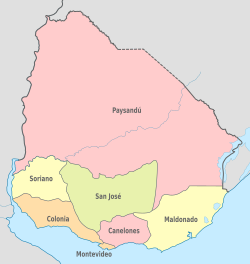
Key Facts
- Geography: Territories east of the Uruguay River and north of Río de la Plata.
- Colonial Powers: Contested primarily by the Spanish and Portuguese Empires.
- Key Cities: Colonia del Sacramento (Portuguese foundation) and Montevideo (Spanish foundation).
- Economic Driver: The introduction of cattle in the 17th century shaped the region's future economy.
- Outcome: The region eventually split, leading to the independence of Uruguay in 1828 and the formation of Brazilian states.
Early Exploration and Indigenous Peoples
Before European arrival, the region was inhabited by nomadic indigenous tribes, most notably the Charrúas, Chanás, Guayanas, and Guaraníes. While Juan Díaz de Solís discovered the territory in 1516, the Spanish "Adelantados" (colonial governors/explorers) largely ignored the area between 1535 and 1590 in their pursuit of precious metals in the interior.
Early Spanish attempts to establish permanent settlements were short-lived. Between 1527 and 1577, several ephemeral centers were founded, including the Fortín de San Lázaro and the Real de San Gabriel. Administratively, the area fell under the Viceroyalty of Peru (established 1542) until 1776.
Despite the Treaty of Tordesillas (1494), which theoretically limited Portuguese expansion to the east of the 46th meridian, the Portuguese continued to advance into the sparsely populated Banda Oriental.
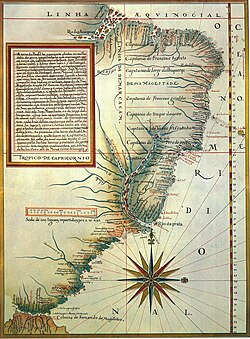
The 17th Century: Cattle and Conflict
In the early 1600s, the region was known by various names, including Banda Charrúa and Otra Banda, before settling on Banda Oriental. A pivotal moment occurred in 1618 under the governance of Hernando Arias de Saavedra (Hernandarias), who integrated the region into the Spanish colonial Governorate of the Río de la Plata and introduced large herds of cattle, laying the foundation for the region's future livestock economy.
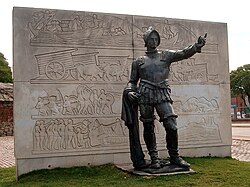
Religious missions also played a role. Franciscan fathers attempted to establish reductions (mission settlements) south of the Río Negro. Further north, Jesuit missions protected Guaraníes and Tapes from bandeirantes (Portuguese slave hunters from São Paulo). This led to massive migrations of indigenous peoples further east into modern-day Brazil to escape capture.
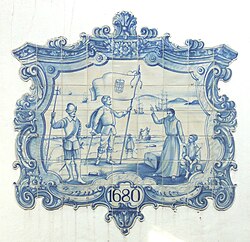
The Portuguese presence solidified in 1680 with the foundation of Colonia del Sacramento. This port allowed the Portuguese to challenge Spanish claims and conduct illegal trade to evade Spanish taxes. Although Spain captured the city in 1681 and 1705, the Treaty of Utrecht (1713) returned it to Portugal.
The 18th Century: The Rise of Montevideo
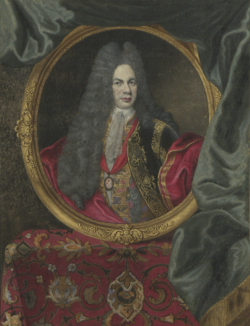
Portuguese expansion continued until 1723, when they built the Montevieu fort. In response, Governor Bruno Mauricio de Zabala led a Spanish expedition in 1724 to expel the Portuguese and found the fortified city of Montevideo. This city became the bastion of Spanish control, populated by families from Buenos Aires and the Canary Islands (known as "canarios").
Throughout the mid-1700s, both empires built fortifications to secure their claims. Portugal established the Fort of San Miguel (1737) and the Fortaleza de Santa Teresa (1762). Diplomatic efforts, such as the Treaty of Madrid (1750), attempted to swap territories, but these often led to conflict, such as the Guaraní War (1754–1756).
Wars and the Path to Independence
The late 18th century was marked by the Seven Years' War and the Spanish–Portuguese War of 1776-1777. The First Treaty of San Ildefonso (1777) finally settled the division: the southern part remained with the Spanish Viceroyalty of the Río de la Plata, while the northern territories went to the Portuguese Captaincy of São Pedro do Rio Grande do Sul.
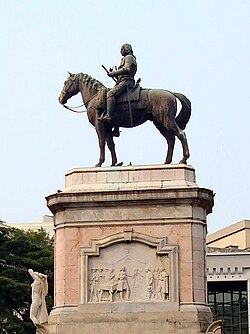
In the early 19th century, the region was shaken by the British invasions of the River Plate (1806–1807). During the British occupation of Montevideo, José Gervasio Artigas gained prominence leading guerrilla warfare. Artigas later joined the May Revolution of 1810, seeking independence from Spain.
After the Battle of Las Piedras (1811), Artigas led a rebellion in the Banda Oriental. By 1813, he created the Provincia Oriental, which was formally recognized as a constituent part of the United Provinces of South America in 1814.
The Final Division
The struggle for the region culminated in the 19th century. In 1817, the United Kingdom of Portugal, Brazil and the Algarves conquered the southern region, renaming it the Província Cisplatina. This sparked the Cisplatine War in the 1820s, led by the "Thirty-Three Orientals."
The conflict ended in 1828 with the Treaty of Montevideo, which declared the former Provincia Oriental as the independent state of Uruguay. Meanwhile, the northern territory briefly became the independent Riograndense Republic (1836–1845) before being re-absorbed into the Brazilian Empire as the state of Rio Grande do Sul.
| Period | Dominant Power/Entity | Key Event/Treaty | Outcome |
|---|---|---|---|
| 1542–1776 | Viceroyalty of Peru (Spain) | Early Exploration | Nominal Spanish control; Portuguese encroachment. |
| 1777–1814 | Viceroyalty of Río de la Plata (Spain) | Treaty of San Ildefonso | Formal division between Spain and Portugal. |
| 1813–1817 | Provincia Oriental | Artigas Rebellion | Attempted autonomy within United Provinces. |
| 1817–1828 | Província Cisplatina (Brazil) | Brazilian Conquest | Annexation by the Portuguese/Brazilian Empire. |
| 1828–Present | Independent Uruguay / Brazil | Treaty of Montevideo | Creation of independent Uruguay. |
Frequently Asked Questions
What was the Banda Oriental?
The Banda Oriental was a colonial territory east of the Uruguay River and north of the Río de la Plata. It currently comprises the nation of Uruguay and parts of the Brazilian states of Rio Grande do Sul and Santa Catarina.
Why was the region contested by Spain and Portugal?
The region was strategically valuable for controlling the mouth of the Uruguay and Río de la Plata rivers. Portugal sought to expand its borders westward and establish trade ports like Colonia del Sacramento to bypass Spanish taxes.
Who was José Gervasio Artigas?
Artigas was a military leader and revolutionary who fought against the British and Spanish. He is credited with the de facto creation of the Provincia Oriental in 1813 and led the struggle for regional autonomy.
How did the region become the modern country of Uruguay?
Following the Cisplatine War between the Brazilian Empire and the local revolutionaries (the Thirty-Three Orientals), the Treaty of Montevideo in 1828 established the region as an independent state.
What role did cattle play in the region's history?
Introduced by Hernandarias in 1618, cattle became the primary economic driver of the region, shaping the landscape and the culture of the gauchos.