Baltic Sea Offshore Wind Farms: Capacity and Infrastructure
The Baltic Sea, along with connected waters like the Kattegat and the Danish Straits, has become a critical hub for European renewable energy. By leveraging the region's consistent wind patterns and shallow coastal waters, several nations have deployed extensive offshore wind infrastructure to transition toward sustainable power.
Offshore wind farms utilize nameplate capacity—the maximum theoretical power output a plant can produce—to define their scale. However, the actual efficiency is measured by the capacity factor, which represents the average power generated as a percentage of that maximum capacity over time.
Key Facts
- Kriegers Flak is the largest operational farm in the region with a capacity of 604.8 MW.
- Denmark hosts the highest number of operational offshore sites in the Baltic and connected areas.
- Vindeby, commissioned in 1991, was one of the earliest pioneers before its eventual dismantling.
- Future Growth: Estonia is planning the Liivi 1 and Liivi 2 projects, with a projected capacity of 2.3 GW by 2035.
Major Operational Wind Farms
The region's infrastructure varies from massive industrial arrays to smaller, community-led projects. Denmark leads the capacity rankings with sites like Kriegers Flak and Anholt, while Germany, Sweden, and Finland have established significant footprints.
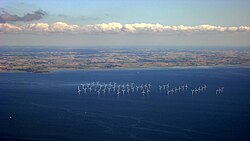
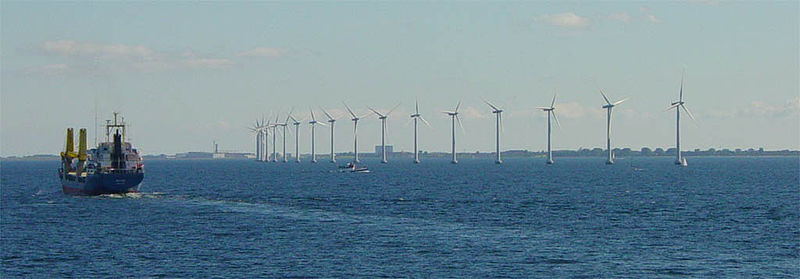
Kriegers Flak stands as a benchmark for modern efficiency, utilizing 72 Siemens Gamesa SWT-8.4-167 turbines. In contrast, earlier projects like Middelgrunden demonstrate a cooperative ownership model, split between private investors and Ørsted.
Regional Distribution and Technical Specs
The depth of the seabed plays a crucial role in site selection. For instance, the Rødsand II farm operates in depths of 6 to 12 meters, whereas the EnBW Baltic 2 project in Germany handles deeper waters ranging from 23 to 44 meters. Distance to shore also varies significantly, from the nearly adjacent Frederikshavn (0.3 km) to the more remote EnBW Baltic 2 (32 km).
| Wind Farm | Country | Capacity (MW) | Commissioned | Owner |
|---|---|---|---|---|
| Kriegers Flak | Denmark | 604.8 | 2021 | Vattenfall |
| Anholt | Denmark | 400 | 2013 | Ørsted |
| EnBW Baltic 2 | Germany | 288 | 2015 | EnBW |
| Rødsand II | Denmark | 207 | 2010 | E.ON |
| Nysted | Denmark | 166 | 2003 | Ørsted / PensionDanmark |
| Lillgrund | Sweden | 110 | 2008 | Vattenfall |
| Offshore Pori Tahkoluoto | Finland | 44 | 2017 | Suomen Hyötytuuli |
Planned Developments
The expansion of wind energy in the Baltic continues to accelerate. In 2023, Estonia auctioned the Liivi 1 and Liivi 2 areas in the Gulf of Riga. These tenders were won by Ignitis and Copenhagen Infrastructure Partners. Located northwest of Ruhnu, these farms are expected to be operational around 2035, contributing a theoretical projected capacity of 2.3 gigawatts to the regional grid.
Frequently Asked Questions
Which is the largest wind farm in the Baltic Sea region?
Kriegers Flak in Denmark is the largest, with a nameplate capacity of 604.8 MW.
What is the difference between nameplate capacity and capacity factor?
Nameplate capacity is the maximum possible power output of the wind farm, while the capacity factor is the actual average power generated expressed as a percentage of that maximum.
Which countries operate offshore wind farms in this area?
Denmark, Germany, Sweden, and Finland all have operational offshore wind farms in the Baltic Sea and connected waters.
Are there any decommissioned wind farms in the region?
Yes, both Yttre Stengrund in Sweden and Vindeby in Denmark have been dismantled.
What are the future projections for Estonian offshore wind?
Estonia plans to develop the Liivi 1 and Liivi 2 projects in the Gulf of Riga, which are expected to reach a projected capacity of 2.3 GW by 2035.