Bahía Blanca
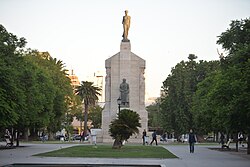
Located on the northwestern edge of the eponymous Blanca Bay in the Argentine Sea, Bahía Blanca (literally 'White Bay') is a vital urban center in the Buenos Aires province. As the fourth-largest city in the province and the 16th largest in Argentina, it serves as the administrative seat of the Bahía Blanca Partido. With a population of 336,574 as of 2022, the city is the heart of the Greater Bahía Blanca metropolitan area, blending industrial prowess with a rich sporting and academic culture.
Key Facts
- Founded: 1828
- Population: 336,574 (2022 estimate)
- Economic Role: Major trans-shipping hub for grains, wool, oil, and fruit.
- Climate: Subtropical (Cfa) with significant temperature variations.
- Sporting Fame: Recognized as the leading city for Argentine basketball.
- Education: Home to the Universidad Nacional del Sur.
Economic Powerhouse and Infrastructure
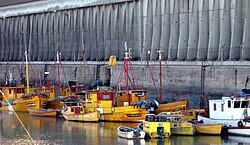
Bahía Blanca is a critical commercial artery for Argentina. Its strategic value lies in its seaports, which are among the most important in the country due to their natural depth of 10 meters (33 ft), with the main channel maintained at 12.19 meters (40 ft). The city manages the export of grains and wool from southern Buenos Aires, oil from Neuquén, and fruit from the Río Negro Valley.
The port system consists of two primary hubs: Puerto Ingeniero White, which handles containers and grains, and Puerto Galván, which specializes in chemicals (such as urea) and sunflower and soy oil. The region is also home to Profertil, one of the world's largest urea producers, and a robust petrochemical pole.
The city's industrial strength is supported by a comprehensive railroad network linking it to Rosario, Santa Fe, and Zapala, alongside a steady supply of natural gas and electricity.
Transportation and Connectivity
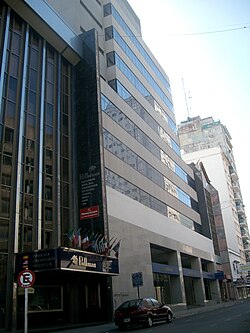
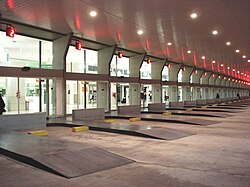
Historically, Bahía Blanca was served by three railway stations. The most prominent was Bahía Blanca Sud, opened in 1884 by the British BA Great Southern company, which connected the city to Constitución over a distance of 680 km (420 mi). However, passenger services were interrupted in October 2022 following a derailment in Olavarría. Other historical stations operated by the British Bahía Blanca and North Western Railway and the French Rosario and Puerto Belgrano Railway are now closed or destroyed.
Culture, Education, and Recreation
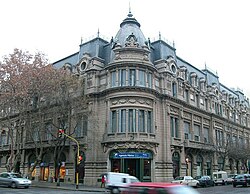
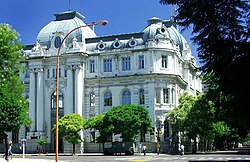
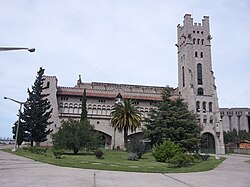
The city is a center for higher learning, anchored by the Universidad Nacional del Sur. Its urban landscape is dotted with cultural landmarks, including the Municipal Theatre and various museums.
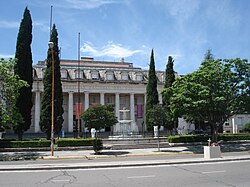
For nature enthusiasts, the Natural Reserve of Bahía Blanca, Bahía Falsa, and Bahía Verde covers 300 square kilometers, including several islands such as Zuraitas and Bermejo. The estuary is a popular spot for shark fishing, attracting visitors from across Argentina. The city also offers recreational areas like Balneario Maldonado and Colón, as well as both municipal and private zoos.
A Legacy of Sporting Excellence
Bahía Blanca is widely regarded as the cradle of Argentine basketball. The city has produced world-class talent, most notably Manu Ginóbili, a four-time NBA champion and Olympic gold medalist. Other notable basketball figures include Juan Ignacio Sánchez and Alejandro Montecchia, as well as coach Sergio Santos Hernández.

Football (soccer) also holds a strong presence, with local teams Olimpo and Villa Mitre. The city has birthed several football icons, including current Inter Milan and Argentina forward Lautaro Martínez, as well as Rodrigo Palacio and former national coach Alfio Basile.
Climate and Environment
The city experiences a subtropical climate (Cfa) characterized by wide temperature swings. Summers are hot and sunny, with an average temperature of 23 °C (73.4 °F), and most of the annual precipitation occurs during this season in the form of thunderstorms. Winters are cool with cold nights, averaging 8 °C (46.4 °F), and are often cloudy and damp.
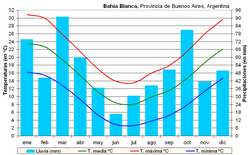
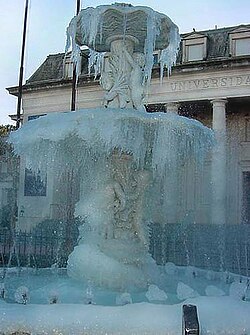
While snow is rare (averaging 0.2 days per year), the city frequently experiences frost between June and August. Annual precipitation is highly variable, averaging 645.4 mm (25.41 in), though it can fluctuate between 400 mm and over 1,000 mm.
Climate Summary Table
| Metric | Summer (Jan) | Winter (Jul) | Annual Average |
|---|---|---|---|
| Mean Daily Max Temp | 31.2 °C (88.2 °F) | 13.9 °C (57.0 °F) | 22.4 °C (72.3 °F) |
| Mean Daily Min Temp | 16.3 °C (61.3 °F) | 2.4 °C (36.3 °F) | 9.2 °C (48.6 °F) |
| Average Precipitation | 66.2 mm (2.61 in) | 32.4 mm (1.28 in) | 639.1 mm (25.16 in) |
| Sunshine Hours (Daily) | 10.0 hrs | 4.8 hrs | 7.3 hrs |
Recent History: The 2025 Floods
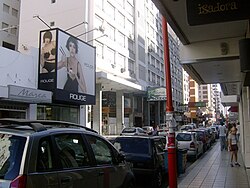
In March 2025, Bahía Blanca suffered a catastrophic weather event when 12 hours of intense rain delivered approximately 290 millimetres (11 in) of precipitation—over half of the city's average annual rainfall. This event, the most devastating in Argentina since 1975, resulted in at least 16 deaths and hundreds of disappearances.
The disaster triggered a massive national humanitarian response. In a rare moment of political alignment, President Javier Milei and Governor Axel Kicillof collaborated on relief efforts. International support followed, with solidarity expressed by the Chilean government and Ukrainian President Volodymyr Zelenskyy, while Elon Musk's Starlink provided free internet to residents for 30 days.
Frequently Asked Questions
What is the primary economic driver of Bahía Blanca?
The city is a major trans-shipping and commercial center, utilizing its deep-water ports (Puerto Ingeniero White and Puerto Galván) to export grains, wool, oil, and chemicals.
Why is Bahía Blanca famous for basketball?
It is considered the leading city of Argentine basketball, having produced legendary players like Manu Ginóbili and Olympic gold medalists.
What happened during the March 2025 floods?
The city experienced extreme rainfall of 290 mm in 12 hours, leading to severe flooding, at least 16 deaths, and a large-scale national and international humanitarian effort.
What is the climate like in Bahía Blanca?
It has a subtropical climate with hot, rainy summers and cool, damp winters. Temperatures can range from a record high of 43.8 °C to a record low of -11.8 °C.
Which notable athletes come from Bahía Blanca?
Beyond Manu Ginóbili in basketball, the city is the birthplace of football stars Lautaro Martínez and Rodrigo Palacio, as well as coach Alfio Basile.