Baden-Württemberg: Germany's Hub of Innovation and Heritage
Located in the southwest of Germany, Baden-Württemberg is a landlocked state that serves as a powerhouse of European industry, education, and culture. Bordering France to the west and situated east of the Rhine, it is the third-largest German state by both area and population. Known for its striking landscapes—ranging from the dense forests of the Black Forest to the peaks of the Swabian Jura—the region balances a deep respect for tradition with a relentless drive for technological advancement.
The state is characterized by its unique identity, often blending the historical legacies of the Grand Duchy of Baden and the Kingdom of Württemberg. This duality is reflected in its diverse dialects and its reputation as a center for innovation.
![A campaign sticker developed by Scholz & Friends, translated, "We can [do] anything. Except [speak] Standard German." That is an allusion to Baden-Württemberg being one of the principal centres for innovation in Germany and having its own distinctive dialects.](/images/77/0f/770f60edb3b8f2fd00b5aa6a43ba97f53c3b930698bca8f80f279e07f3826d11.webp)
Key Facts
- Capital: Stuttgart (also the largest city).
- Population: Over 11.1 million (as of 2020).
- Economy: A GDP of €650.225 billion (2024) with a high per capita income of €57,294.
- Human Development Index: 0.963 (ranked 3rd in Germany).
- Major Cities: Stuttgart, Mannheim, Karlsruhe, Freiburg im Breisgau, and Heidelberg.
- Founded: April 25, 1952.
History and Formation
The modern state of Baden-Württemberg was not formed overnight. At the start of the 20th century, the region was divided between the Grand Duchy of Baden, the Kingdom of Württemberg, and the Prussian province of Hohenzollern. Following the German revolution of 1918, these monarchies were replaced by democratic republics.
The path to unification was complex. While a 1951 referendum showed strong support for a merger in Württemberg and Hohenzollern, there was significant opposition in Baden. Despite this, a general majority of 69% voted in favor, and the state was officially established on April 25, 1952. To resolve lingering disputes, a second referendum was held in the historic Baden area in 1970, where 81.9% of voters finally approved the merger.
Geography and Climate
Baden-Württemberg's terrain is diverse, featuring numerous mountains and hills. Notable peaks include the Feldberg and Belchen in the Black Forest, as well as the Blasenberg in the Swabian Jura.
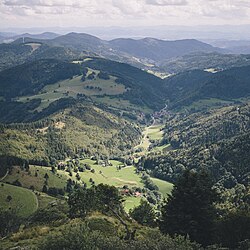
The climate is temperate. Using Karlsruhe as a benchmark, the region experiences mean daily maximums ranging from 5.1°C in January to 26.6°C in July. Precipitation is distributed throughout the year, with the highest averages typically occurring in August.
Major Cities and Urban Centers
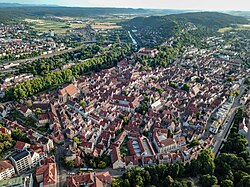
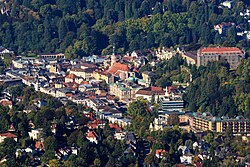
The state's urban landscape is defined by several key cities, each contributing to the region's economic and cultural prestige.
Stuttgart
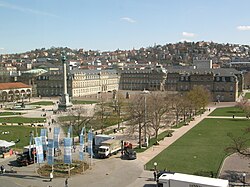
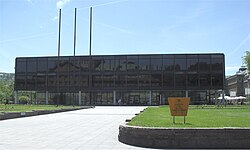
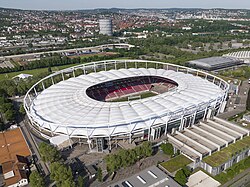
As the capital and largest city, Stuttgart is a global center for the automotive industry and the seat of the state parliament.
Karlsruhe and Mannheim
Karlsruhe is renowned for its legal and technical institutions, while Mannheim is a major industrial and academic hub.
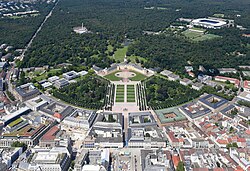
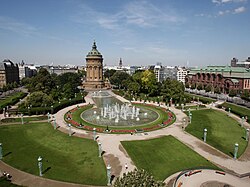
Heidelberg, Freiburg, and Others
Heidelberg is world-famous for its historic castle and university, while Freiburg serves as the gateway to the Black Forest.
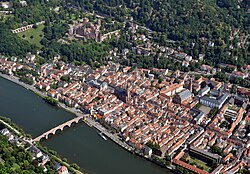
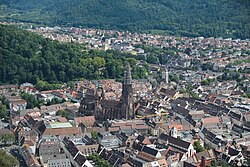
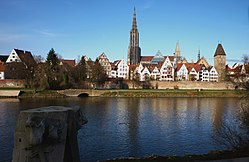
Other significant cities include Ulm, known for the world's highest church tower, as well as Tübingen and Baden-Baden.
Economy and Innovation
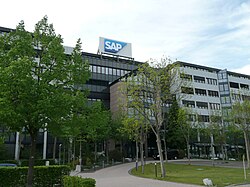
Baden-Württemberg is one of the wealthiest regions in Europe. Its economy is driven by high-tech manufacturing and global corporate headquarters, such as SAP in Walldorf.
The state government also maintains ownership in key industries, holding 45% of the energy provider EnBW and 100% of the Badische Staatsbrauerei Rothaus.
Education and Research
The state is a bastion of higher education, hosting some of Germany's oldest and most prestigious universities. The University of Heidelberg, founded in 1386, is the oldest in modern Germany. Other elite institutions include the University of Freiburg (1457) and the University of Tübingen (1477).
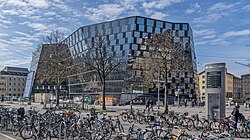
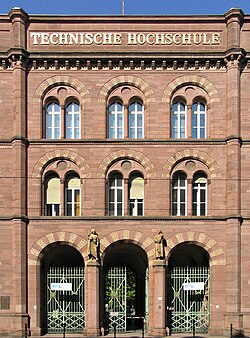
The University of Mannheim is particularly noted for its business administration program, earning it the nickname "the Harvard of Germany."
![The Mannheim Palace houses the University of Mannheim, which repeatedly receives top marks in business administration and is sometimes referred to as the "Harvard of Germany".[47][48][49]](/images/de/88/de8834d28ee1dc627e7abe66206472c6491cd49bede56b4048b50f6bca5efd59.jpg)
Transport Infrastructure
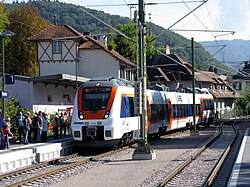
Railways are the backbone of the state's transport. The network includes approximately 3,350 kilometers of standard gauge lines. High-speed rail connects Mannheim, Stuttgart, and Ulm, with further expansions toward Basel currently underway.
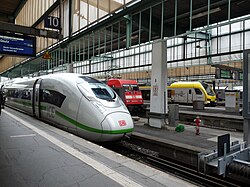
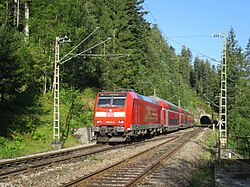
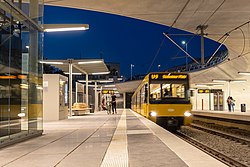
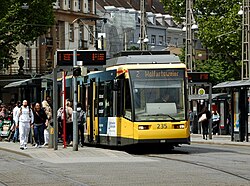
Urban mobility is highly developed, featuring extensive tram networks in Karlsruhe and an underground light rail system in Stuttgart.
Demographics and Society
Baden-Württemberg is a diverse society with a high percentage of residents with a migration background (nearly 28% as of 2013). The largest foreign-born populations originate from Turkey, Romania, and Italy.
Religiously, the population is split primarily between Roman Catholics (37%) and EKD Protestants (33%), with a growing Muslim community (6%) and a significant portion of the population identifying as non-religious or other (24%).
| Metric | Value |
|---|---|
| Total Area | 35,747.85 km² |
| Total Population (2020) | 11,111,496 |
| GDP (2024) | €650.225 Billion |
| GDP Per Capita (2024) | €57,294 |
| HDI (2022) | 0.963 (Very High) |
Frequently Asked Questions
When was Baden-Württemberg officially founded?
The state was officially founded on April 25, 1952, following a merger of the states of Württemberg-Baden, Württemberg-Hohenzollern, and South Baden.
Which is the oldest university in the state?
The University of Heidelberg, founded in 1386, is the oldest university within the territory of modern Germany.
What is the "Harvard of Germany"?
The University of Mannheim is often referred to as the "Harvard of Germany" due to its top marks and prestige in business administration.
What are the primary geographic features of the region?
The region is characterized by the Black Forest (Schwarzwald) and the Swabian Jura, featuring various mountains and hills across its landlocked territory.
Which city has the world's highest church tower?
The city of Ulm is home to the Ulm Minster, which features the world's highest church tower.