Avellaneda: Argentina's Industrial and Wholesale Powerhouse
From its humble beginnings as a port settlement to its evolution into a critical economic engine, Avellaneda stands as one of Argentina's most significant industrial and wholesale hubs. Situated strategically to facilitate trade and production, the city has played a pivotal role in the nation's development over the centuries.
The Historical Evolution of Avellaneda
The roots of the area date back to 1620, when land was granted to Adelantado Juan Torres de Vera y Aragón by Captain Juan de Garay. By 1731, a port settlement known as Puerto del Riachuelo emerged on this site. The town was formally established as Barracas al Sur on April 7, 1852, under the direction of Martín José de la Serna, the Justice of the Peace for Quilmes.
During the late 19th century, the town experienced rapid growth, transforming into a major rail center. It was officially declared a city on October 23, 1895. On January 11, 1904, the city was renamed in honor of former President Nicolás Avellaneda. While it saw significant growth during its early years, the population has remained relatively stable since approximately 1960.
An Industrial and Commercial Hub
Today, Avellaneda is recognized as a primary center for industry and wholesale trade in Argentina. The city's economy is driven by a diverse array of large-scale employers, including oil refineries, metallurgical works, and extensive docking facilities. It is also a center for textile mills, grain-processing plants, and meat-packing facilities.
Several prominent companies maintain their main facilities within the city, including the food processor Molinos Río de la Plata, the beverage manufacturer Cepas Argentinas, the bathroom fixture producer Ferrum, and the cable news network América 24. To support the region's intellectual and professional growth, the National University of Avellaneda was established in 2009.
The Legacy of the Central Produce Market
One of the most notable landmarks in the city's history was the Mercado Central de Frutos (Central Produce Market). Developed by Irish Argentine businessman Eduardo Casey and inaugurated in 1889, this massive brick structure spanned 150,000 square meters (1,600,000 sq ft), making it the largest warehouse in the world at the time of its construction.
Located on the banks of the Riachuelo and served by a Buenos Aires Western Railway link, the market was a cornerstone of regional trade. However, the 20th century brought challenges, including the decentralization of wholesaling and the market's nationalization in 1946 under the IAPI state export agency. These factors led to a steady decline, and the market finally closed in 1963.
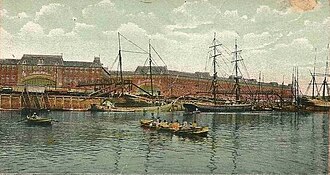
The structure was demolished in 1966 to facilitate the construction of the New Pueyrredón Bridge, which now provides a vital connection between Avellaneda and the Frondizi Expressway in Buenos Aires.
Key Facts
- Founded: Established as Barracas al Sur on April 7, 1852.
- Renamed: Changed to Avellaneda on January 11, 1904.
- Economic Profile: Major center for textiles, meat-packing, oil refining, and metallurgy.
- Education: Home to the National University of Avellaneda (est. 2009).
- Historic Landmark: Once housed the world's largest warehouse, the Central Produce Market.
City Summary
| Category | Details |
|---|---|
| Original Name | Barracas al Sur |
| City Status Date | October 23, 1895 |
| Key Industries | Oil, Metallurgy, Textiles, Food Processing |
| Major Companies | Molinos Río de la Plata, Cepas Argentinas, Ferrum, América 24 |
| Historic Infrastructure | Central Produce Market (1889–1963) |
Frequently Asked Questions
When was Avellaneda officially named?
The city was renamed on January 11, 1904, in honor of former President Nicolás Avellaneda.
What was the significance of the Central Produce Market?
Inaugurated in 1889, it was the largest warehouse in the world at the time, covering 150,000 square meters and serving as a massive hub for farm and ranch products.
Which major companies are headquartered or based in Avellaneda?
Prominent firms include Molinos Río de la Plata (food processing), Cepas Argentinas (beverages), Ferrum (bathroom fixtures), and América 24 (cable news).
Why was the Central Produce Market demolished?
After closing in 1963 due to nationalization and decentralization, the building was demolished in 1966 to make room for the New Pueyrredón Bridge.
What is the role of the National University of Avellaneda?
Established in 2009, the university serves as a center for higher education within the city's industrial landscape.