Automata Theory Textbooks: The Evolution of Hopcroft and Ullman
The study of automata theory—the study of abstract machines and the computational problems they can solve—has been profoundly shaped by a series of seminal textbooks. Written primarily by John E. Hopcroft and Jeffrey D. Ullman, these works transitioned from specialized research foundations to accessible educational tools, influencing how computer science is taught globally.
The Foundation: Formal Languages and Their Relation to Automata
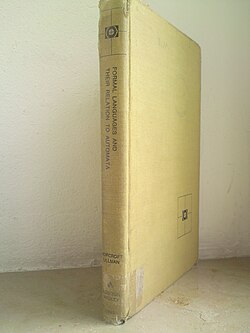
Before the widely known series began, Hopcroft and Ullman published Formal Languages and Their Relation to Automata in 1969. This early work served as a cornerstone for the field, providing the basis for new academic courses and driving research for over a decade. Hopcroft attributed the book's success to a specific pedagogical approach: presenting the essence of a proof before delivering the formal proof itself.
The Transition to Introduction to Automata Theory, Languages, and Computation
In 1979, the authors released a major revision of their 1969 text, titled Introduction to Automata Theory, Languages, and Computation. This first edition was expanded and reworked to be more accessible to students. However, this shift toward detail and explanation created a divide in reception; while students benefited, some faculty members found the increased volume of material cumbersome when preparing lectures.
Despite these mixed reviews from educators, the 1979 edition became a monumental success in the scientific community. Data from CiteSeerX indicates that this specific edition is the most cited, appearing in over 3,000 freely available online scientific papers.
Modern Editions and Shifting Focus
The textbook continued to evolve with the release of a second edition in November 2000 and a third edition in February 2006. A significant change occurred with the second edition: Rajeev Motwani joined Hopcroft and Ullman as a third author.
These later editions marked a strategic shift in content. The authors increased the coverage of practical examples where automata theory is applied, while removing large portions of advanced theory. While this made the text more approachable for beginners, it drew criticism from some academics. One professor, quoted by Shallit, claimed that the authors had "removed all good parts," reflecting a tension between pedagogical accessibility and theoretical depth.
Key Facts
- Original Work: The 1969 book Formal Languages and Their Relation to Automata shaped the field for over ten years.
- Most Influential: The 1979 first edition of Introduction to Automata Theory, Languages, and Computation is the most cited version.
- Authorship Change: Rajeev Motwani became a co-author starting with the second edition in 2000.
- Content Shift: Later editions prioritized practical applications over advanced theoretical proofs to aid beginners.
Edition Summary
| Year | Title | Edition/Status | Authors |
|---|---|---|---|
| 1969 | Formal Languages and Their Relation to Automata | Forerunner | Hopcroft, Ullman |
| 1979 | Introduction to Automata Theory, Languages, and Computation | 1st Edition | Hopcroft, Ullman |
| 2000 | Introduction to Automata Theory, Languages, and Computation | 2nd Edition | Hopcroft, Motwani, Ullman |
| 2006 | Introduction to Automata Theory, Languages, and Computation | 3rd Edition | Hopcroft, Motwani, Ullman |
| 2013 | Introduction to Automata Theory, Languages, and Computation | New International Ed. | Hopcroft, Motwani, Ullman |
Frequently Asked Questions
What was the first book written by Hopcroft and Ullman?
The first book was titled Formal Languages and Their Relation to Automata, published in 1969.
How did the 1979 edition differ from the 1969 version?
The 1979 edition was an expanded revision designed to be more accessible to students through increased detail and explanations.
Who joined the authorship team in the second edition?
Rajeev Motwani joined John E. Hopcroft and Jeffrey D. Ullman as a co-author starting with the second edition in 2000.
Why were the second and third editions criticized by some professors?
Critics felt that the removal of advanced theoretical sections in favor of practical examples made the books less suitable for advanced courses.
Which edition is considered the most cited in scientific literature?
The 1979 first edition of Introduction to Automata Theory, Languages, and Computation is the most cited, with over 3,000 citations according to CiteSeerX.